The Cable Machine Appreciation Society

Cable flye

Does anyone remember when they were a kid and they’d find a lonely exercise bike in the corner of their parents spare room? Dust would gather on the bits that wasn’t used to hang the clothes on to dry.

Perhaps you have felt a bit nostalgic and got yourself an exercise bike too. And just like mum and dads it dries clothes really well.

I remember my parents having a rowing machine too but its awkward frame didn’t lend itself to being much of a clothes dryer. Although I do recall that it made a good battle ground for my He-Man and Skeletor action figures.

There are lots of home gym equipment that seem to get tossed to one side or used for something completely different. Our 4kg kettlebell makes for a fantastic door stopper. A couple of dumbbells in the garden are great footy posts for the kids and the battle rope in the garage seems to provide perfect chewing material for the mice.

Yet if anyone said to me that their Cable Machine multi gym was left unused I would gasp in horror. It is almost perfect and this is my case for it to be one of your go-to pieces of kit whether it be at home or in the gym…

It is versatile. There isn’t one muscle group that cannot be trained on a cable machine. If it has all of its attachments then a full workout can be done on it.

It is non-linear. Don’t be fooled by the ‘machine’ in its title. The cables provide a non-linea movement unlike its weight machine buddies. Non-linea movement can heal old injuries and avoid new ones, it allows better mind to muscle connection as you have to think about the movement much more and it keeps your core engaged.
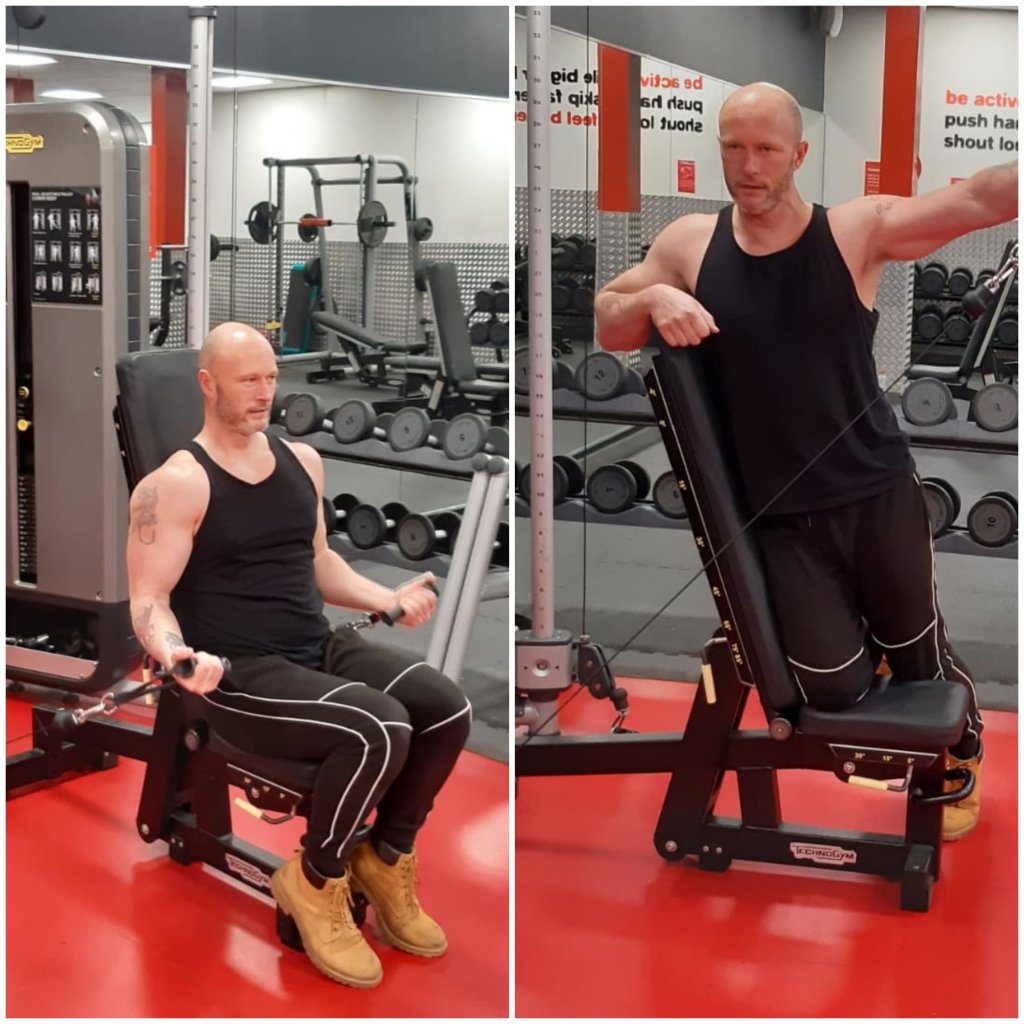
Cable curls and lat raise

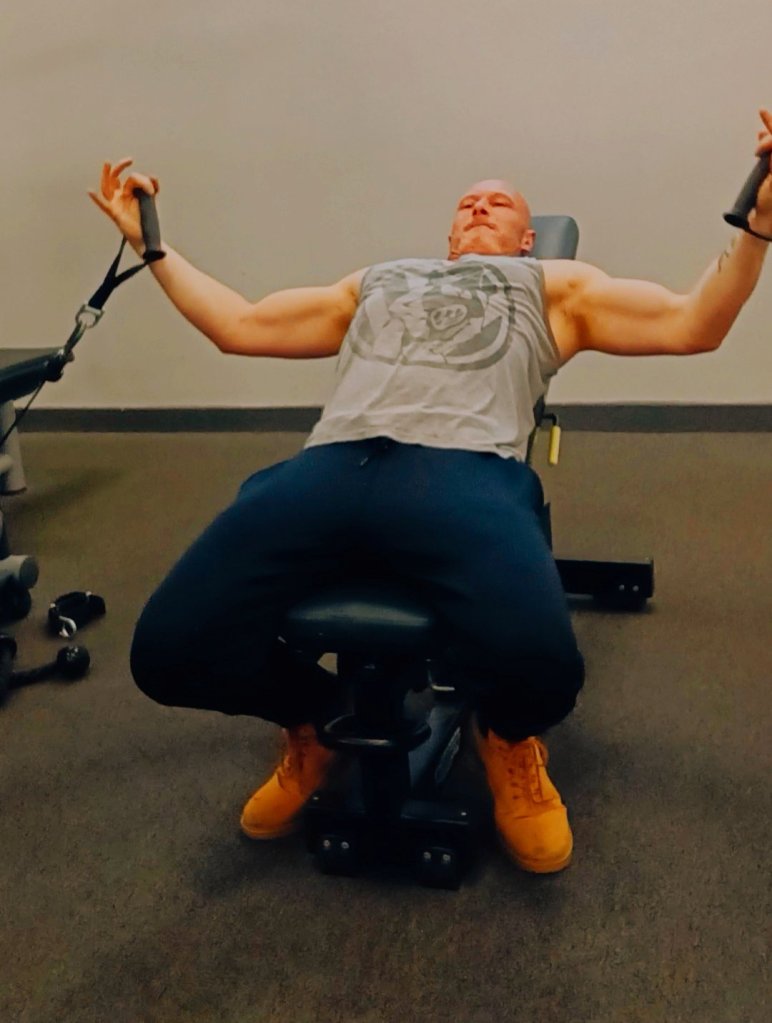
More time under tension. There is no resting position on a cable. Think of performing cable flyes. At the top of the concentric movement, the cable wants to pull your arms back which means that your muscles are continuously engaged as you apply force against it. Don’t fib now! You’ve found a resting point using dumbbells right?!

A great way to finish a workout. Ok, despite my appeals for an appreciation of the cable machine, free weights are still the king of resistance training. But if free weights are Super Mario, then the cables are a very respectable Luigi. And you can burn out on free weights. Your muscles need a selection of different stimulus to grown lean and strong. So when you think that your muscle can’t perform another rep with a free weight, replicate the movement on the cable and rep out until exhaustion.

I hope I’ve put forward a good case for the cable multi gym machine. Thanks for reading!

Question…What’s your favourite piece of equipment that deserves a shout out?!
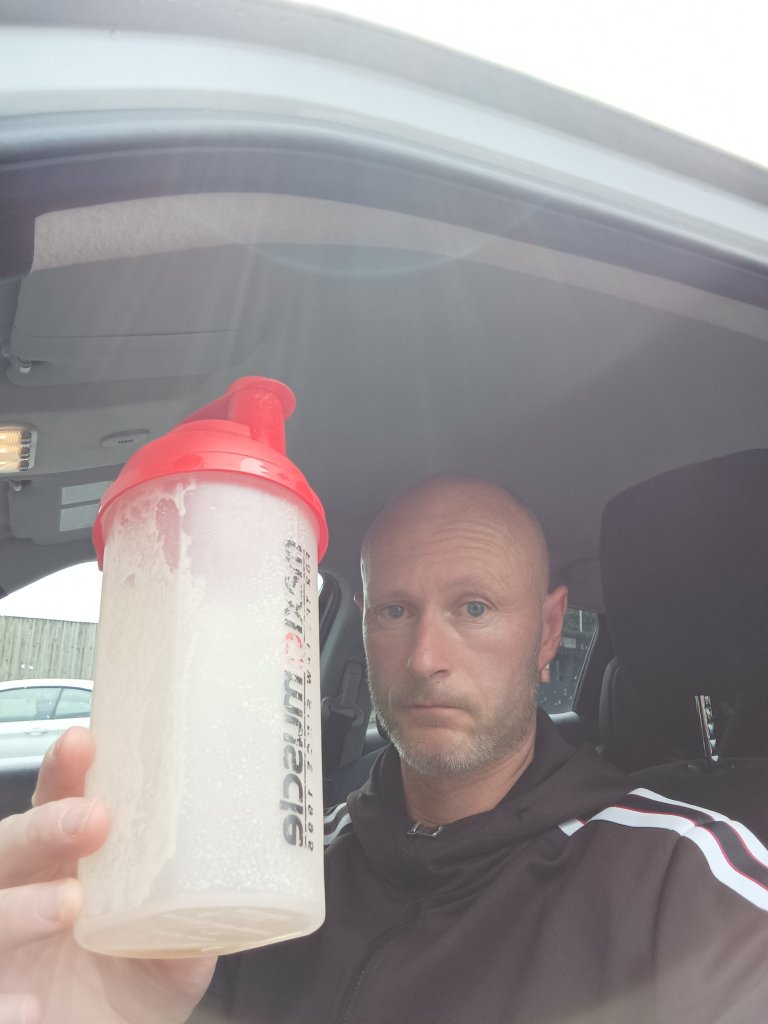
When Is The Best Time To Have A Protein Shake?

Me holding up an empty bottle for the purpose of this article.

Protein shakes are extremely popular amongst gym goers and athletes. They are one of the few supplements that have been tried and tested to actually do what it says on the tin. However, without a proper training regime in place and a nutritional diet to support the protein shake then you aren’t going to see the benefits.

So, assuming that your training is on point and you have a reasonably good diet which hit your daily macros and calorie goals, when should you take a protein shake?

Firstly, it is important to describe the two most popular types of protein. This might help you decide which one it is that you purchase.

Whey Protein

Whey is a dairy based protein with all the essential amino acids which is quickly absorbed by the body. This would be perfect for drinking straight after a workout as it begins to help the healing process from your hard work. Because it works quickly (your body can break it down within 20 minutes of drinking it) whey is useful if you are still on the go even after your workout.

Casein Protein

Casein is also dairy based with all the essential amino acids but is slowly absorbed by the body. This would be ideal for drinking in the evening as it sets to work during the night which prevents muscle loss, especially in older people. Due to its ‘slow release’, casein can also help with those late night snacky feelings just before you go to bed.

Both of these proteins are very effective in muscle gain, weight loss, strength gain and endurance. But it is important to note that for weight loss you must still be in a calorie deficit, even after taking a protein shake. 300 calories is still 300 calories, even if it is protein. Check out the range of low calorie protein shakes that are available.

The Last Word…

The most sensible advise on when to take a protein shake would be whenever you get the opportunity. Don’t stress over it if you haven’t got one at hand straight after a workout. Studies show that the ‘metabolic window’ isn’t necessarily just 15 minutes after training we were once led to believe but the term ‘Golden Hour’ is now referred to as the optimum time for the body to absorb the most nutrients after training. So we don’t all have to make a mad dash to our lockers as soon as we finish our workout!

And if you really want to show off, drink whey after a workout and casein just before bed!

Use Your Toolkit

If you’re a handy person who is good around the house at fixing things and doing a few home improvements then you probably have a tool kit. Your kit will provide you with lots of tools to get a specific job done.

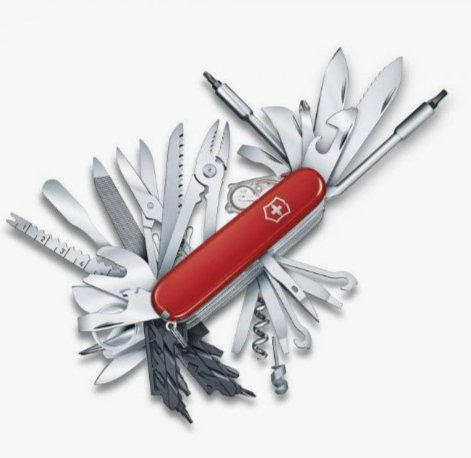
American soldiers in World War 2 had their own little handy tool which became very useful during their time away on duty. The Offiziersmesser, or Swiss Army Knife as they called it, had scissors, saw blade, assortment of screwdrivers, bottle and can openers attached to a spearpoint blade.

When you enter the gym you open your very own handy tool box. Every piece of equipment is a tool to provide you with the ability to reach your goal.

Or at home, if you have invested in equipment for your home workouts, you can have a good selection of tools in which to achieve your fitness objectives.

Even in the outdoors you can use different gradients and an assortment of training methods to meet targets.

And you carry a great tool around with you all day. Body weight exercise is an excellent way to stay active.

And yet in a recent survey (yougov) in the UK it was found that 37% of adults do not even meet at least one hour of physical activity a week. The Department Of Health And Human Services in the US reported that only 22% of adults complete 150 minutes of moderate exercise each week. Interestingly in Europe, Finland, Sweden, Denmark, Germany and Austria are the most physically active with half of their adult population engaging in the recommended amount of exercise according to WHO.

We have all of these tools but not enough people willing to use them. The top 5 reasons that I am given on why they don’t exercise are…

1. “I did but got bored and gave up.”

Solution…An exercise routine should not be boring. If it is then change it immediately. Join a different fitness class, change your goals to more achievable ones, find out more about the variety of equipment and never be aftaid to enter the free weight area of a gym.

2. “It is too expensive.”

Solution…walking, running, bodyweight home workouts are free. My fitness app is free on entry with regular workout ideas. There are budget gyms in most major towns and cities and equipment can be sourced on selling sites.

3. “I don’t have the time.”

Solution…If you work at the right intensity a 20 minute workout can be done daily to good effect. It doesn’t need a journey to and from the gym and an elaborate routine. Just small tweaks in your lifestyle should be able to accommodate some sort of physical activity each day.

4. “I don’t know what to do”.

Solution…Ask a friend who goes to the gym, plays a sport or enjoys running and walking if you could go along too. Also, a good PT will show you what to do and will add accountability.

5. “I’m injured.”

Solution…You can still exercise with an injury. In fact, gentle physical activity can help the healing process. Just find out from a professional what the best activities for your injury would be.

You have a box with lots of different tools to help you improve your physical and mental health. You just need to open it up.

https://www.trainerize.me/profile/nevergiveup2/?planGUI

Knowledge Is Power

When I first started training I wasn’t interested in the finer details such as my diet, muscle groups, recovery and time under tension. I just wanted to get into the gym, throw some weights around and get out. I spent years of my 20’s doing this.

I had some positive results, of course. I kept myself ‘in shape’ and my mental health began to improve. But I also had lots of time out due to injuries and disillusionment. There were something missing. Through ignorance and perhaps the arrogance of youth I didn’t think that I needed to know how to perform in the gym.

It’s like wanting to bake a cake without knowing its ingredients or baking times. You can call it a cake. It comes out of the oven resembling something of a cake. But had you followed a recipe and understood the procedure if could have been so much better.

I never followed a recipe until my PT friend started training with me. He was perplexed at how disorganized my method was. My first mistake was that I couldn’t give him a logical answer on my goals. I wanted size and strength, but I also wanted definition and to lose some belly fat. I would lift heavy not just because I thought that I would get laughed at by my gym peers if I didn’t, but because I thought that this would give me bigger looking muscle.

I gave him an idea of my daily calorie consumption which was generally at a deficit due to me wanting to lose the belly fat.

“But you’re confusing your body.” My friend said. “You ask it to grow in the gym but don’t provide it with the right amount of calories, protein or nutrients to do so outside of the gym.”

This was a lightbulb moment. Immediately I dropped the weight that I was trying to lift. My form improved in the first week. I remained at a slight calorie deficit but increased my protein intake. He explained different training splits such as push/pull and upper/lower. He described the periodization process and how I can achieve muscle hypertrophy, strength, power and be confident in maintaining a 16-18% body fat.

This would take time. I began to appreciate all of this would take time. But because my time away from the gym had reduced due to ego injuries and a lack of knowledge I progressed well. It wasn’t just about how I felt or looked anymore. I wanted to know what muscle performed which function rather than keep my focus on aesthetics. As I became more experienced in my routine and worked through each period of my programme I became fitter. I moved better in my everyday life. I ran faster. I jumped higher. I slept better. I focussed on tasks at work easier. I wanted to learn even more. I realized that knowledge was power. My life was improving and, without even noticing, my physique was too.

You don’t have to be an expert, but you should acquire knowledge from those who know not just gym form and techniques, but who also know you. After all, the ripped dude on his YouTube channel sounds like he knows what he is talking about, but he doesn’t know you, your needs, your goals, your likes or dislikes.

When you start learning the basics you’ll find that it’s a piece of cake.

10,000 Kicks

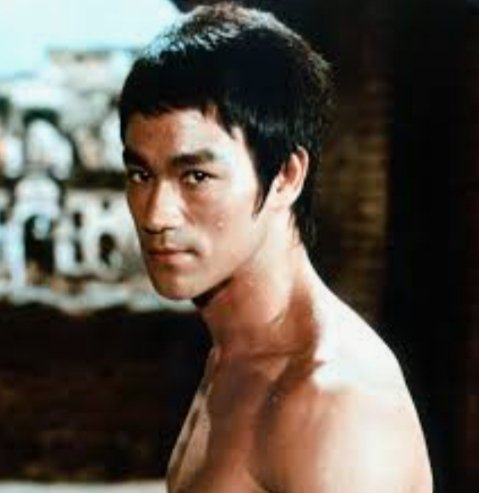
It’s coming up to 50 years since the release of the Bruce Lee movie Enter The Dragon. It was one of my all time favourite films growing up. I’d watch it many times with my dad and it sparks good memories when I watch it now to this day. Bruce Lee was a hero of mine growing up. His quotes resonated with me too. These are some of my favourites…

“I fear not the man who has practiced 10,000 kicks once, but the man who has practiced one kick 10,000 times”

This can be used as an analogy for many different circumstances in our lives. In fitness, I see this as the biggest stumbling block to people’s goals. We try to be good at everything, but in doing so, we often end up being good at nothing. We give up as we see failure as a conclusion rather than a pathway. We chop and change our routines until our bodies are confused about what we are asking it to do.

“Defeat is a state of mind. No-one is ever defeated until defeat has been accepted as reality.”

If you have found what activities that you enjoy then stick to it. Practice 10,000 times and more. Do you think that every one of your kicks will be perfect? Do you think that by quitting you will reach your goals? Practicing is hard. Quitting is hard. Choose your hard.

Keep practicing your kick and you will sometimes fail. Stop practicing your kick and you have always failed.

Your last kick is neither your best kick nor your worst kick. It just provides a platform for your next kick. Practice dealing with the good efforts and the failures. Both will see you hit your goals in time.

“It is like a finger pointing away to the moon. Don’t concentrate on the finger or you will miss all that heavenly glory.”

I have talked about your ‘why’ previously. Your why is what gets you out of bed each day and enables you to focus. Your why is the moon. Your ultimate goal. The finger merely provides an instant direction. From there you just have to focus on your goal and be certain of your path towards it. Focus on the finger for too long and you lose your goal. It is just a finger. The moon cannot be observed anymore.

Don’t forget the focus on your why.

The Piano Stairs

If the only piece of equipment available to me in the gym was a treadmill I probably wouldn’t go. I don’t particularly enjoy running on a tready. I like training, but I certainly don’t like absolutely everything it involves.

With the closure of gyms during the first lockdown I had to find alternative ways to exercise. But I found that I were skipping sessions and not fully focussing on my training. I simply didn’t have the equipment available to me that really makes me happy. Jogging became a regular activity and I went walking with the family daily of course, but it wasn’t fulfilling my hypertrophy goals and the more sedentary period of my life didn’t help my weight maintenance. I craved a bench press, weight plates to deadlift with and decent dumbbells. That is the sort of workout I enjoy. It makes me happy. I like the results and I keep going back. That is my Piano Stairs.

In Stockholm, Sweden an experiment was conducted on how people’s behaviour can be changed for the better by making a boring everyday task more fun. Musical piano steps were installed in a subway instead of regular steps to see if more people would use the steps instead of the escalator. Results showed that 66% more people used the stairs than usual that day. If more proof was needed that people are more likely to engage in a fun activity than stuck to the mundane then that was it.

Yet when it comes to our health I don’t find it conclusive when I talk to the gym members. Walking on musical stairs for an amusing short period of time instead of standing still on an escalator makes sense, but put the same person in a gym and there’s a good chance that they will choose something safe and uninspiring. It’s important for me to point out that just because I don’t like the tready doesn’t mean that everyone else doesn’t either. If that is what excites a person and motivates them into going to the gym then that is what a large part of their training should involve.

Almost every day I will hear,”I get bored on the treadmill.” Or “I hate deadlifts.”

So why do they use a treadmill or perform deadlifts? There are literally thousands of exercises to do inside or outside of the gym. If there’s exercises that you don’t like, don’t do it!

There has to be a draw to keep going back to the gym. Yes, of course, you have your goals which might include feeling fitter and looking your best, but if you’re going to spend your time absolutely hating the process there’s a good chance that you won’t stick it out, whatever your goals.

I usually get a programme right when I send it to my trainees. However,during feedback if they tell me that there’s something that they do not enjoy I will change that particular exercise. There’s plenty more. We just need to find the right ones that make my trainee want to complete it and keep going back to it. That will give them a better chance of succeeding in reaching their goals.

So, I’ve found my Piano Stairs and I’m sure that my trainees have found theirs. What’s your favourite bits of equipment and exercises that keep you going back for more?

https://www.trainerize.me/profile/nevergiveup2/?planGUI

MacGuffin Reps

It’s a long standing joke between me and my trainees that I’m a rubbish counter. I’ll often say 6 and, whilst under stress, the trainee will shout ‘That was seven!’

The truth is I don’t particularly care what number rep it is.

When asked about how many sit ups he did each day, Muhammad Ali said,”I don’t know because I don’t count until it starts hurting.”

My job is to give my client a target, for example a 12 rep set, with a weight that they will begin to ‘struggle’ at about rep 8/9. If they start to struggle from rep one, we’ve gone too heavy or not allowed enough rest period from the previous set. Having a number in mind what you would like to achieve is good as far as having a target, but it isn’t essential to your overall goals.

In my own training I call my reps a MacGuffin. Within the film industry this term is used to describe a character or an object that keeps a plot in motion without having any significance in the outcome of the movie. Think about the briefcase in Pulp Fiction and, even the much loved character in Star Wars, R2D2 was called a MacGuffin by George Lucas. Neither had a bearing on the outcome of the movies that they were in, yet were present throughout their films that they appeared in.

What was in the briefcase? Who cares?

To follow the plot, the viewer thinks that they must pay attention to the object or the character. Indeed, as I train, I recognize that my MacGuffinesque reps won’t define the outcome of my workout, rather the weight and quality of those reps will. Yet I understand the need to to have them there. And if I do as an experienced trainer, most of my clients will need their MacGuffin too.

The important thing to remember is that the weight and the quality of your reps is what will get the best results. During your programming you should go through a variety of reps, sets, weights and rest periods anyway. This can help in avoiding a plateau. But one rep is going to better than 10 rushed reps with poor technique. The reason for poor technique is that you have not perfected your first rep at the correct weight. Get that wrong and the rest of your set is not going to get you the results that you want and in some circumstances will cause injury.

I have mentioned in a previous post about an older gent gym goer that generally trains at the same time as me. I’ve called him Hannibal because he is strapped up like Dr Lecter as they wheel him out of his prison cell. The only thing that is missing is the muzzle. The strappings, I’m concluding from experience, is because of his previous injuries. He will pick up the heaviest weights and quarter rep twenty times. Had he performed at a sensible weight and completed 8 perfect reps then I would imagine that he would have swerved many of his injuries.

But perfect reps aren’t sexy or cool. R2R2 isn’t sexy, it is just a character that provides a platform for the heroes. Harrison Ford was the eye candy. The briefcase in Pulp Fiction wasn’t cool but it was written into the plot for very little purpose. Samuel L Jackson was cool.

Not sexy (but my Henry hoover has a thing for R2D2)

The weight that I choose and the time I have my muscle under tension with that weight is my leading actor. My leading actor will play a significant part in the climax of the movie. Without the leading actor the movie could not have a satisfactory ending. The reps count just happens to be a part of the script and, if you’ve got the star cast in place, won’t have any bearing to the final scene.

https://www.trainerize.me/profile/nevergiveup2/?planGUI

The Test

My eldest came out of the school gates looking very pleased with himself. He ran towards me waving a piece of paper shouting “Daddy daddy, I got 10 out of 10!”

At the beginning of the week he had been given ten words to learn for a spelling test today. As well as my wife and I going through these words daily and his teacher teaching them he was well prepared for a test.

Schools, higher education and any learning environment have a similar system. We learn, practice and revise until we are tested on the subject. When you leave education, however, I find it a very different experience. Life gives you the test first, and then you learn the lesson.

Imagine my son having the test first and then learning the words after? It seems unfair, right? Ah, and yet our experiences in life are full of these examples.

What I try to provide as a Personal Trainer is a platform in which to learn, develop and achieve. An individual’s fitness journey has, admittedly, moments of enduring the test before knowing the lesson. In some ways that helps us deal with the challenges of success and failure. If we knew how to do it we’d already be doing it, so learning from life’s tests is a part of the process. And the process isn’t a smooth, linear path.

My job is not just to bask in the glory of a trainee’s goal being achieved like a PB or a weight loss target, but it is to navigate us through the difficult times. That’s not easy to do on your own. It’s doubly difficult when, even though you’ve put the hours in and worked with a plan in place, things still don’t go smoothly. Yes, you get given the words, you revise like mad, and you don’t always get full marks in your exam.

The problem is when you get given the words to learn, you revise like mad, don’t pass the exam and you give up. A few months pass by and again you get given the words, work hard and study but still don’t quite make the grade. Before you know it you are a year older and you are still stumbling through the tests, quitting, starting again…the cycle continues.

This, for me, is where the role of a coach is vital. There’s plenty of people that will count your reps on a rocking ab machine. But a coach will provide knowledge, technique, expertise, experience and the ability to get you to your goals. Even when the test becomes tough, they know what to do to get you through to the other side.

My son might only get 9 out of 10 next week, even if he works hard in his revision. But that in itself is a lesson. How I react to it and how he dusts the disappointment off is the difference between his future success and failure. If he learns how to deal with that disappointment it becomes even more important than learning the word he got wrong.

Life is ironic. It takes depression to know happiness. It takes stress to understand calm. It takes failure to recognise success.

Click on the link below if there are any of my services that you would like. My training app is free to enter if you would like more information.

https://www.trainerize.me/profile/nevergiveup2/?planGUI

Negative Reps

In an earlier article I discussed the three types of muscle contractions during exercise. Of course, all three have a huge bearing on how well we progress in our training goals of strength, hypertrophy, fat loss or endurance. But when it comes to those exercises that just seem to be a little too tough to master, I may have a solution…

…the negative rep AKA eccentrics.

Eccentric movement is the lengthening of the muscle. This is commonly seen as the lowering of a load such as bringing the bar to your chest in a bench press. Performed by experienced resistance trainers to work through a plateau or to challenge their muscle fibres, negatives can be a great inclusion in your training programme, especially for the exercises that you just can’t seem to master.

Pull Ups

Because the pull up is one of the most common exercises that I hear people say is one that they find extra difficult, I’m going to use this as my example. Pulling your own body weight up can be one of the most difficult exercises to do. A mistake that I see regularly with a pull up is the lack of core engagement. To an extent, you can get away with poor core engagement on many exercises. You won’t get the results that you want and injuries are much more prevalent in those who do not engage their core during exercise, but moving a weight from A to B is still possible. Performing pull ups, however, requires full engagement of your core to be able to do it. The best way to practice this is through negative reps.

Core Engagement

Your core can be described as everything but your arms and legs.

Some of the most common ways that I have heard in how to engage the core is to brace yourself as though you are expecting a blow to the abdomen. Another is to imagine squeezing an orange under your arm pit. And for your glutes, you just need to squeeze the hell outta those butt cheeks! Try them now… no-one is looking!

Negative Rep Pull Up

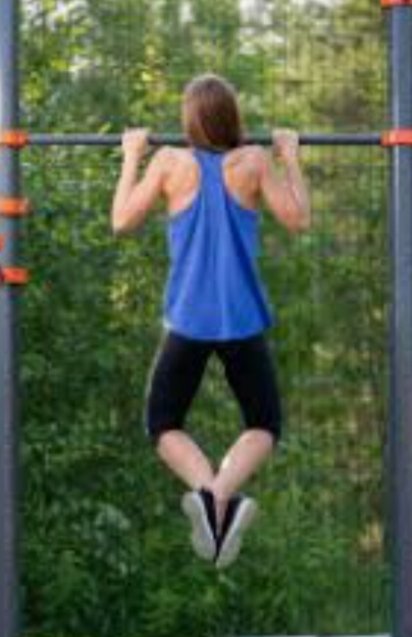
Standing on a box below a pull up bar, grip the bar and get into a flex hang position as pictured below. You should breath in at the point of your flex.

Hold this position for a few seconds (each practice you want to be able to hold for a little longer) and slowly lower yourself into a dead hang position (arms fully extended) whilst breathing in.

Legs can be controlled easier if your feet are locked together, as above. Flailing legs can distract you from your core brace, grip and breathing.

Once you have completed one rep you can come down from your dead hang and repeat the process. Practicing these negative reps will create grip strength, core stability, confidence and time under tension which will all contribute to your progression onto full pull ups. The only thing that will make you fail will be your lack of patience, so don’t allow it.

A pull up is a classic gym exercise that not only looks impressive it confirms your technical skills and your strength, but to get there sometimes we have to put in the hard yards. So my advice?

Stay positive, go negative!

https://www.trainerize.me/profile/nevergiveup2/?planGUI

Understanding Muscle Contractions

Understanding muscle contractions are important if you are on a fitness journey that includes muscle growth, strength, fat loss, mobility and sports specific training. Once you understand the basics of muscle contraction I am convinced that you will speed up your ability to meet your goals. And I say basics because you don’t need to be a fit pro, a scientist or professional athlete to know your own body. Hopefully a little bit of reading of articles that leave out the jargon can help you to understand. So let’s jump straight in!

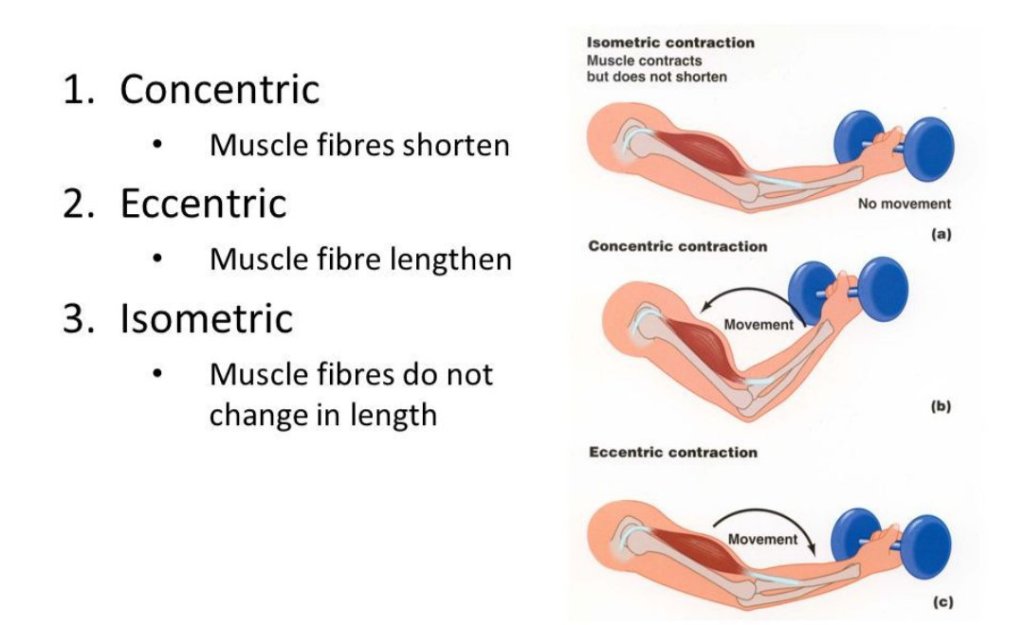
Your muscles perform three types of contractions when you exercise.

* Concentric

* Eccentric

* Isometric

A concentric movement shortens the muscle to force an object to move. Think of the bicep curl. As you force the weight towards your shoulder your bicep shortens to create a squeeze.

An eccentric movement lengthens the muscle and stretches the muscle fibres. Imagine the lowering of the weight during a bicep curl or the squatting part of a squat or leg press. This phase of the rep is regarded as the part that induces the most muscle growth as the muscle fibres are fully activated in lowering a weight under control. This is where delayed onset of muscle soreness (DOMS) are most like to occure and specific eccentric training is a popular training phase for many athletes.

An isometric movement is a contraction that does not require muscle to lengthen or shorten. Think of a plank or wall sit. There are no reps that use concentric or eccentric movement. These are particularly useful when sparing the joints from discomfort or injury but still strengthening the muscle.

Developing an understanding of these muscle contractions will give you a greater appreciation of time under tension (TUT). Powering through 12 reps in 15 seconds is fairly straightforward. However, this is not the best way to train. Once you imagine the muscle  lengthening and shortening through repeated exposure to the load of the weight then you can create a clear ‘mind to muscle’ pathway. You begin to think about each rep rather than just move a weight from A to B and it might need you to cut out the ego lift and go lighter. Just because you’re benching 100k doesn’t mean your muscle has gotten much out of the process. If you aren’t in control of your muscle contractions then your target muscle is unlikely to feel the need to change.

I ask my online trainees what their rate of perceived exertion (RPE) is after each exercise. As I’m not physically stood next to these clients I cannot see how easy or difficult they found the activity. If they are rating their workout at around 5/10 I would ask them to slow the tempo of each rep before adding more load in an attempt to challenge them to a high exertion level.

TUT and muscle hypertrophy

Earlier I mentioned time under tension as a significant factor in muscle development. Longer TUT will create a more challenging experience and much more rewarding for muscle hypertrophy. If I were to learn French for ten minutes a day I would get much less knowledge of the language than if I were to learn French for 30 minutes.

So, if I were to complete a set in ten seconds I would get much less chance to elicit muscle growth than if I were to complete a set in 30 seconds. Every rep and set is an opportunity for muscle growth. Moving a heavy object is easy. Thinking about it requires muscle engagement.

I hope that this article helps. I have tried to remove unnecessary jargon as I believe that resistance training should be enjoyed by everyone and we shouldn’t need a physiology degree to do it. And not just do it, but do it to ensure you get the benefits from it!

https://www.trainerize.me/profile/nevergiveup2/?planGUI