What I have Learned From Being A Personal Trainer So Far

For 8 years I’ve been training people in helping them towards their fitness goals. Here’s what I’ve learned so far…

1. It’s the hardest job I’ve ever had. Sure, it sounds cool. Training people in something that I’m passionate about is fantastic and I get to hang around gyms and talk about football and train myself. But I also need to stay business minded. It’s about getting clients and keeping them. Keeping them by setting goals and working towards them. Their results represent my abilities as a PT and my own performance, whether with a client or training myself, will be watched by everyone else. It’s intense.
2. What a client achieves physically isn’t even 50% of their goal completed. They might think it. Great! They’ve lost half a stone. That’s good work. But how do they keep it off? And, now that they have achieved a weight loss target, do they actually respect themselves any more? Do they like themselves? Fitness is more than a PB, a marathon run or a weight loss goal. It’s how we begin to perceive ourselves. It’s respecting yourself enough to WANT to eat nutritious foods, not just because you have to. I have to make people believe that they’re worth hitting their goal, otherwise it’s just going through the motions. And eventually, motion without emotion comes to an end.

3. Chain gyms don’t care about their freelance PT’s. Ok, let me explain this one. The floor managers of these gyms might, but if you think anyone sat in Pure Gym Towers cares about a PT then think again. And why should they? If you are a newbie freelance PT the sooner that you can get into your head that you are now a business person the better. You are a contractor on their premises. It’s tough at times. You pay them rent and they can still call the shots on your business. If you leave then they’ll just replace you. But the sooner you understand that the sooner that you will either a) learn to suck it up or b) find a niche at an independent gym, online or in your own premises.

4. I needed to stay relevant to people. Over the years and with a change of gym in a new town with a pandemic to deal with, I stagnated. So in the past couple of years I started doing different courses to become equipped with reinventing my PT work. Now, armed with new qualifications, knowledge, an online training app and new business ideas I have kept myself and my business fresh.

5. I have to stay grounded. If I believe that I am the oracle of fitness then I’ll look silly. I’m not. Nobody is. If I don’t know the answer to a question then I’ll be honest and do my research on finding the answer out. People respect that.

And the most important thing that I have learned is that respect goes a long way.
False Choice

The term ‘false choice’ is used to describe a situation where we believe that we only have two options to get the answer.

Examples of this include…

Which came first, the chicken or the egg?

If you want to protect the environment, you must want the economy to crash.

If you support Utd, you must hate City.

If you are proud of your nation, you must be xenophobic towards all other countries.

You like horror movies? So you don’t like comedies?

Marmite. You either love it or hate it.

All of the above gives us very little option. It is an either/or dilemma. Which is not very helpful.

And it is not very helpful when it comes to fitness goals. We often restrict ourselves to two categories. Our pigeon holes are…

A. I don’t go to the gym therefore it doesn’t matter what I eat so much because I haven’t got any time to make fitness goals.

B. I often workout therefore I restrict my diet to look and feel my best in order to reach my goals.

These two extremities are unhelpful when it comes to planning your health, wellbeing, nutrition and quality of life. It doesn’t have to be down to choosing between two options.

As much as lots of people begin their exercise routines in September and start a particular diet in time for looking their best for Christmas parties, there are more people that decide on leaving it until January when they will make it a New Year’s Resolution. Yet both options often lead to disappointment.

The September starter will find that they have hit the gym hard, restricted their calories too much and still run out of time to reach their (usually) unachievable goal.

The January starter finds it even harder. They procrastinated back in September for a reason and it’s because they don’t like exercise or they have never been shown any exercise or food that they like to sustain it. So they decide to leave it until after the summer. Then decide to wait until January where they can make a New Year’s Resolution. The cycle continues.

So what if I told you that there were multiple choices? Options that were all shades of grey and not just a black or white view. A consistent, sensible lifestyle approach that didn’t leave you with anxiety about your body and your health.

You don’t need a program that you would expect to see from an Olympian. You don’t need to spend hours each week in the gym. In fact, for most fitness goals you don’t even need a gym. And you never have to quit your favourite snacks.

When you enter a false choice scenario, it is easy to reach a dead end. The all or nothing method can leave us unfulfilled, demoralised and either ends up in quitting or never getting started.

The chicken and the egg question is a prime example of a puzzle that only becomes a puzzle because of how the question is posed. Whilst both options are correct, the only way of explaining the conclusion to this is by exploring the grey areas. This is because the original question is poorly delivered.

We ask ourselves poorly delivered questions all the time. Would I prefer the chocolate cake or the spinach smoothie tonight? If this was my only choice, then the chocolate cake would win every time. But again, if you were to explore the possibilities you would find that a small portion of chocolate cake would be great and you can have the smoothie too!

Should you begin an exercise routine for weight loss or not? Once again, this question is poor. If you find yourself motivated in that specific moment, you might answer yes. Tomorrow, you might feel differently.

To get your answers, first you need to discover why you should exercise more and why choosing nutritional meals is important to you.

My answer is easy. I don’t want my kids to have to bury me when they’re just young men and if I do live to be a ripe old age I want to be as independent as possible. I want a certain quality of life. So yes, I do want to exercise and I do want to choose healthier options.

However, I don’t want this to dictate my life. I enjoy not moving too. I enjoy laying on the sofa watching four episodes of Better Call Saul back to back with a glass of wine. But I can rest easy knowing that I walked the kids to school instead of driving, or I took the stairs instead of the elevator, or I went to the gym or… whatever I did, I moved. I had an active day and I made sure that I had nutritional meals.

I’m not training to run a marathon or for a bodybuilding competition. The only event I’m training for is in the event of old age I can get in and out of a chair, that I can play football with my grandkids, that I can get to the toilet in time. That doesn’t require me to hammer the gym for two hours a day.

Your false choices will kill your goals if you let them. If you look closer, you have many options to choose from. You just need to start answering them honestly.

Three Square Meals

A question I get asked lots of times is whether we actually need three square meals or not. And then the convo often goes into what those meals should consist of for weight loss.

There is no one set answer to this question, of course. There never is! And that can be frustrating when you have goals set around your weight and your eating habits. You want answers. You need help.

Before writing, I researched a number of respectable websites that gave advice on meals and mealtimes and they all had different approaches based on some study or other. They all have good intentions and they’re all correct in their own ways, but they all admit the same things in their summary…it all depends on each individual.

Hire A Professional

So I would always advise you to talk to a professional about your goals as a first stop. A good nutritionist or personal trainer will want to know your lifestyle and habits. From there they can work with you in your weight goals. But beware of quacks. A charlatan will write you a meal plan without getting to know you. Basically, it’s a copy and paste job. They’ll do the same meal plan for every poor sod that comes to them for help. And the alarm bells should start ringing if their idea of a meal plan is written on a piece of A4. It’s not professional and it might as well be scribbled on the back of a fag packet. Same with a workout program.

Why Three Square Meals?

Now, I haven’t got the studies of the University of Ohio or Murcia, but I do have ten years of successfully guiding people to healthier eating habits behind me. And I have found that the three square meals a day tradition isn’t necessarily the best way. Indeed, the very term ‘square meal’ has had etymologists in a frenzy for years. Some argue that it derives from nautical origins of sailors using square plates, filling their plate with wholesome food to give them energy such as stews. But others would argue that it comes from American mining of the 18th century, which means something that was made with exact right angles was properly constructed. Fair and square. Proper, honest and straightforward. A square meal.

But I would argue that our eating habits have changed over the centuries. This term to describe our eating habits is from a time where food wasn’t as abundant. Communities were poor where food rationing would have been usual practice and limiting meal portions on sea voyages would have been sensible. We don’t have these same issues now. Food is cheap, accessible, flown from far and wide to our plate, farmed, tinned and packaged for longevity. Food is brought to our attention through advertising on screens and billboards, newspapers and the internet. So we don’t need to know when to eat our three square meals anymore. It’s a stress that we can take out of the emotions of our eating. If we miss a meal, food is never too far away before we get another opportunity.

Let’s take breakfast time, for example. This was promoted as the most important meal of the day. A promotion led by none other than Mr Kelloggs in the 19th century. He happened to have just invented a breakfast cereal. So, is breakfast the most important meal of the day? And if so, is cereal the best choice of meal?

In my opinion, the answer is no and no. If you are not hungry, then why would breakfast, or any meal, be of any benefit at that time? And Bananas, yoghurt, eggs, nuts, seeds, smoothies are all better breakfast choices than cereal anyway. Eating something high in protein will keep you fuller for longer instead of getting those elevenses hunger pangs. This is what you need to keep in mind in whatever meal you prepare at any time of day. Do you have sufficient protein on your plate to keep you full?

Take Back Control

Our lifestyle of today doesn’t reflect what was expected of us in a time gone by. Our shift patterns have changed, more of us work now rather than expecting mum to stay at home with the kids and we work for longer hours and for longer into our older age than before. We shouldn’t feel obliged to stick to an eating pattern that is outdated in modern day living. But because we do feel obliged to eat at certain times we become anxious around our eating habits. And this anxiety leads to poor choices.

And WHAT we eat is far more important than when we eat it.

Choosing snacks or meals when you are anxious rarely turns out well. We look for comfort. Food anxieties are one of the biggest problems when it comes to weight management. We rarely feel in control of our mealtimes or our meal choices.

For example, our employer will set our break and lunch times. We are often restricted in time and where we eat. Many work based cafeterias will have vending machines with poor nutritional value options and if we work on an industrial site a burger van will park outside and waft it’s greasy burgers right into your work place vents. Even the gym where I train has a vending machine offering chocolate and crisps on the way out. If you pop to the supermarket for your lunch you are met with meal deals that are, quite frankly, pitiful.

To help yourself in taking control of your situation you need to plan and prepare. Plan your meals in advance. Batch cook soups, sauces, chilli, lasagne, stews and cottage pie. Request a microwave in your staff room if you haven’t currently got one. If you prefer sandwiches then prepare them the night before and buy items like yoghurt and fruit to accompany a packed lunch. Make a fruit and veg smoothie and decant it into a large sports bottle to keep drinking throughout the day.

There are ways in which you can take back control and cut out the anxiety of what your next meal will be. To succeed, knowing what your next meal will be through planning will create a positive mindset.

And the great thing about planning is that you no longer need to worry about three square meals. In fact you could eat five nutritious smaller meals that fit with your calorie goals and find that you are on the right track both physically and emotionally.

Society shouldn’t tell you how to eat. You should. Take back control and own it.

As Easy As 1,2,3

Up and down the country parents are dealing with consoling their children who have just received their GCSE results today. There’s going to be some very happy households too. Many kids will have made their grades and will be able to put their plan A into place.

But for the kids that were like me at 16 it will feel like a lonely experience. Embarrassing too. Friends, cousins and jubilated kids on the news waving their bit of paper in the air all seemed to do better than me. I felt like a failure.

I even remember what I wore that day. It was my grunge stage at 16. Long hair, ripped jeans and an orange REM t-shirt from the Monster album. Grunge symbolised the anger, frustration and angst of those years. Listening to bands like Nirvana, Pearl Jam and Soundgarden became much more appealing than revising for exams.

I will never know how those exam results changed my life. Not really. I never felt like I wanted to go to University, so top grades never appealed to me anyway. The problem was that I didn’t know what I wanted to do at 16.

But what I do know now is that those results didn’t define me. I thought they did at the time. And it used to annoy me that If I were to fill out a job application form it would ask for my GCSE results. 27 years later, is my knowledge of GCSE algebra of any importance to any potential employer? My knowledge of algebra does not define me!

I didn’t know it then, but I learnt a great lesson that day. I learnt how to deal with disappointment. And not just the sort of disappointment you get when you open up the takeaway bag to find that they’ve missed out the salt and pepper spare ribs, as crushing as that is. No. The disappointment that you feel when you don’t even want to be on the planet anymore. You don’t know why you exist.

And looking back throughout my life I managed to discover lots of failures. I fail often. Only now, I absolutely love it!

Due to knowledge, experience, a good track record and plenty of recommendations I seemed to have stumbled into becoming a weight management specialist within my coaching. And I call it weight management because as much as the large percentage of people want to lose weight, I also work with those who need to gain weight. So specialising in weight loss wouldn’t do what I do any justice.

What I find is that many people go through the same emotions as I have. Not so much in them having the same experiences, but in how they feel about themselves after failure. Not hitting a weight target, not managing to complete an exercise routine or feeling like they’ve eaten too much or too little. Anxiety and resentment can take over.

But over time I’ve managed a lightbulb moment that has armed me with the most valuable tool. I now know that failure is not the opposite of success, it is a part of it. To succeed at anything, we must accept that we fail sometimes. That’s why I love it. Failure, to me now, is a milestone moment. If I know how it went wrong, tomorrow I will know how to put it right.

You will not have success every day, whatever your goals. It will hurt. I know it will. And the good news is that whatever your journey might be, it won’t be as bad as learning algebra.

Alternative Therapies

What do you think about the term ‘alternative therapy’?

So often during conversations about certain therapy that might be useful to a person’s physical or mental health it gets passed off as ‘hippie dippy’ (which is what crystal healing was called by a friend of mine). Other descriptions made to reference alternative therapies are bizaar, ridiculous and weird.

Perhaps some are. We live in an era where multi media can help sell any fad to any group of people or demographics and I have no doubt that many alternative therapies have been hijacked by the billion dollar business of the health and fitness industry. Indeed, if a celebrity brings out a book on maggot debridement therapy alarm bells start ringing to me.

However, many helpful treatments classed as alternative therapies are things that are much older than conventional treatments. Yoga, for example, is traced back to Northern India some 5,000 years ago. Meditation is an ancient practice from 5000 BCE. The Chinese medical text Con-Fu of the Toa-Tse dates back to 1800 BC detailing the application of massage techniques for therapy. Crystal healing, thought to be ‘hippy dippy’ by a friend of mine, was first used 6000 years ago by the ancient Sumerians of Mesopotomia.

Conventional treatment cannot be ignored either, of course. I’m a science man myself. I like the research, experimentation and the practical study of our world. Without it I wouldn’t be able to be a Personal Trainer. I don’t just stumble across a number of movements and hope that they work for a client. I follow the evidence in what WILL work for whatever my client wishes to achieve.

But it is also important to be open minded and question things. And I question everything. I question why our health services are so quick to dispense anti depressants to us. According to the OECD Health Statistics, the USA and the UK have some of the highest numbers when it comes to their citizens taking anti depressants compared to other nations.

The pharmaceuticals industry is worth 1.42 trillion US dollars (statists.com). The antidepressant industry alone is worth 28.6 billion dollars. So I question why our health services would ever want to promote any type of alternative therapy when they earn so much from us popping pills.

And yet I still can’t discredit medicine. It is a fantastic invention that saves lives or can make lives easier to live. Choosing between conventional treatment or alternative therapy is the issue for me. It shouldn’t be a case of either/or.

Personally my last resort has always been turning to conventional medication. In my early 20’s I was prescribed antidepressants. I held the prescription in my hand as I stood outside the pharmacy, wondering if there was an alternative. Down the road to the pharmacy was a gym. I joined that instead.

But the gym didn’t completely cure my anxieties. They’re still there and, as I have discovered, it is just a part of my personality. The gym just helps me to think whilst producing endorphins, which happens to be the body’s very own natural happy drug. There’s me and science again! Any type of movement can produce it. Just do the movement that you enjoy and you’ll get your very own supply of endorphins!

I have never met a person who has not benefited from yoga. And I don’t mean the sort offered by most multi national gyms. You want fixing not breaking. I mean proper yoga taught by a yoga instructor in a yoga studio. I’ve never heard anybody feel worse from a massage treatment performed by my wife. Most people feel that, with consistent treatment, their body and mind feels much more relaxed. And I’ve never encountered a poor meditation. Sitting in silence with your own thoughts and feelings for a short time each day should be a priority to anybody, whatever ailments we have. What’s so weird about that?!

Alternative therapy should always be considered in our quest for peace, happiness, health and fitness. As much as modern day medicine is extremely important, grounding ourselves and opening up our therapeutic experiences in our lives should always be considered.

And if somebody scoffs at you for buying a yoga mat, invite them to do The Crow and enjoy the entertainment.

The Journey

A very important piece of advice was given to me the other day and it has stuck with me. In fact, the more I think about it the more I can relate it to me and my goals and I see it in other people too.

The person who loves to walk will walk further than the person who loves the destination.

When you love the journey, goals just happen. The destination is cool too! But you are so engaged with the process you don’t even realise that you are there. You carry on. You hit more milestones. And whether you inch forward on some days or you take big strides, you want to continue.

This advice is so huge it goes beyond the stuff we do to become fitter or jacked or to control our weight. This is a lesson for life. There are some months I could earn more money in my previous job. I could walk away from being self-employed with no holiday or sick pay and know that I could have a regular income each month.

But this journey that I’m on? Priceless. I’ll enjoy this journey so much more. The stress, the pitfalls and the headaches are there but the good times, by far, outweigh the bad. This is my own process. My destiny.

I’ll need to give myself a little tap on the shoulder in future when I have a moment feeling down or inadequate just to remind myself of why I keep walking. Some days I’m crawling, some days I’m running. Either way, I keep going forward on my journey because I enjoy it.

I spent so long not enjoying the process. In the gym I’d choose the wrong exercises because ‘that’s just what you need to do, dude!’

And yet it isn’t what I ‘just need to do’. I need to find the few exercises that I enjoy and become good at them. Then the journey really begins. I find new and interesting formulas and techniques. Maybe stuff that I hated before became appealing and the challenge of trying it and succeeding gets me out of bed in the morning.

Transferring this attitude into everyday life is similar. The journey needs to make sense to you. It has to be yours and a good PT will make it yours because it will be personal to you. Something I’ve yet to see from Poundland PT is actually making Personal Training personal. If a PT can’t do that all they do is give every person they train a gym induction. Gym inductions are free.

Your journey becomes an obsession. Obsessions can be healthy, even if we might not like the word or its connotation. Most people we see as being happy, healthy or successful got to where they are because they were obsessed about their journey. They trained almost every day. They made their journey personal and kept on walking.

So what of the destination? Is it irrelevant? No, for sure it plays a part, but if you focus on the big house, the sports car, becoming jacked, being a size 8, taking 4 cruises a year or having the perfect family then you will be disappointed. You’ll want short cuts. You’ll take routes that you don’t enjoy and can even be dangerous to your mental or physical health. You become desperate. You quit.

The destination just happens. But it only happens if you enjoy the walk.

Keep going forward son. There’s nothing to stop you on your journey but your own self doubts.

How To Approach ANY Fitness Goal

Dale is absolutely buzzing. Today he just walked 30 minutes to the gym, completed an intense resistance workout and ran home again before he gets ready for his shift. As he showers he reflects back on his workout. Sure, he’s tired before he even gets to work! But there’s also a feeling of satisfaction and an adrenaline that will keep him going long into his shift. He even flecks on the way past the mirror. “Still got it”, he says to himself.

Today was his first gym session in a while and he is following a training programme. Tomorrow he’ll do the same and then his rest days are to complete 10,000 steps. “Active recovery”, his PT demands. On top of this, he promises himself to cut out the midweek drinking. Over the past few months he has noticed that he has been buying more beers to drink after work. It has left him feeling sluggish and unhappy with his weight.

He goes to bed feeling tired but accomplished after today. His gym kit is ready for tomorrow.

Then tomorrow comes. He didn’t get the best night’s sleep. It was warm and he tossed and turned. He ended up on the sofa so that his wife was not disturbed. As he eats his breakfast a whole lot of excuses go through his mind on why he can’t make the gym today.

He feels tired, so there’s no point as it will be a rubbish workout. Maybe he could just drive there and back, but no, it needs to be just like yesterday’s session otherwise he’ll feel like he’s failed. There’s paperwork to do for work. The car needs booking in for its service. The kids need to be dropped off at their activities. He needs energy for other stuff. Maybe he should leave the gym for today and hope for a better day tomorrow.

After work he opens up a beer. He’s starting his workouts again tomorrow so a few cans won’t harm tonight.

A week passes and he has only been to the gym on that first day. Bad night’s sleep has continued due to his alcohol consumption. This has caused anxiety which has led to poor meal choices. He marches on the spot while the kettle boils to at least show his PT that he is getting in his 10,000 steps but most days he is a few thousand away from reaching them.

If only he hadn’t talked himself out of the gym on day 2. He doesn’t even understand why he did. He kind of enjoyed it!

The paperwork for his job will still be there after a workout. The car can still be booked into a garage if he went to the gym. The kids can still be taken to their activities. Going to the gym 4 times a week wouldn’t make his life, his family’s life or his work life suffer. It would most likely have a much more positive effect. And deep down he knows that it isn’t just the warm weather causing him to have a bad night’s sleep. The alcohol he drinks will give him poor quality sleep but eventually his sleeping would become much better if he remained consistent with his training programme. His PT tells him that. The fitness pages on his social media tells him that. Articles on how to approach any fitness goal tells him that.

No matter how good his last workout was or how intense he made it, if he doesn’t do it consistently he will not reach his goals. And his goals aren’t just about giving a flex in the mirror and feeling pumped. It’s about feeling better about himself. It’s about having more energy for his wife and kids. It’s about approaching middle age and wanting to do something about his health now before it gets even harder when he is older.

He will have bad days. Days where an emergency crops up. But his consistent approach means that he can plan an alternative. What he can’t do is stop, put it on hold or promise himself that he’ll start again in January. Work, family, the odd bad night’s sleep, that old niggling injury and the car needing a service will still be there in January. He knows this! But those excuses just keep on popping into his head.

Whatever your goals are, you need to consistently work on a solid plan and stick to it. It could be the best plan in the world but if it isn’t carried out consistently you will not get to where you want to be.

Remember Dale the next time you think about giving your workout a miss. You might even come up with a similar excuse to what he used. If so, do it differently.

Deadlifts

The last time I counted there were over 30 different variations of the deadlift. Many of them are spin offs of original lifts and if you are a deadlift enthusiast then you are probably intrigued in what these different lifts can achieve.

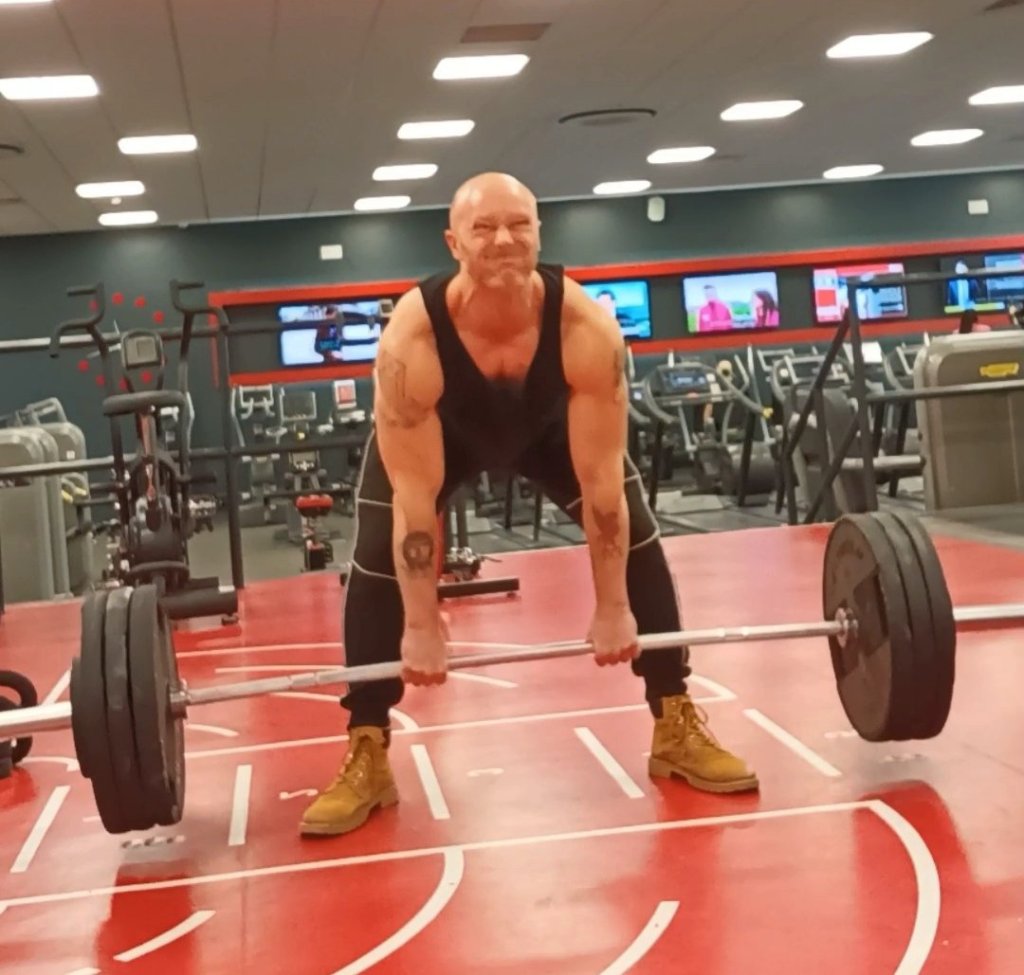
But it’s worth explaining my relationship with deadlifts if you’re not already aware. Basically, deadlifts saved me from a life of back pain, poor mobility and quitting playing all the sports that I love. And because of that I believe that it sorted out my mental health too.

A decent footballer as a teenager, I knew that I might not be able to continue playing the game I love with a passion due to the terrible sharp pains that I would get. This would sometimes be during a game but I could garauntee the pain for two or three days after the match. Playing against other 16 year olds who could train harder than me, move better than me and recover better than me was demoralising. My skill and application was there, but my back and the sharp pain that would drive down my butt and leg was excruciating. I simply couldn’t compete against them. They were fit kids. And even though I were the same age as them, I felt like an old man.

I quit playing football when I left school. Cigarettes, alcohol and the opposite sex didn’t give me extra back pain. That became my new sport. But the pain remained. Trying to put socks on, especially in winter when my back seemed to seize up more, was a task in itself.

As a young man in my late teens I began going to the gym often. I realized that I could still remain active by doing controlled movements, my running (which was always impressive in school competition) was still good and I found a zest for life again outside of nightclubs. This even lead me to want to join the army. I wanted to put myself up against their physical demands. I also needed a career and I was drifting at the time. A weekend at Penikuik barracks saw me fly through their trials. With hundreds of applicants I was one of the first to finish the cross country and I came first in the sit up bleep test. My competitive spirit meant that I’d probably be still completing the sit ups now had I not been told the test had finished.

However, in the back of my mind, I knew that the physical demands that I put on my body would catch up to me. On the Sunday evening, trying to hide the limp that accompanied the back pain, I walked into the Major’s office. He slid the contract in front of me. I had passed and he wanted me to sign into the army. I was desperate to sign. I didn’t know what civilian life had in store for me. I felt secure in army life. I had a purpose. My back pains had other ideas.

Back at home I managed to get a good, rewarding job within the Social Services, I continued with my gym training and I started to enjoy life. I thought that I had to live with the pain so it didn’t frustrate me like it once did. I just had to get on with it. But my training was all wrong. I know that now. The lure of the aesthetic training like my friends were doing was strong. I wanted the biceps, pecs and abs. This made me feel good, but it never addressed my injury. In fact I added to my injuries by chasing the aesthetics.

I began talking to trainers and gym owners. My mates were decent lads who trained hard but I had to ask professionals for advice. It took some time to convince me that deadlifts would help me. My thoughts were (even though it was me who approached them) that they just wanted my money. Also, just watching someone perform a deadlift triggered the shooting pain down my leg.

Over time we worked on my form. I got stronger. I built muscle in the affected areas. I moved better. After a year or two I could stand out of a chair without a grimace. I could put my socks on. I even started kickboxing. Surely that would cause my back pains to start again? I started playing golf. After my first tee off I fully expected to feel pain. But no. It felt good. Even just 3 years ago I played a full football match for the gym where I train. In my 40’s, I managed something that my teenage self could not physically do…play football and recover without pain.

Football in my 40’s was something I never would’ve believed

Deadlifts still play a big part in my training. I know that my back injury is still lurking and ready to pounce. During the recent lockdowns when the gyms were closed I could feel the niggle was there. But the muscle that I had built over the years weren’t going to let me down.

I do exactly the same now as what those trainers did for me. I advise others on how to overcome their injuries, I enable them to perform exercises safely and productively and they become stronger and happier people. That’s my aim, because that’s what happened to me. Living life with pain is demoralising. It doesn’t just destroy your physical capabilities, but it affects the mental health. At times I felt useless.

It doesn’t really matter the age or background of a potential client. Within an hour of a consultation or a 1-1 session with me they will have performed some sort of deadlift. It could be a 20 year old wanting muscle hypertrophy, a 40 year old with back pain or an 80 year old trying to keep their independence. They will perform deadlifts with me. Weights, rep ranges, set and rest periods might differ, but they will be deadlifting.

Thanks for reading guys. Take care.

Shay PT.

Dirty Fries

Scarborough is a small town. It’s the sort of place that if you go into the town centre you will probably know somebody to say hello to. Train in a gym with almost 3,000 members and the chances are that I will definitely see somebody I know.

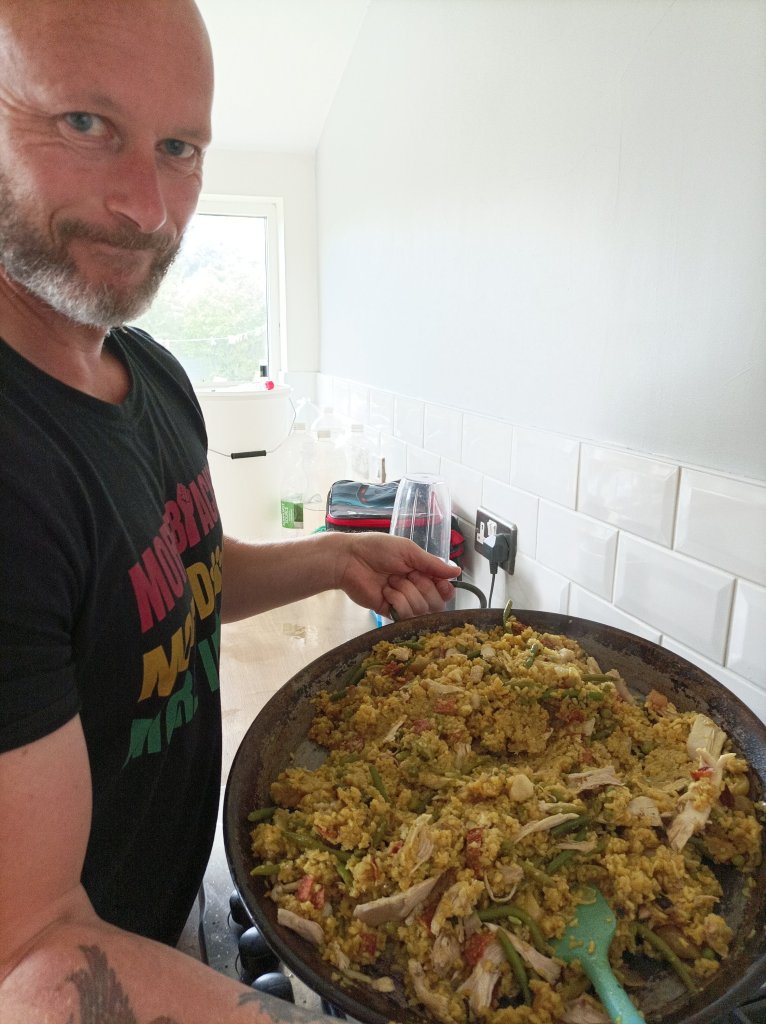
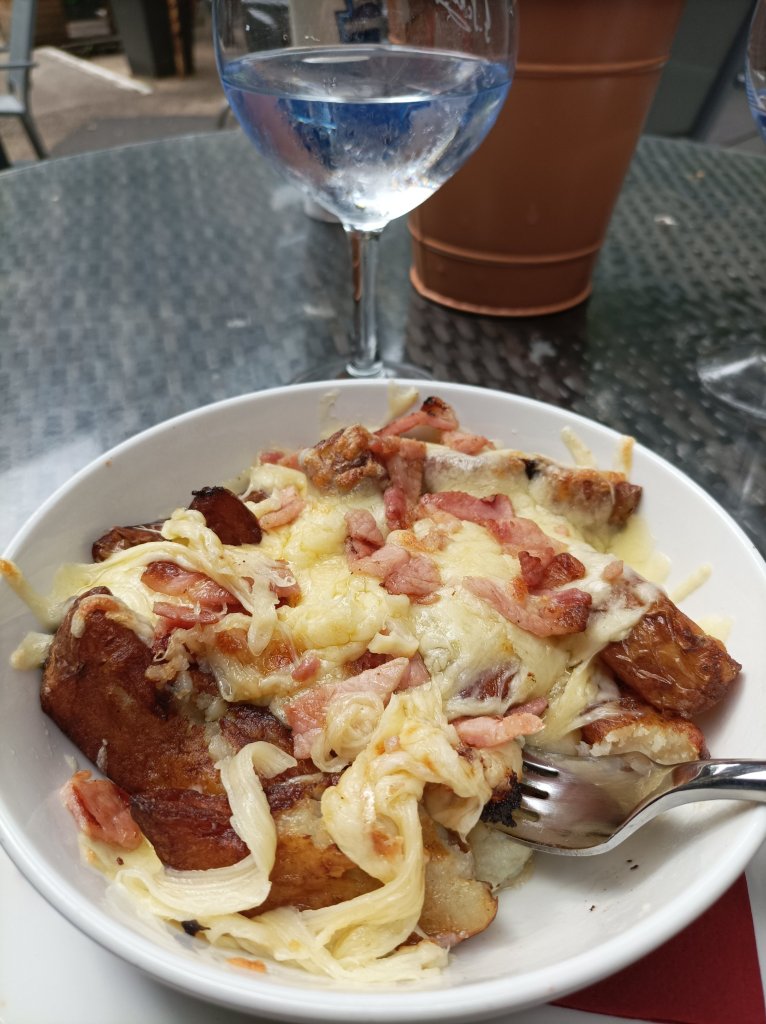
Had they seen me in a bar this lunch time they would have found me with a large gin and tonic and some ‘dirty fries’. When I ordered them I imagined some chips with a sprinkling of grated cheese. What I actually got was a bag of potatoes, a pack of bacon and a block of cheese squeezed into a good sized pasta bowl. This wasn’t the amuse bouche that I had visioned in my mind, but it was one my belly was happy to try.

I wished a client of mine would’ve walked in as I slurped the stringy melted cheese into my mouth. If only to keep proving my point. I keep reiterating my point regarding food and weight management…eat it. All of it. If it fits your daily calories, eat it and enjoy it. But there’s a slight caveat. Just one little rule.

If you aren’t going to cut out the low nutrition foods, then you must keep the nutritionally dense foods high. Whether you are very active with fitness goals or more sedentary, keep the nutritionally dense foods high.

You see, I don’t believe in banning food types. If you want to stop off at a bar and order a truck full of McCain’s Chips then do it, as long as your  weekly macros are met. Yes, weekly. Some days your carbs might be up, but if you keep the nutritionally dense and high protein foods a priority over the course of the week then your calories and macros will average out. Judging your Journey on just one day will serve you no purpose.

I knew that I could eat some greasy cheesy chips today. I count my calories.

Now, if you read the newspapers you might gasp in horror at the knowledge that I count calories and I also endorse it for others. The one exception being anybody suffering from an eating disorder. In which case they don’t need me, they need professional medical support.

But the media seem to be very negative towards counting calories. Which is interested, because they print lots of other methods such as 5:2, Intermittent fasting and promote large dieting companies who count ‘syns’.

My conclusion is that counting calories isn’t sexy. It isn’t a buzz word or trending on Twitter. And if it isn’t a large company paying a newspaper to advertise their diet or a book publisher paying them to flog Michael Mosley’s new fad diet, then it gets demonized as wrong.

If I go into a shop and see something that I want to buy I will check my bank balance before I purchase it. That’s just simple accounting.

If I go to the carpet fitters I will take the measurements of the room that I wish to have carpeted with me. That is just common sense.

If I take my son to buy a pair of shoes I will ask the assistant to measure his feet first. Efficient.

And if I want some dirty fries washed down with a gin and tonic I will make sure that my meals around this tasty treat are low in calories and high in nutrition. No anxiety or concerns.

I get what I want now and again and I also get to keep my body on track with my fitness goals. And a part of my fitness goals is my mental health, therefore stressing at banning all of the foods that I enjoy is not something that I consider healthy. I have a good relationship with food. I don’t want to feel anxious about being in a social environment and seeing half of the food on the menu to be cancelled for me.

I don’t develope programmes or challenges for my clients if I wouldn’t do it myself. So occasionally doing my own Balanced Plate Challenge works for me. My clients succeed, why shouldn’t I enjoy my own methods too?!

And so it’s time to make my smoothie. With plenty of spinach and fruit in there my body will still know that I love it. And it might even get another bowl of dirty fries again next week!

Fitness Auditing And Why We Need It

You have this cool programme that you developed/got off YouTube/received from a trainer about 6 months ago and it was fantastic.

It excited you, gave you a new purpose in the gym and got you some kick ass results. For the first time in a long time, you had a new belief in reaching your goals.

It was amazing. WAS.

But now, 6 months on, it all feels like a slog. The thought of going to the gym isn’t exciting you any more like it did. The results are slow if any at all and you’ve started to feel the injury niggles from repeating the same old exercises. Day in… Day out.

>sigh< “here we go again” you say as you enter the gym doors.

You start to blame yourself. Are you tired? Is your mind just not in the game anymore? Is it just an age thing? Are you eating right?

The odd day off creeps in where you would usually have gotten to the gym. A few mates are having a pint after work. It’s tempting. The gym bag gets thrown back into the boot of the car. Or the early morning start where you once jumped out of bed to get a workout in before work has gone. Now the snooze button seems like a better option.

If any of this sounds familiar then the chances are is that your programme has run its course. I’d estimate that it’s probably a good four months out of date.

Not only does a progressive programme last over months and in some cases years, but keeping a check on the finer details like rest periods, weights, reps and sets becomes essential to a trainees goals.

If you have a workout plan that you repeat every week without a direction beyond that plan then it will become stagnant. You become demoralised and you give up. Or you become demoralised and injury gives you little option but to give up.

Internet workouts perplex me. They appeal to people because they are free. I’ve been there. The free option was like finding a cheat sheet. A short cut that didn’t cost a penny. And the guy posting it was jacked. ‘That’ll be me soon,” I thought.

Programming isn’t a one size fits all. And if you are lucky enough to find something that works to begin with, then eventually, without auditing, you will be forever treading water. It will become a tired workout. You’ll become tired.

Assessing your progress every 6-8 weeks should be as much a part of your training as perfecting your squat or your bench. Knowing how and when to tweak your workouts is a skill. I only acquired this skill when I was studying for my PT qualifications. Since then I’ve written thousands of programmes.

If only I’d have known how to audit my fitness 20 years ago when I was at my physical prime. In truth, I didn’t have a clue back then.

I don’t blame myself or anyone else for not auditing and following a progressive programme. There’s so much confusing information out there and, as I say, it’s a skill. A skill that I learnt and became qualified in.

Why wouldn’t you try out free workouts online? After all, I wouldn’t trust most PT’s in mainstream gyms anyway. I honestly can’t tell if they’re giving the gym member an induction or a training session, such is the lack of passion in their approach.

But very good PT’s do exist. Ones who are fully self employed are generally 100% committed and knowledgeable to their clients. They have to be. If they fail then nobody will pay them. If they don’t get paid they don’t have a job. I literally go to sleep at night thinking about programmes or tomorrow’s sessions. I have to. I’m the one who will help my clients audit their workouts. I need to know every tweak for over 20 programmes at any one time.

The Bottom Line

Any new workout usually works for a time. They often work muscle groups that haven’t been worked before and muscle soreness feels intense but satisfying. But the body adapts and with it so must your programme. How you adapt it is what will keep getting you the results.