The Test

My eldest came out of the school gates looking very pleased with himself. He ran towards me waving a piece of paper shouting “Daddy daddy, I got 10 out of 10!”

At the beginning of the week he had been given ten words to learn for a spelling test today. As well as my wife and I going through these words daily and his teacher teaching them he was well prepared for a test.

Schools, higher education and any learning environment have a similar system. We learn, practice and revise until we are tested on the subject. When you leave education, however, I find it a very different experience. Life gives you the test first, and then you learn the lesson.

Imagine my son having the test first and then learning the words after? It seems unfair, right? Ah, and yet our experiences in life are full of these examples.

What I try to provide as a Personal Trainer is a platform in which to learn, develop and achieve. An individual’s fitness journey has, admittedly, moments of enduring the test before knowing the lesson. In some ways that helps us deal with the challenges of success and failure. If we knew how to do it we’d already be doing it, so learning from life’s tests is a part of the process. And the process isn’t a smooth, linear path.
My job is not just to bask in the glory of a trainee’s goal being achieved like a PB or a weight loss target, but it is to navigate us through the difficult times. That’s not easy to do on your own. It’s doubly difficult when, even though you’ve put the hours in and worked with a plan in place, things still don’t go smoothly. Yes, you get given the words, you revise like mad, and you don’t always get full marks in your exam.

The problem is when you get given the words to learn, you revise like mad, don’t pass the exam and you give up. A few months pass by and again you get given the words, work hard and study but still don’t quite make the grade. Before you know it you are a year older and you are still stumbling through the tests, quitting, starting again…the cycle continues.

This, for me, is where the role of a coach is vital. There’s plenty of people that will count your reps on a rocking ab machine. But a coach will provide knowledge, technique, expertise, experience and the ability to get you to your goals. Even when the test becomes tough, they know what to do to get you through to the other side.

My son might only get 9 out of 10 next week, even if he works hard in his revision. But that in itself is a lesson. How I react to it and how he dusts the disappointment off is the difference between his future success and failure. If he learns how to deal with that disappointment it becomes even more important than learning the word he got wrong.

Life is ironic. It takes depression to know happiness. It takes stress to understand calm. It takes failure to recognise success.

Click on the link below if there are any of my services that you would like. My training app is free to enter if you would like more information.
https://www.trainerize.me/profile/nevergiveup2/?planGUI

Understanding Muscle Contractions

Understanding muscle contractions are important if you are on a fitness journey that includes muscle growth, strength, fat loss, mobility and sports specific training. Once you understand the basics of muscle contraction I am convinced that you will speed up your ability to meet your goals. And I say basics because you don’t need to be a fit pro, a scientist or professional athlete to know your own body. Hopefully a little bit of reading of articles that leave out the jargon can help you to understand. So let’s jump straight in!

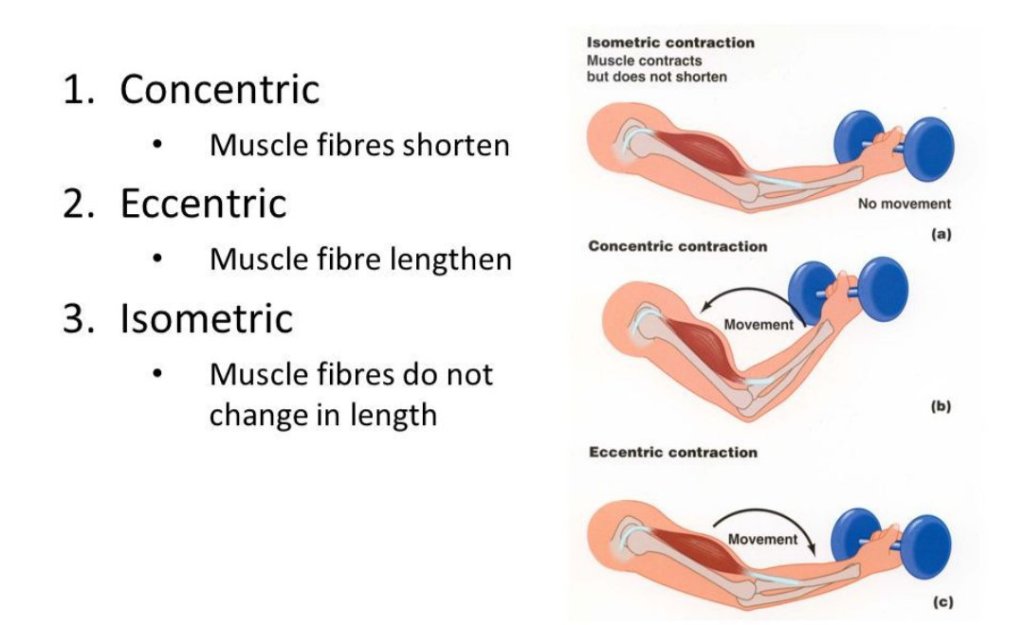
Your muscles perform three types of contractions when you exercise.

* Concentric

* Eccentric

* Isometric

A concentric movement shortens the muscle to force an object to move. Think of the bicep curl. As you force the weight towards your shoulder your bicep shortens to create a squeeze.

An eccentric movement lengthens the muscle and stretches the muscle fibres. Imagine the lowering of the weight during a bicep curl or the squatting part of a squat or leg press. This phase of the rep is regarded as the part that induces the most muscle growth as the muscle fibres are fully activated in lowering a weight under control. This is where delayed onset of muscle soreness (DOMS) are most like to occure and specific eccentric training is a popular training phase for many athletes.

An isometric movement is a contraction that does not require muscle to lengthen or shorten. Think of a plank or wall sit. There are no reps that use concentric or eccentric movement. These are particularly useful when sparing the joints from discomfort or injury but still strengthening the muscle.

Developing an understanding of these muscle contractions will give you a greater appreciation of time under tension (TUT). Powering through 12 reps in 15 seconds is fairly straightforward. However, this is not the best way to train. Once you imagine the muscle  lengthening and shortening through repeated exposure to the load of the weight then you can create a clear ‘mind to muscle’ pathway. You begin to think about each rep rather than just move a weight from A to B and it might need you to cut out the ego lift and go lighter. Just because you’re benching 100k doesn’t mean your muscle has gotten much out of the process. If you aren’t in control of your muscle contractions then your target muscle is unlikely to feel the need to change.

I ask my online trainees what their rate of perceived exertion (RPE) is after each exercise. As I’m not physically stood next to these clients I cannot see how easy or difficult they found the activity. If they are rating their workout at around 5/10 I would ask them to slow the tempo of each rep before adding more load in an attempt to challenge them to a high exertion level.

TUT and muscle hypertrophy

Earlier I mentioned time under tension as a significant factor in muscle development. Longer TUT will create a more challenging experience and much more rewarding for muscle hypertrophy. If I were to learn French for ten minutes a day I would get much less knowledge of the language than if I were to learn French for 30 minutes.

So, if I were to complete a set in ten seconds I would get much less chance to elicit muscle growth than if I were to complete a set in 30 seconds. Every rep and set is an opportunity for muscle growth. Moving a heavy object is easy. Thinking about it requires muscle engagement.

I hope that this article helps. I have tried to remove unnecessary jargon as I believe that resistance training should be enjoyed by everyone and we shouldn’t need a physiology degree to do it. And not just do it, but do it to ensure you get the benefits from it!

https://www.trainerize.me/profile/nevergiveup2/?planGUI

Repeat, Repeat, Repeat

My eldest must think I’m obsessed. At 8 he has certainly got a natural talent for football and he is always keen to have a kick about in the garden in-between matches and team training. He will often just want to take shots at me which is fine as I firmly believe that doing the bits that you enjoy the most is what keeps us interested. But I do try to get him to do the bits that aren’t really coached yet at his age.

Throw ins at under 8’s is a classic example. A throw in is usually a foul throw (which the ref allows due to their age), the length of the throw is week due to poor technique and the decision making in who to throw it to is questionable.

Passing is another example. Instead of trying to ‘Messi’ it past 5 opposing players in his own penalty area (8 year olds don’t like to pass) I want him to make good, confident decisions on when to pass and create openings.

To master these he needs coaching and, although I’m not an FA coach, I do know how to coach.

One piece of advice that I can take into any type of coaching, expert at it or not, is to repeat the process over, and over, and over, and over, and over again. And when you think you’ve mastered it, repeat it again.

We move on too quickly. Either because we think something is accomplished or because we haven’t discovered a purpose for continuing.

https://www.trainerize.me/profile/nevergiveup2/?planGUI

My eldest also brings home words to learn for a spelling test at the end of each week. It’s the same process. Tying his own show laces, eating foods that are nutritious but he doesn’t yet like the taste of, crossing a road, learning French all need repeating to be good at it. Despite some freakish ability by some people to have a natural talent at something, the rest of us have to work bloody hard to be good at it. And even then, don’t think that those with a natural talent don’t practice hard at what they do. They do, but what they do is just their knack. Their ‘thing’. We’ve all got a ‘thing’, we just need to find it. But if we are to persue different interests or to progress in certain areas then the chances are you will need to practice like mad to be any good at it. My son has a tendency to move on too quickly. Perhaps most kids do. Just because he has read his ten words for his spelling test doesn’t mean that he knows them.

I’d love to play guitar. I’ve even bought a couple in the past that look great as ornaments. Actually playing it will require time, patience, practice and repeating. I don’t do that. My excuses are time, my natural abilities aren’t good enough and getting blisters on my fingers. I know that I would be able to play a little if I stopped with the excuses. Maybe I’d never be Ed Sheeran, but I would learn the chords and be able to enjoy playing the guitar and far quicker if I hired a teacher.

My excuses for not playing guitar are exactly the same excuses that I hear on a daily basis in the gym.

Time, not good enough and injuries.

But me playing guitar or not isn’t affecting my health. Learning the chords won’t help my body fat percentage go down. Breaking into the intro to Smells like Teen Spirit won’t make me look and feel better in my clothes and my mental health won’t be any clearer if I can play the theme tune to Coranation Street. So I haven’t found my ‘why’. I haven’t found my purpose to playing guitar, therefore my motivation for doing it, as great as it would be, just isn’t there.

Passing a football through cones isn’t as exciting as smashing a ball into the top bins past his dad, but my son will develop and understand the game much quicker. And if he sees his work pay off on the pitch in a game then he will want to practice even more. He will want to repeat the process that allowed him to make the pass, shot, dribble or throw that won the game. Hopefully he discovers his reason for playing football. It might make him feel good. He might enjoy being part of a team. He might enjoy the buzz and excitement on match day or he might know how important exercise is to his physical and mental health. As long as he knows why he keeps going back for more he will keep progressing.

For best results I can’t help repeating certain movements for my clients to perform. Yet despite the repatition it is important to keep the reason for doing it fresh in their minds and also creating new challenges.

Yes you can squat, now can you squat deeper?

That is a good bench press, now create a slower eccentric movement for time under tension.

You can perform 10 reps, now do 12 reps.

Exactly the same for my eldest at football. You scored with your left foot, now can you kick the ball with you right foot. It is still football. It is still repeating the process, but now we have a new challenge to consider. And it will take time. Practice and time. Lots of it.

Remember your reasons for doing something. If it is so important to you then you will continue the process and you must repeat, repeat, repeat until your body and mind knows exactly what it is that you are wanting from it.

If it’s important enough to you then you will achieve it. You’ll never give up!

The Pareto Principle

Although Vilfredo Pareto didn’t commit his work to the perfect exercise programming he did create a power law which developed the concept of quality control which has some significance in the fitness world. This power law, also known as the 80/20 rule, is explained in a number of ways.

In his work, Cours d’économie politique, Pareto showed that 80% of the land in Italy was owned by 20% of the population. He then discovered this to be true in many countries within the western world. In business management it is an adage that 80% of sales comes from 20% of clients. In taxation it is found that as recent as 2018 (USA) the top 20% of earners pay 80% of Federal income taxes. Microsoft noted that by fixing the top 20% of reported bugs, 80% of errors would be eliminated. Studies also find that 20% of patients use 80% of health care resources. In the USA The Dunedin Study founds that 80% if crimes are committed by 20% of criminals.

Yet perhaps, like with all research, theory and principles there are always exceptions. And in an amusing kind of way, 20% of us might subconsciously be using the Pareto Principle 80% of the time! Indeed, how true is it that you have 50 apps on your phone but only use around 10 of them most of the time? I have ten takeaway menus in my kitchen drawer but I will only use two for about eight out of the ten occasions that I order a takeaway.

The roads in your town that you drive on. The TV channels that you watch. The websites that you visit and the rooms during your waking hours in your home, roughly, will be spent on 80% of your time in just 20% of them.

So what is the significance of the Pareto Principle in our exercise routines? Already I have noticed that 20% of the gym members are spending 80% of their training time doing it correctly. But what is the correct way? How can we optimize our time to produce as much as possible from our exercise routines and hit our goals? Maybe this principle might help.

So we should expect 80% of our results in the gym to come from 20% of the work. Conversely, the remaining 20% of our results to come from the remaining 80% of the work.

This means that we need to learn, adapt and master the 20% of the work and THEN create a structure for your remaining 80%!

I can’t help you with the 80% of your time (unless you ask and then I can develop a kick ass training plan specific to your needs) but I will tell you the core exercises that you should be including whether it be for hypertrophy or fat loss. These should be your 20% to gain 80% of your results…

Walking

Walking shouldn’t be underestimated. In my previous articles I have discussed the importance in getting outdoors and walking. Not only can you burn calories if that is one of your goals, but it helps our cardiovascular system, brings us closer to nature, allows thinking time and, if you are walking with a friend or partner, enables good conversation away from normal life. I’m a treadmill Dodger, I admit, but I do enjoy walking which, not only does it tick the right boxes as above but allows me to crack on with the rest of my 20% in the gym.

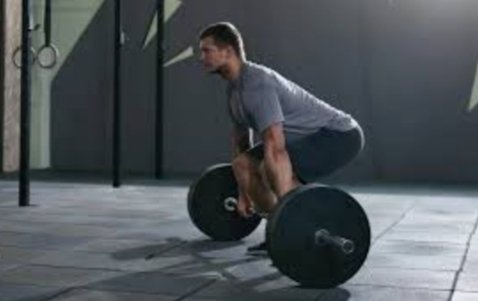
Deadlifts

One of the greatest compound exercises you could ever begin to master. It is difficult yet very rewarding. It is so much more than a leg exercise or indeed a back exercise. To execute a perfect deadlift, every muscle needs to work hard. And it isn’t just a cardio machine that gets the heart racing. Give me 10 reps for 5 sets at a medium to heavy weight and tell me that you haven’t worked up a sweat! There are lots of variations to get to grips with too, so you’ll never get bored.

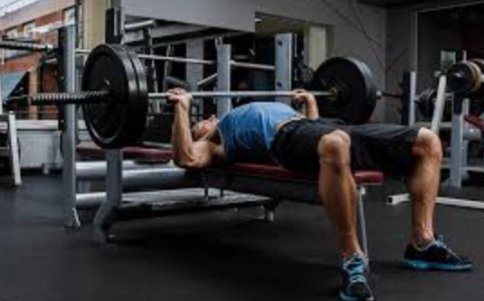
Bench Press

Again, this is a compound that should be incorporated into a complete workout routine. Known for working the chest (pecs) it is doing it a disservice to label it as such. The best bench press form actually comes from the drive from your feet and into your core before your push. Variations can be done by using dumbbells and different bench angles and isn’t just for men wanting impressive pecs! Females should perform them too! Also, depending on your weights and reps this will target your triceps and shoulders effectively.

Squats

With a barbell, with kettlebells, with dumbbells, with a weight plate or body weight, squats could possibly be the greatest exercise to master of them all. You can perform them anywhere! In the gym, at home, in the office or waiting for the bus. Great for your legs, of course, but your core will need to work hard for your perfect form.

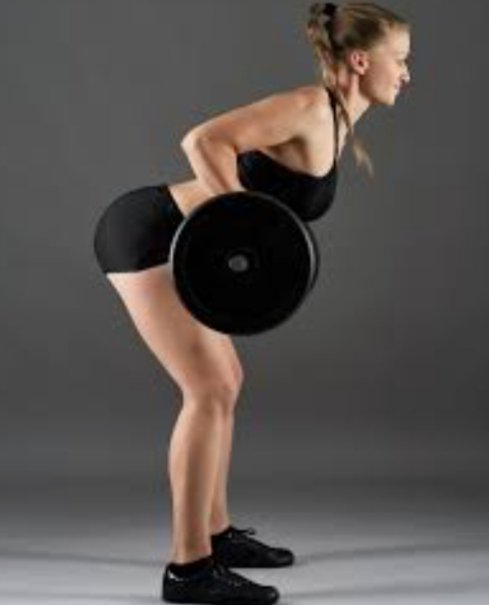
Rows

Traditionally performed as a bent over barbell row, but can be adapted to be done with dumbbells and kettlebells with both hands or just single handed. In my experience of teaching these techniques it is possibly the one that is done incorrectly. The back muscles seem to be tough muscle groups to target without good ‘mind to muscle’ technique, therefore the biceps tend to do too much of the work without the proper scapular retraction needed. However, this is part of your 20% for the 80% benefits so I’d start getting used to them!

Isolation exercises are often used too often and too early within a workout. By isolating smaller muscle groups we don’t elicit muscle growth, hypertrophy, fat loss or strength in the way that we intend to, which can create frustration with our goals. The compounds suggested above should be your staple, go-to exercises, but weights, rep ranges and sets will vary depending on individual goals.