Are Meal Plans Any Good?

I don’t know anybody who doesn’t have moments of sadness, anxiety, general pissed offness or, in many cases, depression. At some level, we all suffer from these emotions.

Out of all of the people that I have ever known to be in either a low mood or in the full depths of depression around 99% of these people will, to some extent, lose control of their eating habits. A busy lifestyle, work, family stuff, bills, illness, body image and the curve ball that everyday life throws at us can all contribute to that.

And this is the one reason why I don’t understand prescribed meal plans created by Personal Trainers to their clients. These meal plans can range from £50 to thousands of pounds in my experience. I’m open to hear from anybody who has had a positive experience with a meal plan that somebody else has created for you. I don’t want to dismiss it completely. I just don’t get it. How can anybody fully comply with a meal plan?! Unless you’re an elite athlete and it is your job, I don’t see how you can.

https://www.trainerize.me/profile/nevergiveup2/?planGUI

Here are my top concerns with meal plans and non compliance…

1. Your friends decide to go out for a meal and invite you. Will the restaurant’s menu include the delightful Baked chicken tenders with five cherry tomatoes, a quarter cup of diced cucumber and one teaspoon of light French dressing which is what your PT has told you to eat tonight? You think not, so you decline their offer.

2. You’ve been to the gym early this morning and worked hard in your job up to lunch time. You’re hungry as you have used up a lot of energy. Yet the one large pear followed by the one large boiled egg worth 210 calories in your lunch box doesn’t really appeal to you. You eat it but your belly is left rumbling for the rest of your shift.

3. You take your fourth Jacket potato of the week out of the oven and think, ‘I just can’t face another one!’ And the tuna with light mayonnaise is becoming a chore too.

Each scenario adds to a little bit more resentment and, ultimately, lack of compliance. You keep crashing. You feel demoralised. You begin to wonder what the point of the whole process is. You’re unhappier than before.

I have found that to reach weight loss goals we have to identify why it is that we think a meal plan needs to be put in place. I haven’t met anybody who is overweight not know that an apple is better for them than a bag of crisps. Or a spinach salad with light dressing  is better than a pizza. I believe that we over eat or choose  less nutritionally dense foods due to our emotions. The strongest food cravings often hit at our weakest point emotionally. We can find comfort in food several times a day, consciously or sub consciously.

And without doubt the fast food chains and endless promotions on low nutritional food are always on hand to give us a little ‘pick me up’. The temptations are everywhere, but will they go away just because Zoe from TeknoGym wrote you a meal plan? If I’m entirely honest I’d be more inclined to get a pizza slice from Greggs than face another open face waffle sandwich, just to piss Zoe off.

You need to stop labelling foods good, bad, treat or syn. Your relationship with food will only end up being a negative one. And rather than having a fixed meal plan written by someone else, you can start developing a plan that works for you. Batch cook some of your favourite sauces, make a list of the nutritious foods that you should be enjoying often but make sure that you are still allowing yourself the foods that you can enjoy less often. Identify your triggers. If you know that a stressful incident at work or at home is followed by eating a family sized bar of chocolate then replace it from your cupboards or desk drawer with either something sweet but smaller or, if you’re feeling ready, replace it with carrot sticks, fruit, nuts or seeds.

Little changes make a big difference. These little changes are far more effective that one massive overhaul of your diet. You don’t need the perfect diet. You want the one that works for you in the long term.


Magnifying Glass

Have you ever walked into a fitness class and wanted to just turn around and go home again? The participants all looked keen, fit and ready for an hour of Burpees. Have you ever felt out of your depth going into a fitness class?

I have…and I was the bloody instructor!

In my early days as an instructor I would walk up to the class hall repeating in my head,”I’m the instructor. I’m the man! I know what I’m doing!”

And of course, I did know what I was doing but it didn’t stop the nerves. It didn’t stop me from scanning the room and thinking, ‘Most of these are younger than me, they look fitter, they all know each other.’ Lots of fitness class attendees are hardcore who book their classes early, stand in the same place with their equipment at their feet, ready for the instructor to enter. My first class felt like I was walking into a western saloon bar. The doors creaked open, the music paused, everyone stopped talking and looked towards me. Only it was nothing like that. It was my own anxieties playing out a completely different story.

I have learned to take away the magnifying glass when I teach a fitness class now and I no longer have these insecurities. The nerves will always be there. If the adrenaline stops I might as well as look for a different job. I need the participants to feel my adrenaline. That’s the exciting bit.

But this magnifying glass was something that was with me in every aspect of my life. Everybody else had a better life than me. They were happier, better dressed, had better jobs, more money. And when social media came along and I looked up my old pals from previous jobs and school…you guessed it, they were all more successful.

I had to do something about how I felt about myself. If I were going to be a success without comparing myself to anybody else then I needed to address this magnifying glass. And by success I mean a good dad and husband, a job I enjoyed and somewhere to live and prosper. Success is not a jet set life to me. If our potatoes grow in the garden this year that is a success story!

Our magnifying glass makes anything appear amplified. I often saw everything in anxiousness and fear but now I look for hope, happiness and confidence.

Poet Alexander Pope wrote, “The greatest magnifying glasses in the world are a man’s own eyes when they look upon his own person.”

I stopped looking at everyone else and looked at me. My own dreams, my own aspirations, my own successes and my own life. The magnifying glass is always there, I just need to know where to direct it.

If you are apprehensive about entering the gym or going to a fitness class for the first time, put the magnifying glass firmly on yourself and focus on how fabulous YOU are.

https://www.trainerize.me/profile/nevergiveup2/?planGUI

An Apple A Day…

I wasn’t really encouraged greatly to eat my fruit and veg as a kid. It was often there on my plate but there were never any reason to eat it. The chips and sausages or ice cream for dessert was always much more appealing.

But during the 80’s the information that we received was very different to what we get now. And although we can still get incredibly misleading information these days, one thing that is a fact according to just about every piece of research that has been done on the subject, is that fruit and vegetables are extremely good for us.

And yet a recent survey of England said that just 28% of adults were eating the recommended fruit and veg a day, which is 5 a day in the UK and in many other European countries this has gone up to 8 a day. Even more depressing to me is that the survey came back with just 18% of children aged between 5 and 15 were eating 5 portions a day in England. The survey was done in 2018 by the NHS. With an increase in the cost of living and families struggling to feed their kids in the UK today, I can’t imagine that those figures have improved.

Indeed, with the meals that are on offer at my kids school which, I must add is an otherwise fantastic school, I know that they’re going without one portion of fruit or veg for at least 6 hours of the day on most days. Outside caterers are in charge of this and, like with most privatisation, I don’t have faith in a person centred approach.

But then we can blame school caterers, restaurants, supermarkets, media, the government or whoever else influence ours and our kids diets, but fundamentally it is our choice. Certainly for most families in the UK, despite the increase in the cost of living, we choose whether we eat our 5 a day or not.

If you have read my previous articles you might have gathered that I’m not a regular PT. Or at least I’m not like the influencers that want you to eat chicken and broccoli three times a day ‘for those gainz bruh!’ and I’m not in the gym training myself for hours or weighing out my rice from my Tupperware box.

I like kebabs, Greggs sausage rolls, wine, gin and tonic, takeaways and cheese. I have kids who like crisps, chocolate and chicken dippers. My wife and I enjoy meals out without looking at the calories column before ordering the main course. We are busy getting our kids ready for school while making breakfast, preparing our work schedules and picking up dirty undies and socks to go into the wash before we leave the house. That is real life. I’m lucky if I finish my coffee on a morning.

And that, I expect, is what most of my trainees do in their lives too. Life can be chaotic. Counting how many pieces of fruit and veg you’ve had might not even enter your head. And that was me. For years I didn’t really give it much thought. The token spoonful of peas would gatecrash onto my plate from time to time and I’d eat the odd banana. But being mindful of my diet was not a concern of mine. I trained hard so, in my eyes, what I saw in the mirror was all that mattered.

A few changing points happened to me which made me think very hard about my nutrition. Firstly, I met my wife. She is an excellent cook and cooking together became a part of our evenings. This I would suggest to anybody. Learn to love cooking. We don’t have to be Jamie Oliver. Just spend a bit of time in the kitchen with the food you’re about to eat.

Then I went on my PT course to be a Fitness Instructor and Personal Trainer. The course itself was fairly basic in all honesty, but it gave me a thirst for knowledge. I wanted to know how our bodies moved and what each muscle was called and what it did. I wanted to understand how our bodies function and survive and I studied our bodies need for the right nutrition. I still do. I don’t know it all. I never will. A good PT will sometimes tell you that they don’t know, but will find out when you ask them a question. A poor one will feed you any old shit for them to look clever and gain a new client.

Lastly, I noticed a difference in my performance. Obviously in the gym, where I began lifting heavier and training for longer without having to stop. My PB’s went through the roof at 35 and they’re still going up at 43. But also, outside of the gym my mood was lifted, I became a better person and I had more energy for my kids. My body was feeling fuelled on good food. This alone made me like the foods that I had previously ignored.

But that didn’t stop me from enjoying the foods I liked before. I still like kebabs, Greggs sausage rolls, drink wine and gin and tonic, takeaways and I’m a sucker for stilton on a cream cracker. I have just become more mindful of how much of it I consume. I never banned these foods from my life. Had I done that I suspect that I would have resented the nutritious foods.

My youngest is a fruit and veg dodger. As a toddler we had concerns about his eating and the health visitor suggested that we feed him cake or basically anything that he would eat! His weight was low and we just had to try anything at all for him to get to a reasonable weight. It was a stressful time and even now he is extremely fussy. Our eldest will eat pretty much anything. For our youngest, however, each mealtime is like a bush tucker trial. We keep introducing new fruit and veg along with his favourite cheese wrap and now at almost 6 he is understanding the need to eat vegetables with his meals. He is still a small eater but he is doing much better. As long as he gets his cheese wrap he’s happy to eat the carrot sticks.

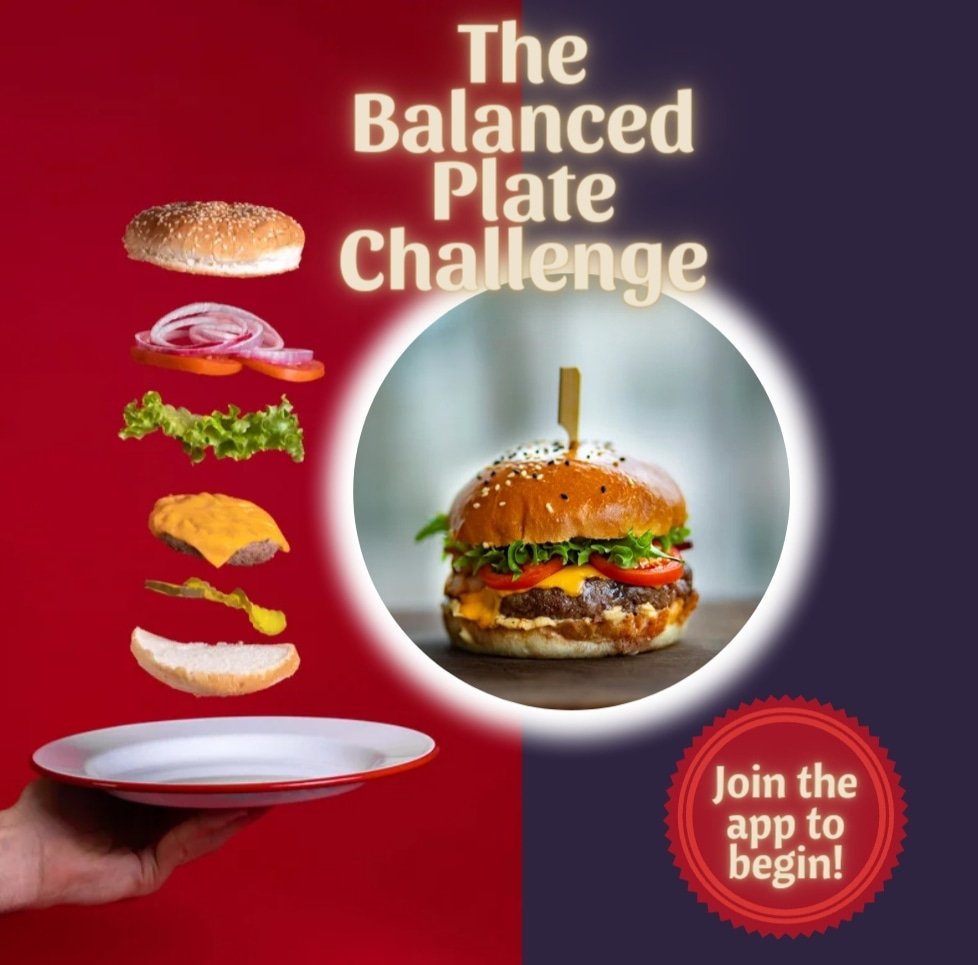
You shouldn’t underestimate how important nutritional food is, but that doesn’t mean that you have to ditch the Pringles either! Just find that balance and be more mindful with your food. The positive fuel is almost instant. Imagine what a consistent balanced plate can do for you?

https://www.trainerize.me/profile/nevergiveup2/?planGUI

Understanding Change

In my previous career I worked as a support worker for adults with learning difficulties and autism. This gave me an insight on human behaviour and how to understand people with a different perception to the world we live in.

One of their main challenges was to be as independent as possible despite being in a society demanding that they change. The organisations offering support to these people and many of their workers were fully committed to enabling their service users to live as independently as possible. They weren’t looking for everything to be done for them. They might have just needed some support and encouragement to live THEIR life in a strange ‘neurotypical’ world. And yet society can often want to change people.

The people I supported often got frustrated at certain rules and laws that had to be applied and demands that were put upon them to be more ‘normal’.  I didn’t change anybody that I worked with. I just enabled them to do what they wanted to do safely. Any positive changes to their lives that they wished to make would be encouraged by me and I would support them through it. That was my job.

Becoming a Personal Trainer was, I thought, an entirely different role and of course, on the surface it really is. It is only when you get to understand human behaviour that you begin to find similarities. And then all of that level of understanding comes right back.

“We keep trying to change people’s behaviours without a full understanding of how and why those behaviours arise”

The fitness industry does just as much damage as it does good. It is full of crooks and scammers who pray on people wanting to change their appearance. From miracle pills and drinks, bogus PT’s, weight loss coaches (failed PT’s), social media influencers, celebrity fitness DVD’s and Doctors spewing 5:2, Fast 800 and intermittent fasting all over the tabloids. We are bombarded with us changing how we look. Perhaps, in their eyes, we should all look a certain way. Or, let’s be honest, they want to make us feel so bad about ourselves so we pay them in a desperate attempt to be ‘fixed’ by them.

But they don’t know you or I. Why do I keep getting promotions for fat loss pills that work within a week (there’s before and afters to prove it) on my Facebook feed every day? Do they think I need it? Even as a PT who, for most days, feels comfortable in my own skin feels a little self conscious. How must the regular person feel?

I get miracle hair growth lotion ads too which is definitely more appropriate for my feed and yet I have no desire to have a full head of hair. I don’t want it. They. Won’t. Change. Me.

But they want my money. They want me to want to change my appearance.

And although my role as a PT is to exert change to an individual, it isn’t their appearance that I’m looking to change, even if that is what they come to me wanting.

“The journey isn’t so much about becoming anything. It’s about unbecoming everything that isn’t really you, so you can be who you were meant to be in the first place.”

Goals need to be set when you begin a fitness journey. But once you have set those goals you must put it in an envelope and safely store it away for a while. Today you don’t need it. Today, you just need to know what you have to do TODAY. Know it, plan it and stick to it.

My job isn’t simply telling someone to run faster, lift heavier or eat better foods. I need to know WHY they should want to run faster, lift heavier and eat better foods. If I am to support them on their journey, then I need to know their perception of themselves. I offer support but also realize that I cannot tell anybody what to do. My job is to allow the individual to makes their choices, embrace the victories and process the failures. It is THEIR journey.

I don’t change anybody that I work with. I just enable them to do what they want to do safely. Any positive changes to their lives that they wish to make is encouraged by me and I support them through it. That’s my job.

Starting Your Week The Right Way

Our days are often played out at a hundred miles an hour. When we begin our working week it speeds through so quickly we can look back and regret not having time to commit to your workouts, talk to friends, give your granny a call or prepare nutritious food.

We can make it slightly easier for ourselves if we plan our week. Going into a new week without a plan could be the reason why you don’t stick to a nutrition plan or an exercise routine. Here’s my top tips to get you focussed on your week ahead!

1. Batch Cook.

I would recommend dedicating a couple of hours a week to batch cooking. In this time you can make two or three different sauces that can be used at a later date. I have plenty of takeaway tubs that have been saved over the years that make perfect containers for this. It means that, even after a busy day, you can still create a nutritious meal with little fuss. Just defrost your sauce and add the veg, meat, pasta etc. My favourites are bolognese, curry, chilli and macaroni cheese.

2. Plan Your Workouts And Stick To It.

“I might go to the gym if I have time” usually means you don’t have time. Something crops up or you create a reason not to go, so you don’t get round to going. Make it easier for yourself. A workout doesn’t have to be in a gym. I often post 10 minute workouts on my training app and run programmes that work around an individuals lifestyle. https://www.trainerize.me/profile/nevergiveup2/?planGUI

Planning workouts with a partner or friend with similar fitness goals works because you are able to keep each other motivated and you are less likely to cancel and let them down. Hiring a good PT also adds accountability.

Also, never underestimate going for a walk. This might be the perfect way to start a fitness journey if you can plan and stick to regular walks throughout your week.

3. Avoid A Sunday Night Syndrome.

Sunday night syndrome is also known as anticipatory anxiety. It’s a very real thing to many people. If you get the feeling of dread as you think about entering a new week then try these techniques…

a) Practice meditation on the Sunday evening (or whenever your week is starting). You don’t have to be a Buddhist Monk or spiritual to be good at it. There are some very good apps or YouTube guides that will talk you through it. Just find a quiet place and think about controlling your breathing. Visualize the positives in your life and how these can contribute to your week ahead.

b) Look forward to an event by booking a treatment such as a massage or a spa. Having an enjoyable activity to focus on can get you over difficult times in your week.

c) Avoid alcohol before your week begins. Although you might think that a few drinks on your Sunday evening is relaxing and helps you cope with your anxieties, it actually has the opposite effect. Sleep can be more unsettled, your food choices are not as good and your emotions are in less control. Alcohol can lead to you believing that things are worse than they actually are.

4. Give your granny a call as part of a Sunday night routine. Once you’ve prepped your meals, put the lycra in your gym kit and had a moment of calm, not only will your granny appreciate the call but you will feel a whole lot better for doing it. After all, once you’ve heard about Derek from number 63’s dodgy hip and Maureen from bingos arthritis you’ll feel so much better about yourself!

It’s Time To Print Out The Score Sheets!

It’s that time of year again. The snacks come out, the score sheets get printed, the kids stay up later, the bunting goes up, I get to wear a blonde wig and we complain about nobody liking the UK.

It’s Eurovision time!

My wife and I were always an unlikely couple. I was the gym rat who went to mainstream clubs and watched football with my mates in my spare time. My wife had an alternative dress style, went to indie bars and loved arts and crafts. We met whilst working together and I don’t think our colleagues ever thought it would last. But we had a secret connection and it was our love our Eurovision.

Agnetha or me…who can tell?!

Ok, ok, maybe that’s not entirely true. Our similar interests also included Japanese horror movies, Pearl Jam and Nirvana, pool and darts, food and Desperate Housewives (the American TV series, not just desperate housewives).

But whilst these interests have ebbed and flowed between us over the years, our love of Eurovision has grown. Maybe this is what makes our marriage complete. Well, that and our two kids. And food probably.

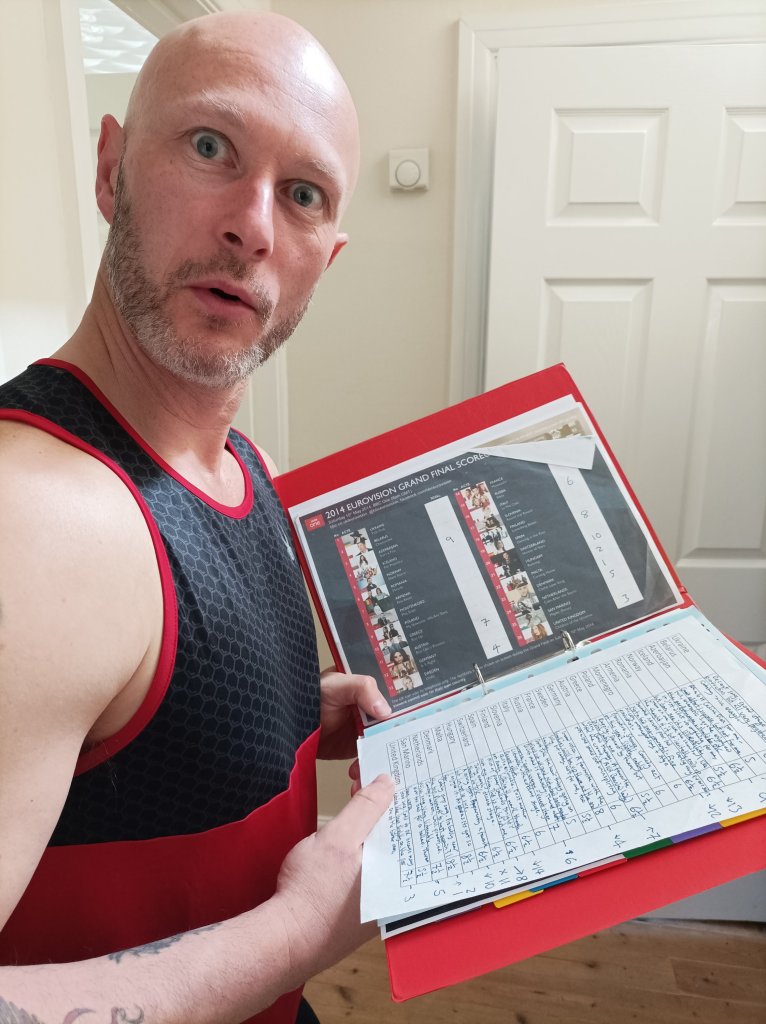
For the past 15 years we have scored every event of Eurovision. We even have a folder each with our score sheets in them. In the past we have had house parties on Eurovision night, but that was a disaster. Everyone wanted to talk over the songs as they mocked the artists. We dropped theses mates and found better ones, of course. But they can’t come around on Eurovision night. We won’t make that mistake again.

This year it will be an alcohol free event too. It just so happens our abstinence for the foreseeable has fallen on the date of Eurovision. It’s also fallen on the dates of the FA Cup final, the last couple of games of the Premier League and the Champions League final!

Ah well. We do like to prove to ourselves that we can go a few weeks without a tipple. We enjoy a drink at the weekend to unwind, but actually the feeling of being fresh and lighter from the habitual weekend drinking is very empowering. It’s our reset button, Eurovision or not.

So we will be dancing and wearing Abba wigs totally sober tonight, which might make us sound even more weird! But one thing’s for sure, with events in the world being as they are, an evening of countries coming together to stage the campest event ever is a very welcome sight.

The Test

My eldest came out of the school gates looking very pleased with himself. He ran towards me waving a piece of paper shouting “Daddy daddy, I got 10 out of 10!”

At the beginning of the week he had been given ten words to learn for a spelling test today. As well as my wife and I going through these words daily and his teacher teaching them he was well prepared for a test.

Schools, higher education and any learning environment have a similar system. We learn, practice and revise until we are tested on the subject. When you leave education, however, I find it a very different experience. Life gives you the test first, and then you learn the lesson.

Imagine my son having the test first and then learning the words after? It seems unfair, right? Ah, and yet our experiences in life are full of these examples.

What I try to provide as a Personal Trainer is a platform in which to learn, develop and achieve. An individual’s fitness journey has, admittedly, moments of enduring the test before knowing the lesson. In some ways that helps us deal with the challenges of success and failure. If we knew how to do it we’d already be doing it, so learning from life’s tests is a part of the process. And the process isn’t a smooth, linear path.

My job is not just to bask in the glory of a trainee’s goal being achieved like a PB or a weight loss target, but it is to navigate us through the difficult times. That’s not easy to do on your own. It’s doubly difficult when, even though you’ve put the hours in and worked with a plan in place, things still don’t go smoothly. Yes, you get given the words, you revise like mad, and you don’t always get full marks in your exam.

The problem is when you get given the words to learn, you revise like mad, don’t pass the exam and you give up. A few months pass by and again you get given the words, work hard and study but still don’t quite make the grade. Before you know it you are a year older and you are still stumbling through the tests, quitting, starting again…the cycle continues.

This, for me, is where the role of a coach is vital. There’s plenty of people that will count your reps on a rocking ab machine. But a coach will provide knowledge, technique, expertise, experience and the ability to get you to your goals. Even when the test becomes tough, they know what to do to get you through to the other side.

My son might only get 9 out of 10 next week, even if he works hard in his revision. But that in itself is a lesson. How I react to it and how he dusts the disappointment off is the difference between his future success and failure. If he learns how to deal with that disappointment it becomes even more important than learning the word he got wrong.

Life is ironic. It takes depression to know happiness. It takes stress to understand calm. It takes failure to recognise success.

Click on the link below if there are any of my services that you would like. My training app is free to enter if you would like more information.

https://www.trainerize.me/profile/nevergiveup2/?planGUI

Negative Reps

In an earlier article I discussed the three types of muscle contractions during exercise. Of course, all three have a huge bearing on how well we progress in our training goals of strength, hypertrophy, fat loss or endurance. But when it comes to those exercises that just seem to be a little too tough to master, I may have a solution…

…the negative rep AKA eccentrics.

Eccentric movement is the lengthening of the muscle. This is commonly seen as the lowering of a load such as bringing the bar to your chest in a bench press. Performed by experienced resistance trainers to work through a plateau or to challenge their muscle fibres, negatives can be a great inclusion in your training programme, especially for the exercises that you just can’t seem to master.

Pull Ups

Because the pull up is one of the most common exercises that I hear people say is one that they find extra difficult, I’m going to use this as my example. Pulling your own body weight up can be one of the most difficult exercises to do. A mistake that I see regularly with a pull up is the lack of core engagement. To an extent, you can get away with poor core engagement on many exercises. You won’t get the results that you want and injuries are much more prevalent in those who do not engage their core during exercise, but moving a weight from A to B is still possible. Performing pull ups, however, requires full engagement of your core to be able to do it. The best way to practice this is through negative reps.

Core Engagement

Your core can be described as everything but your arms and legs.

Some of the most common ways that I have heard in how to engage the core is to brace yourself as though you are expecting a blow to the abdomen. Another is to imagine squeezing an orange under your arm pit. And for your glutes, you just need to squeeze the hell outta those butt cheeks! Try them now… no-one is looking!

Negative Rep Pull Up

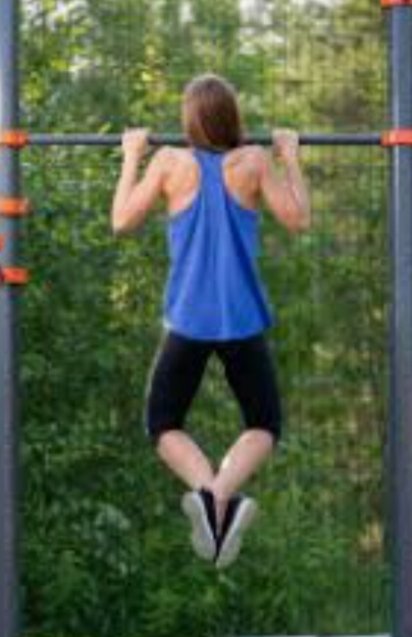
Standing on a box below a pull up bar, grip the bar and get into a flex hang position as pictured below. You should breath in at the point of your flex.

Hold this position for a few seconds (each practice you want to be able to hold for a little longer) and slowly lower yourself into a dead hang position (arms fully extended) whilst breathing in.

Legs can be controlled easier if your feet are locked together, as above. Flailing legs can distract you from your core brace, grip and breathing.

Once you have completed one rep you can come down from your dead hang and repeat the process. Practicing these negative reps will create grip strength, core stability, confidence and time under tension which will all contribute to your progression onto full pull ups. The only thing that will make you fail will be your lack of patience, so don’t allow it.

A pull up is a classic gym exercise that not only looks impressive it confirms your technical skills and your strength, but to get there sometimes we have to put in the hard yards. So my advice?

Stay positive, go negative!

https://www.trainerize.me/profile/nevergiveup2/?planGUI

Understanding Muscle Contractions

Understanding muscle contractions are important if you are on a fitness journey that includes muscle growth, strength, fat loss, mobility and sports specific training. Once you understand the basics of muscle contraction I am convinced that you will speed up your ability to meet your goals. And I say basics because you don’t need to be a fit pro, a scientist or professional athlete to know your own body. Hopefully a little bit of reading of articles that leave out the jargon can help you to understand. So let’s jump straight in!

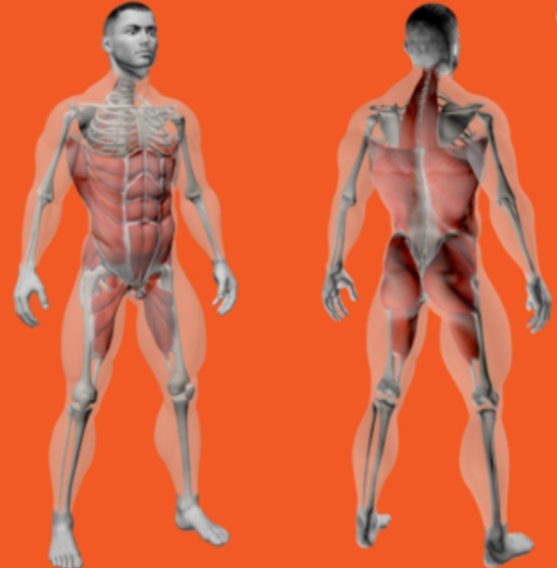
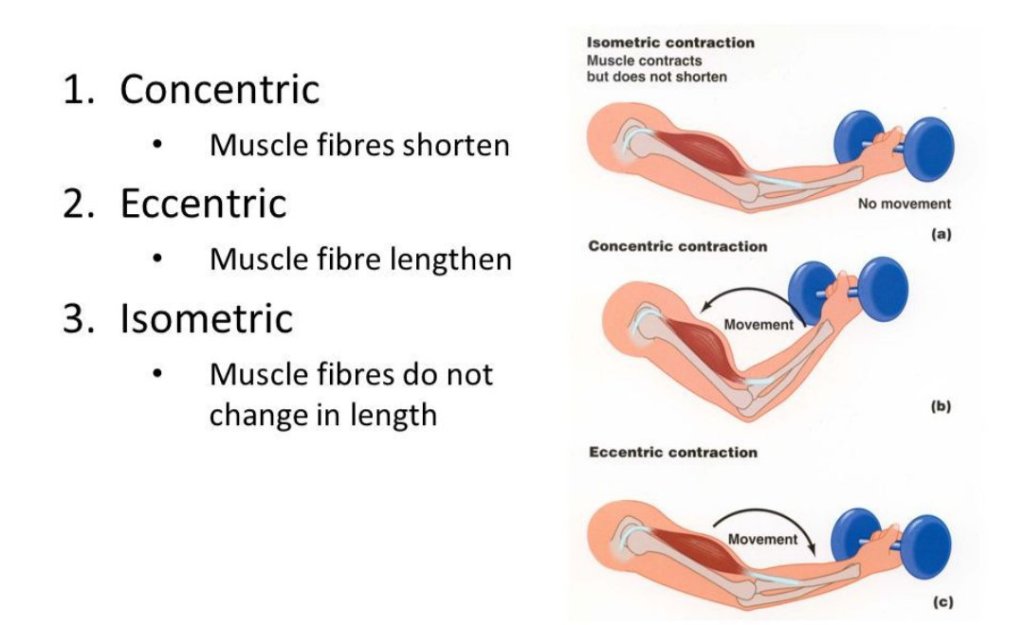
Your muscles perform three types of contractions when you exercise.

* Concentric

* Eccentric

* Isometric

A concentric movement shortens the muscle to force an object to move. Think of the bicep curl. As you force the weight towards your shoulder your bicep shortens to create a squeeze.

An eccentric movement lengthens the muscle and stretches the muscle fibres. Imagine the lowering of the weight during a bicep curl or the squatting part of a squat or leg press. This phase of the rep is regarded as the part that induces the most muscle growth as the muscle fibres are fully activated in lowering a weight under control. This is where delayed onset of muscle soreness (DOMS) are most like to occure and specific eccentric training is a popular training phase for many athletes.

An isometric movement is a contraction that does not require muscle to lengthen or shorten. Think of a plank or wall sit. There are no reps that use concentric or eccentric movement. These are particularly useful when sparing the joints from discomfort or injury but still strengthening the muscle.

Developing an understanding of these muscle contractions will give you a greater appreciation of time under tension (TUT). Powering through 12 reps in 15 seconds is fairly straightforward. However, this is not the best way to train. Once you imagine the muscle  lengthening and shortening through repeated exposure to the load of the weight then you can create a clear ‘mind to muscle’ pathway. You begin to think about each rep rather than just move a weight from A to B and it might need you to cut out the ego lift and go lighter. Just because you’re benching 100k doesn’t mean your muscle has gotten much out of the process. If you aren’t in control of your muscle contractions then your target muscle is unlikely to feel the need to change.

I ask my online trainees what their rate of perceived exertion (RPE) is after each exercise. As I’m not physically stood next to these clients I cannot see how easy or difficult they found the activity. If they are rating their workout at around 5/10 I would ask them to slow the tempo of each rep before adding more load in an attempt to challenge them to a high exertion level.

TUT and muscle hypertrophy

Earlier I mentioned time under tension as a significant factor in muscle development. Longer TUT will create a more challenging experience and much more rewarding for muscle hypertrophy. If I were to learn French for ten minutes a day I would get much less knowledge of the language than if I were to learn French for 30 minutes.

So, if I were to complete a set in ten seconds I would get much less chance to elicit muscle growth than if I were to complete a set in 30 seconds. Every rep and set is an opportunity for muscle growth. Moving a heavy object is easy. Thinking about it requires muscle engagement.

I hope that this article helps. I have tried to remove unnecessary jargon as I believe that resistance training should be enjoyed by everyone and we shouldn’t need a physiology degree to do it. And not just do it, but do it to ensure you get the benefits from it!

https://www.trainerize.me/profile/nevergiveup2/?planGUI

Repeat, Repeat, Repeat

My eldest must think I’m obsessed. At 8 he has certainly got a natural talent for football and he is always keen to have a kick about in the garden in-between matches and team training. He will often just want to take shots at me which is fine as I firmly believe that doing the bits that you enjoy the most is what keeps us interested. But I do try to get him to do the bits that aren’t really coached yet at his age.

Throw ins at under 8’s is a classic example. A throw in is usually a foul throw (which the ref allows due to their age), the length of the throw is week due to poor technique and the decision making in who to throw it to is questionable.

Passing is another example. Instead of trying to ‘Messi’ it past 5 opposing players in his own penalty area (8 year olds don’t like to pass) I want him to make good, confident decisions on when to pass and create openings.

To master these he needs coaching and, although I’m not an FA coach, I do know how to coach.

One piece of advice that I can take into any type of coaching, expert at it or not, is to repeat the process over, and over, and over, and over, and over again. And when you think you’ve mastered it, repeat it again.

We move on too quickly. Either because we think something is accomplished or because we haven’t discovered a purpose for continuing.

https://www.trainerize.me/profile/nevergiveup2/?planGUI

My eldest also brings home words to learn for a spelling test at the end of each week. It’s the same process. Tying his own show laces, eating foods that are nutritious but he doesn’t yet like the taste of, crossing a road, learning French all need repeating to be good at it. Despite some freakish ability by some people to have a natural talent at something, the rest of us have to work bloody hard to be good at it. And even then, don’t think that those with a natural talent don’t practice hard at what they do. They do, but what they do is just their knack. Their ‘thing’. We’ve all got a ‘thing’, we just need to find it. But if we are to persue different interests or to progress in certain areas then the chances are you will need to practice like mad to be any good at it. My son has a tendency to move on too quickly. Perhaps most kids do. Just because he has read his ten words for his spelling test doesn’t mean that he knows them.

I’d love to play guitar. I’ve even bought a couple in the past that look great as ornaments. Actually playing it will require time, patience, practice and repeating. I don’t do that. My excuses are time, my natural abilities aren’t good enough and getting blisters on my fingers. I know that I would be able to play a little if I stopped with the excuses. Maybe I’d never be Ed Sheeran, but I would learn the chords and be able to enjoy playing the guitar and far quicker if I hired a teacher.

My excuses for not playing guitar are exactly the same excuses that I hear on a daily basis in the gym.

Time, not good enough and injuries.

But me playing guitar or not isn’t affecting my health. Learning the chords won’t help my body fat percentage go down. Breaking into the intro to Smells like Teen Spirit won’t make me look and feel better in my clothes and my mental health won’t be any clearer if I can play the theme tune to Coranation Street. So I haven’t found my ‘why’. I haven’t found my purpose to playing guitar, therefore my motivation for doing it, as great as it would be, just isn’t there.

Passing a football through cones isn’t as exciting as smashing a ball into the top bins past his dad, but my son will develop and understand the game much quicker. And if he sees his work pay off on the pitch in a game then he will want to practice even more. He will want to repeat the process that allowed him to make the pass, shot, dribble or throw that won the game. Hopefully he discovers his reason for playing football. It might make him feel good. He might enjoy being part of a team. He might enjoy the buzz and excitement on match day or he might know how important exercise is to his physical and mental health. As long as he knows why he keeps going back for more he will keep progressing.

For best results I can’t help repeating certain movements for my clients to perform. Yet despite the repatition it is important to keep the reason for doing it fresh in their minds and also creating new challenges.

Yes you can squat, now can you squat deeper?

That is a good bench press, now create a slower eccentric movement for time under tension.

You can perform 10 reps, now do 12 reps.

Exactly the same for my eldest at football. You scored with your left foot, now can you kick the ball with you right foot. It is still football. It is still repeating the process, but now we have a new challenge to consider. And it will take time. Practice and time. Lots of it.

Remember your reasons for doing something. If it is so important to you then you will continue the process and you must repeat, repeat, repeat until your body and mind knows exactly what it is that you are wanting from it.

If it’s important enough to you then you will achieve it. You’ll never give up!