Exercise should be like any other activity…variety is important. If you don’t seek variety now and again, it can become a little stale. And so whatever your goals are, I’m here to give a shout out to using resistance bands as part of your training.
The Benefits
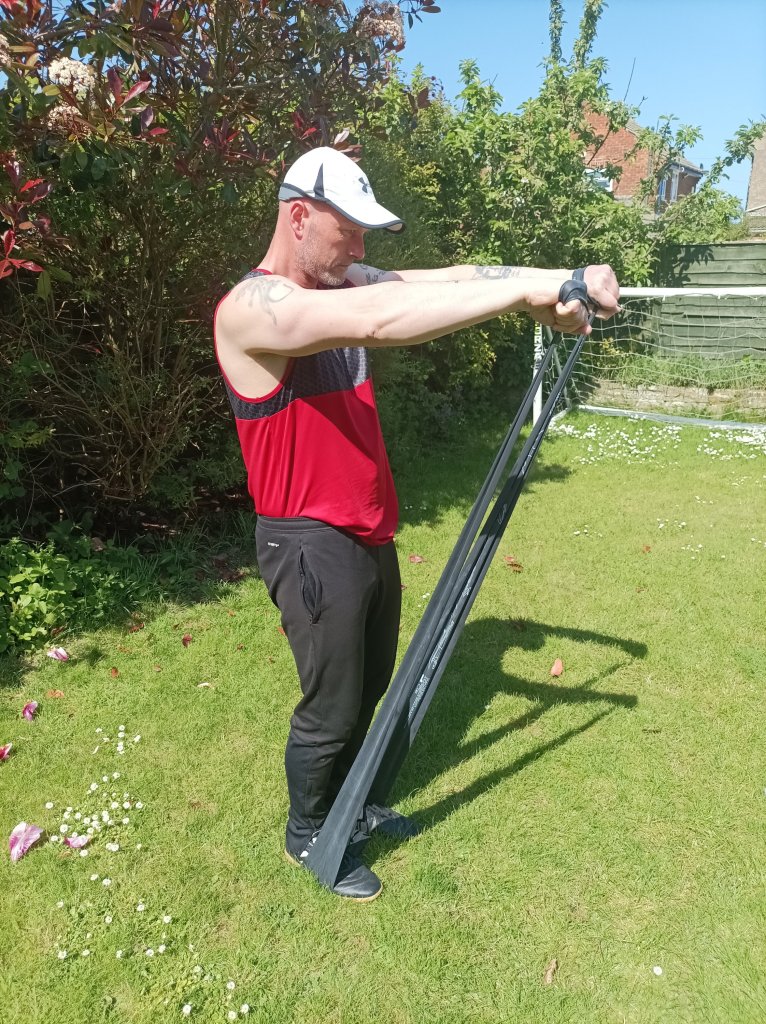
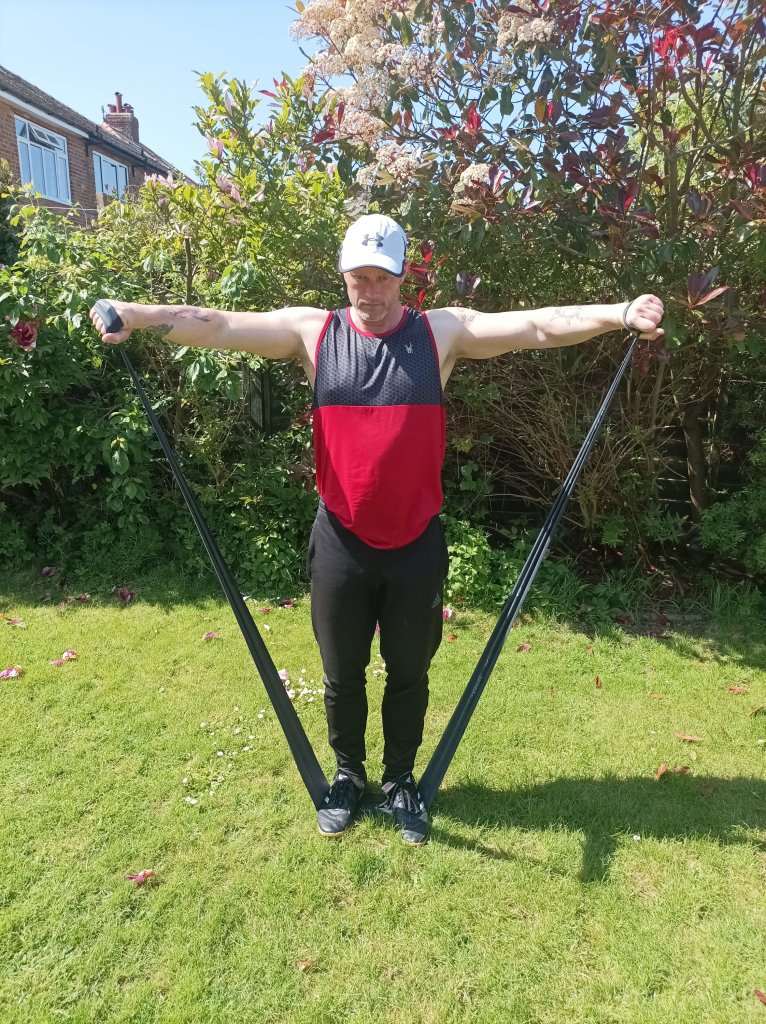
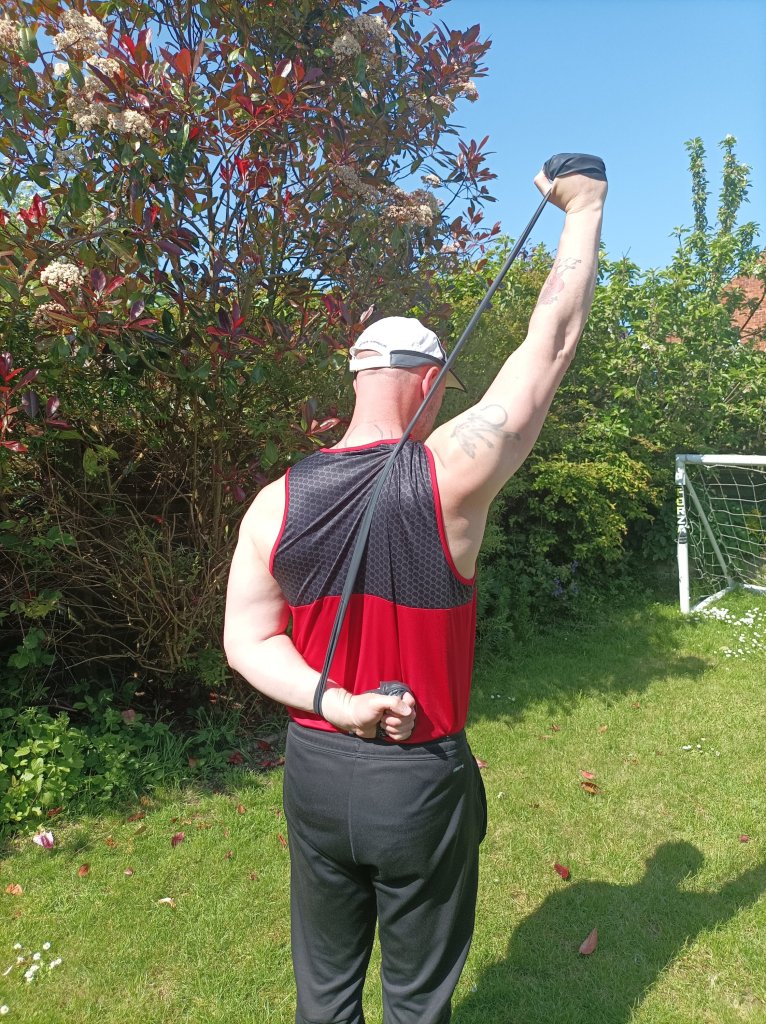
* They are convenient. You could easily do a good exercise routine during an episode of Corrie. This means that you have not had to leave your house to get a workout in. And these days time is precious and you just don’t always have time to get there.
* They are small. Storage is an issue with traditional training equipment, but with these bands they can just fold away back into their case. They make terrible door stops though, so keep a kettlebell nearby for that job.
* They are cheap. Very cheap in fact. Shops like Lidl and TK Max will often stock them for under £5 and the bands will come with a variety of resistance. But be careful, it’s easy to go into these shops for one item and come out with a George Foreman grill, a snorkel and a car cleaning kit as well.
* Variety in your workouts. It’s easy to get bored, especially if exercise isn’t your hobby. Also, your muscles get bored too. Trying out different equipment should be part of the fun for your mind and your body.
* They are good for injury rehabilitation and general aches and pains. After an injury or with sensitive areas it isn’t always a good idea to go straight back to using dumbbells etc. Let your body recover with some simple routines with the resistance bands before hitting the heavy stuff.
So I hope that I’ve managed to convince you that a set of resistance bands can be useful toward your fitness goals.
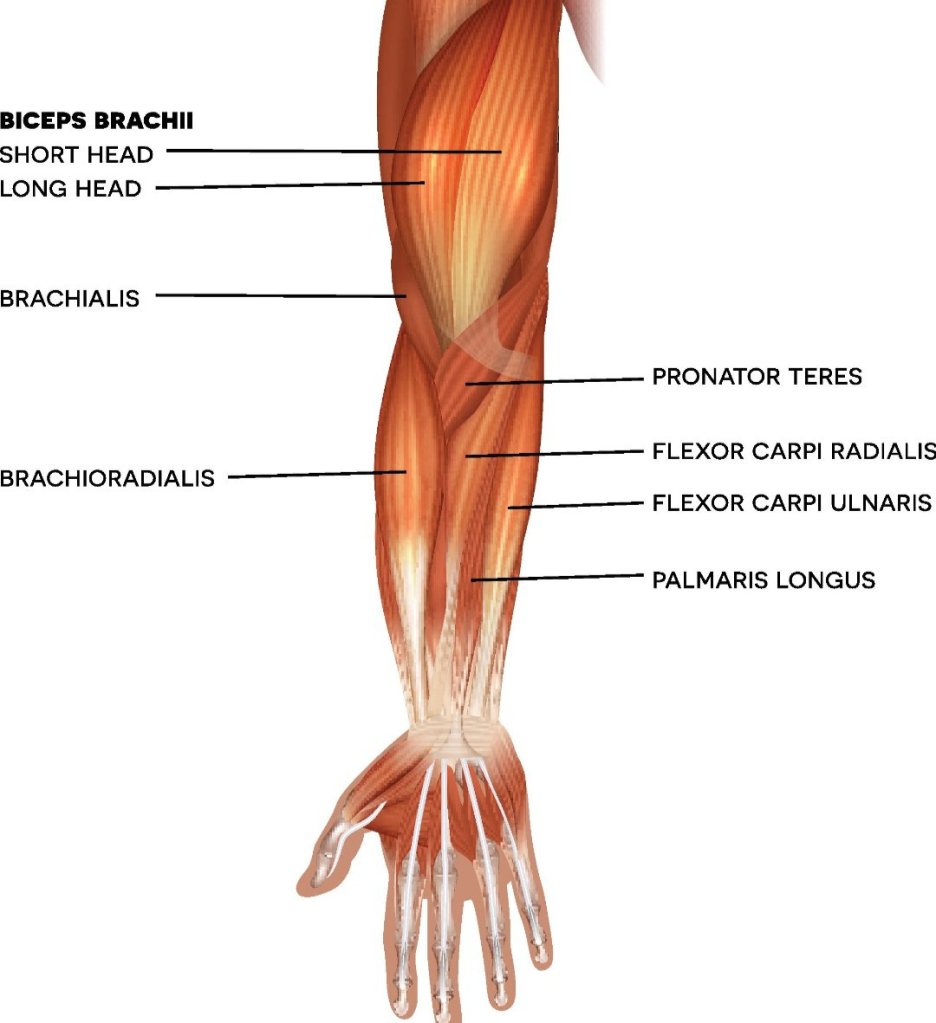
An unusual pain came over my elbow as I trained a couple of weeks ago. I say elbow, but it seems to stem from the brachialis. It wasn’t debilitating, but it was noticeable in my everyday movement which was uncomfortable.
Having trained Monday to Friday plus a few occasions where I’ve trained twice a day, I put it down to over training. Ok, I thought, with the half term holiday for a week around the corner, I decided to take a step back to recover. My readers will be aware that I will take school half term holiday off from the gym for a number of reasons, but the biggest by far is that my kids are at home and I appreciate spending time with them. Of course, I still have to be in the gym for my clients, but I rarely stick around to train myself. It gives me a natural break from it. And on this occasion, it seemed like I needed it.
But as the week went by, my arm became even worse. It went from a sharp pain to becoming a constant dull ache.
My advice to my trainees in this situation is…
* Always listen to your body. If you can’t train then take it easy and have a few days off (or train a different part of the body) but
* If you feel that you can train through the pain, you might find that the pain will ease.
It was totally coincidental that I had to take it easy after my injury due to the half term holiday, but I didn’t feel that my lay off was doing it any good at all. In fact, the pain was getting worse. Once I got back to the gym, plan B was in place. I trained through the pain.
And now, after a week back at training as normal, my injury has almost totally disappeared.
When my kids have a fall at football and start crying I assess the situation very quickly. I need to know where it hurts. Are there any cuts? Is it bleeding? But 99% of the time it has been a case of telling them to ‘run it off’. I’ve no doubt that it hurts at the time and there might be niggling pain associated with it afterwards, but I think that there’s usually a good case for ‘running it off’.
Training through minor injuries allows the body to maintain strength and conditioning, therefore enabling an injury to heal. But this must be up to each individual’s honest assessment. If you blame any twinge or niggle on not training because you can’t be bothered, then you might as well just be honest with yourself and admit that you can’t be bothered. However, if an injury is seriously affecting your performance or your life outside of the gym then giving the gym a miss and seeking professional advice might be an appropriate course of action.
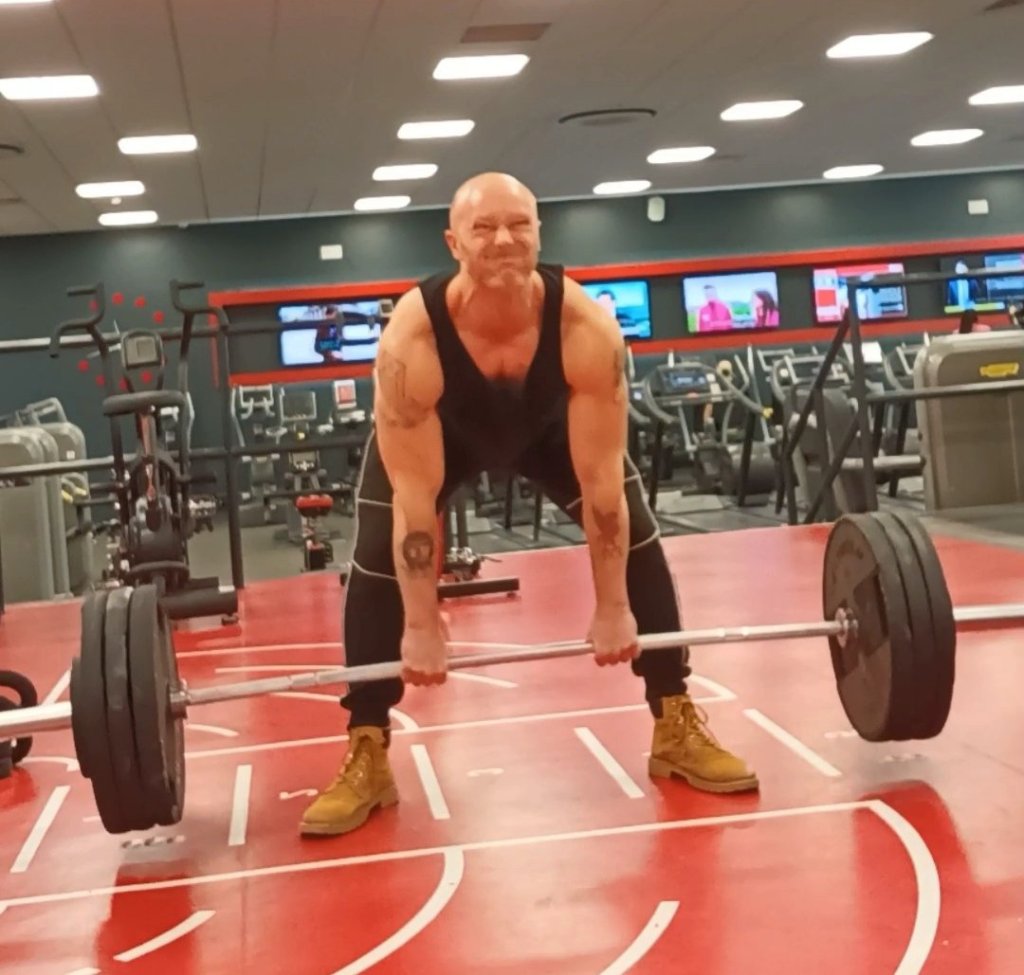
The last time I counted there were over 30 different variations of the deadlift. Many of them are spin offs of original lifts and if you are a deadlift enthusiast then you are probably intrigued in what these different lifts can achieve.
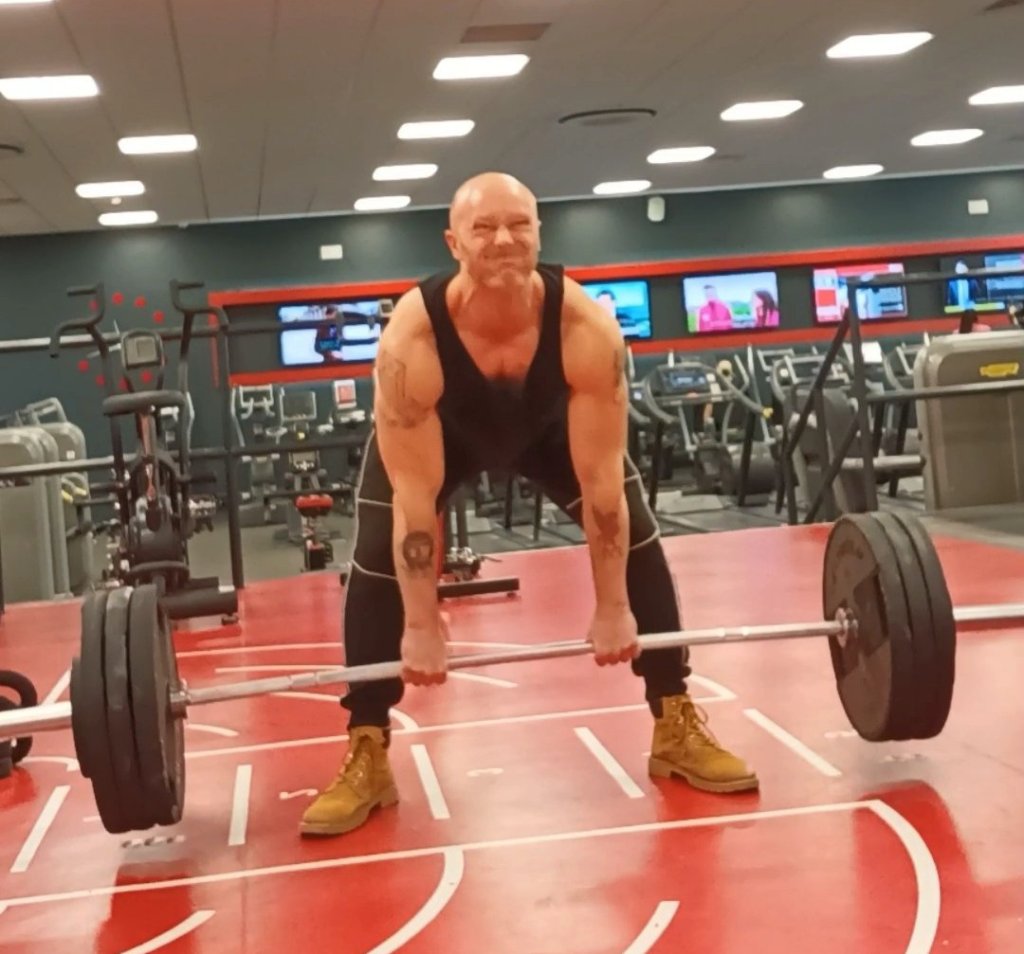
But it’s worth explaining my relationship with deadlifts if you’re not already aware. Basically, deadlifts saved me from a life of back pain, poor mobility and quitting playing all the sports that I love. And because of that I believe that it sorted out my mental health too.
A decent footballer as a teenager, I knew that I might not be able to continue playing the game I love with a passion due to the terrible sharp pains that I would get. This would sometimes be during a game but I could garauntee the pain for two or three days after the match. Playing against other 16 year olds who could train harder than me, move better than me and recover better than me was demoralising. My skill and application was there, but my back and the sharp pain that would drive down my butt and leg was excruciating. I simply couldn’t compete against them. They were fit kids. And even though I were the same age as them, I felt like an old man.
I quit playing football when I left school. Cigarettes, alcohol and the opposite sex didn’t give me extra back pain. That became my new sport. But the pain remained. Trying to put socks on, especially in winter when my back seemed to seize up more, was a task in itself.
As a young man in my late teens I began going to the gym often. I realized that I could still remain active by doing controlled movements, my running (which was always impressive in school competition) was still good and I found a zest for life again outside of nightclubs. This even lead me to want to join the army. I wanted to put myself up against their physical demands. I also needed a career and I was drifting at the time. A weekend at Penikuik barracks saw me fly through their trials. With hundreds of applicants I was one of the first to finish the cross country and I came first in the sit up bleep test. My competitive spirit meant that I’d probably be still completing the sit ups now had I not been told the test had finished.
However, in the back of my mind, I knew that the physical demands that I put on my body would catch up to me. On the Sunday evening, trying to hide the limp that accompanied the back pain, I walked into the Major’s office. He slid the contract in front of me. I had passed and he wanted me to sign into the army. I was desperate to sign. I didn’t know what civilian life had in store for me. I felt secure in army life. I had a purpose. My back pains had other ideas.
Back at home I managed to get a good, rewarding job within the Social Services, I continued with my gym training and I started to enjoy life. I thought that I had to live with the pain so it didn’t frustrate me like it once did. I just had to get on with it. But my training was all wrong. I know that now. The lure of the aesthetic training like my friends were doing was strong. I wanted the biceps, pecs and abs. This made me feel good, but it never addressed my injury. In fact I added to my injuries by chasing the aesthetics.
I began talking to trainers and gym owners. My mates were decent lads who trained hard but I had to ask professionals for advice. It took some time to convince me that deadlifts would help me. My thoughts were (even though it was me who approached them) that they just wanted my money. Also, just watching someone perform a deadlift triggered the shooting pain down my leg.
Over time we worked on my form. I got stronger. I built muscle in the affected areas. I moved better. After a year or two I could stand out of a chair without a grimace. I could put my socks on. I even started kickboxing. Surely that would cause my back pains to start again? I started playing golf. After my first tee off I fully expected to feel pain. But no. It felt good. Even just 3 years ago I played a full football match for the gym where I train. In my 40’s, I managed something that my teenage self could not physically do…play football and recover without pain.
Football in my 40’s was something I never would’ve believed
Deadlifts still play a big part in my training. I know that my back injury is still lurking and ready to pounce. During the recent lockdowns when the gyms were closed I could feel the niggle was there. But the muscle that I had built over the years weren’t going to let me down.
I do exactly the same now as what those trainers did for me. I advise others on how to overcome their injuries, I enable them to perform exercises safely and productively and they become stronger and happier people. That’s my aim, because that’s what happened to me. Living life with pain is demoralising. It doesn’t just destroy your physical capabilities, but it affects the mental health. At times I felt useless.
It doesn’t really matter the age or background of a potential client. Within an hour of a consultation or a 1-1 session with me they will have performed some sort of deadlift. It could be a 20 year old wanting muscle hypertrophy, a 40 year old with back pain or an 80 year old trying to keep their independence. They will perform deadlifts with me. Weights, rep ranges, set and rest periods might differ, but they will be deadlifting.
My usual gym routine is from Monday to Friday. The weekends are generally for family time and relaxing away from formal exercise. It works for me. There’s no set rule that works regarding a training plan. Perhaps my ideal plan would be having two rest days that aren’t together but personal circumstances have to be accounted for.
What training a full five days in a row allows me to do is have a definitive day in which I can begin a wind down in the intensity of my workouts. I can’t hammer my body every single day with heavy compounds. Indeed, I believe in my 420 reps workout that I have developed for others so much so that I am doing it myself. This means that once Thursday’s session is over I have completed over 1500 reps. By Friday, my body is telling me that I need a little assistance from machines!
And this is exactly what the resistance machines are perfect for. They provide much more relief for the body and it isn’t just the physical aspect that needs the respite. Neuromuscular Innovation, or more commonly known as the mind-muscle connection, takes its toll on the brain. The thought process of connecting with your target muscle in a bench press scenario is much greater than on a press machine.
Foot positioning, core engagement, time under tension, breathing and the contraction are all crucial components of a bench press. Sure, there’s still the necessary check list to go through on a machine but in no way is it as thorough. Therefore, instead of risking injury with sloppy end of the week technique, I still get to workout without breaking myself.
It does concern me, however, how overused these machines get. I get the impression that lots of gym goers use them because they haven’t been shown how to squat, deadlift, bench press or barbell row. Their inductions usually include a brisk talk through these machines, so why would they use anything else?!
When I did gym inductions I went through deadlift form as a priority. It is a free weight compounds that requires the whole body to move and work together as one. I can analyse the hip extensors and knee flexors of the participant and get an understanding of overall strength and fitness levels. Without it, I would struggle to know what machine or what type of exercises a new gym member should be doing. So I am perplexed as to how the gym staff know. Introducing them to an ab crunch machine is way way off of where most new gym members need to be.
And don’t get me started on an ab crunch machine. An over reliance on a resistance machine can cause injury, but an ab machine can be particularly dangerous. The deep abdominal muscles, together with the back muscles support and protects the spine. I cringe as I see yet another gym member rocking wildly like a wound up toy trying to work their abs. Back pain is the biggest reason for staff sickness in the UK and until we begin to train our lower backs correctly this statistic won’t change.
The Final Word
Resistance machines are a great way to supplement your workouts. A heavy session on the bench or in the dumbbell section takes a lot out of us physically and on the nervous system. Rounding off a session on the machines or cables can be a perfect finish. But we can’t rely on them to reach our goals, be it injury rehabilitation, weight control, muscle gain or movement. If you are completely new to the gym then I would recommend starting in the free weights area with a trainer who knows what they’re doing.
That you for reading this article. If you have any questions on this or any of my practices then do get in touch!
Gym Classes are an excellent way to introduce yourself to formal exercises, meet new people with similar goals and to plan your fitness routine for consistency. From Stretch classes, Zumba, Spin and Boxercise the mainstream gym have covered it all. And being a Fitness Instructor myself I can see the fantastic benefits of booking onto a regular gym class….but it should come with a warning.
Here are my gripes on classes…
* Gyms that I am aware of are regularly putting on virtual classes. This seems to limit the cost of paying for a live instructor and can run throughout the day. I find this counterproductive from a gym going by the feedback that I receive as many gym members want live instructors and some have moved to other gyms to find them. A trained fitness instructor can manage the pace and intensity of the class and adapt workouts each week to fit the needs of their participants.
* I see more injuries occur in fitness classes than I do in the gym. An instructor cannot check the form of 30 class members. The classic exercises for poor form are deadlifts, bent over rows and kettlebell swings. In fact kettlebell classes are an injury waiting to happen. When you need to teach hip hinges, breathing and core control to a room full of people who see their half hour class as a way to ‘blast their abs’ or ‘fat burn’ it becomes an impossible task.
* When you think about the titles that they are given, such as those above (abs blast and fat burn are real life class titles) it is very misleading. An abs class once a week won’t get anybody a six pack. An abs class won’t do a great deal for stabilising core muscles. A fat burn class usually consists of fast paced reps that use exercises that require slow, controlled movement to focus on target muscles and avoid injury. Getting these movements right and incorporating them in a fitness programme is essential for all types of fitness goals, but repping out as many deadlifts as you can in 60 seconds won’t. Yes it burns calories, but put your back out and you won’t be burning those calories again until you’ve recovered from your injury.
* Classes can be demoralising for lots of people. They feel inferior compared to those around them. Yet many class goers have been going to the same class for years and might know what to do. If they know the instructor then they will probably know what equipment is used and what exercise is next. They probably even know that the class starts with Rock DJ and finishes on a club version of Castle On The Hill. But new people might feel out of their depth. Which leads me onto my recommendation…
Oh do tell Shay!!
Well, for anyone going to a new gym and are a little apprehensive or have never been to one before I would suggest hiring a good PT (a good one! Not a Poundland special) and learning how to move correctly. Of course I would say that, I’m a PT right?! Yeah but Brian who is reading this at his home in Penikuik won’t be hiring me 1-1 so it’s of no great advantage to me. It is, however, sound advice.
5 sets of ten deadlifts will be far more important to a gym goers goals than a class when they first start out on their journey. When to breath, how to engage the core, foot placement, hip hinge, strength and stamina building, morale boosting and goal setting are all of things that will be learnt fairly early on in regular PT sessions. None of which are taught with any great depth (if at all) by Mr Motivator at the front of the class whooping and jumping like a Duracell Bunny on speed.
The Journey should begin on the gym floor, not collapsing on a class floor.
Thanks for reading! If you enjoy my blogs then check out some of the other stuff too. See you soon!
We’ve all heard of the phrase ‘Practice makes perfect’ right?
Well as much as I agree with the sentiment, I’m going to explain to you what it actually means to me. Because it comes with a caveat.
I believe that you can practice something really badly. You could be perfectly bad at it I suppose, but I don’t think that is the purpose of the phrase ‘Practice makes perfect’.
I’ll use the bench press as an example. Repeating the bench press incorrectly each day will undoubtedly cause injury. Shoulder injuries around the rotator cuff, which are muscles and tendons that surround the shoulder joint, are very common due to poor technique.
I have seen some very impressive weight being pushed in the gym but with horrendous form! Form doesn’t just allow us to actually train the muscle that we are supposed to be training, but it helps us avoid injury.
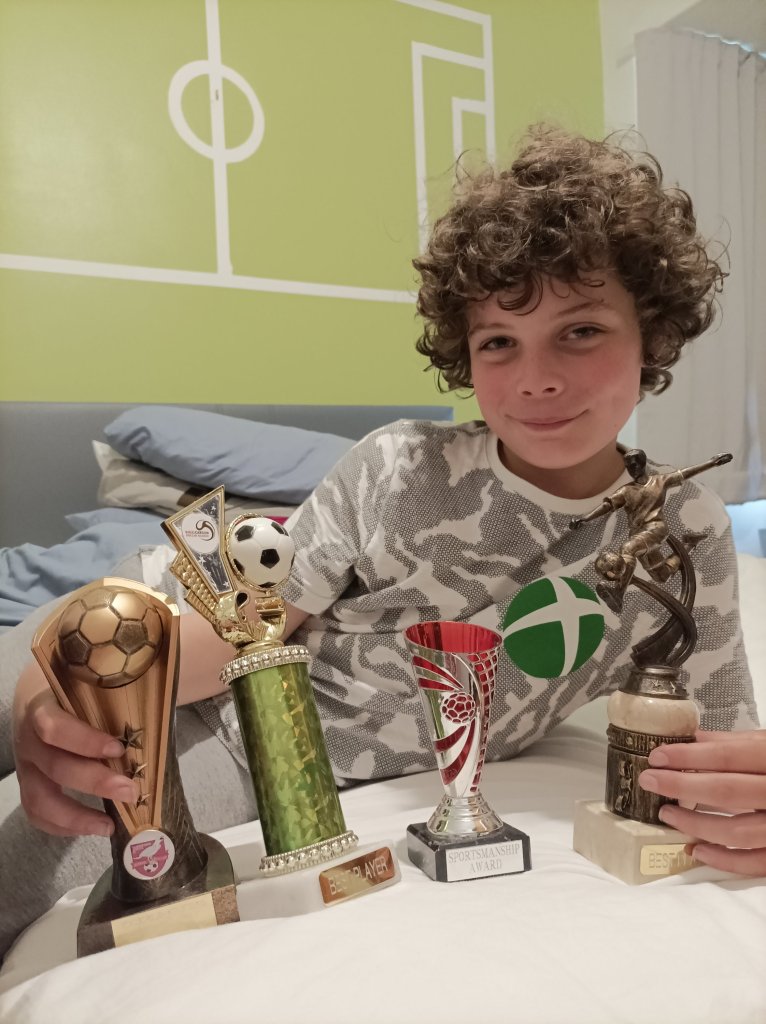
Practicing correct form AND doing the right things specific to your goals is important. My son wants to practice a rainbow flick in the garden for an hour each day because he has seen Neymar do it. I go through this technique with him for a certain length of time because he enjoys it and then I encourage him to move onto his practical skills. Pass and move, target practice, ball shielding and tackling are all part of the game that he will need to do withing a match. There has to be a sensible mix of the fun stuff and the stuff that gets the job done!
Awards for playing football, not for rainbow flicks
It’s like the row of dudes training their nightclub muscles in front of the gym mirror every day. A pumped up bicep made up of sarcoplasm (blood and water) bulging from their T-Shirt looks good and probably makes them feel great. Fine. But over working the bicep instead of training all of the muscle groups equally will not provide an overall athletic, healthy and practical body. The older they get, this will become apparent. Age can be unkind and pumped up biceps won’t hide the years of neglect in other areas.
And as for my son, unless he becomes Neymar or goes into the circus he will probably never need to perform a rainbow flick for any great purpose (even Neymar gets booked for doing it).
I always say to my trainees ‘practice, practice, practice’. It’s not always popular when I prescribe yet another 5 sets of squats for them to perform but it is necessary. I know that they have good form and I also know that, through progressive overload, they will continue to get better and stronger.
I fear that the regular gym goer won’t ask a PT or gym staff about good form anymore. Either there’s no point in asking because they don’t really know (watch them train themselves, I wouldn’t ask some of them how to lift something heavy above my head) or it is perceived that a PT will try to sell you their services. Often this is true, they’re at work after all. But if you find a dedicated fitness professional they will happily discuss gym form with you. It should be their passion. So ask one who you see regularly and doesn’t seem pushy with their sales. Who knows, if they impress you and you feel that you can progress with them as your coach then you might choose to have them as your PT.
So don’t continue doing something wrong. It’s not impressive getting a PB if it means you put your back out. Start practicing doing it right and make progress injury free.
I want to share with you the difference between a Process Focussed attitude and an Outcome Focussed attitude. Because when you can give yourself a little tap on the shoulder and remind yourself of the process then the outcome will eventually happen. I promise.
It All Needs A Process
I am so, so good at this in the gym with myself and my clients. I focus entirely on the process. That is my job. It’s what I am trained and disciplined in. But outside of the gym I have goals that I want now…right this second! And in frustration of not being able to get them right now means that the process gets crumpled up and torn like a handy pocket road map that has been stomped on during my tantrums. Had I kept a level head, the road map would still be intact and it would be easier to follow. The tap on the shoulder from myself, a professional, a partner or a friend can work wonders in working out the process for anything. A career move, a life skill, family life and health and fitness goals. It all needs a process.
Sometimes we just see a 10k run, a dress size, a one rep max or a weight loss target. The finer details of how we are getting there is the real key.
In football, the skill isn’t knowing that you need to score more goals than the opposition, it is how you’re going to do it. You can give any sporting example of this and it remains the same. The process needs to be the focus. The outcome harbours great rewards, but without the process you won’t get there.
Frustrations Of The Outcome Focus
So I’m not getting on my high horse here and telling you that I do everything perfectly and you need to step up. You might be able to help me find my process in other aspects of life with your skills. But I’m here to talk about fitness goals. And I’ve been prompted to give it a mention because the gym is full of outcome focussed people. They press, lift, run and jump without any attention to their process. They just want the results. And this can lead to frustration and in many cases injury.
And when you figure out a process for one thing, other parts of your life can begin to take shape too. Have you ever experienced getting a promotion in your career and found that your relationships in your private life improved? You have followed a process and met deadlines, hit targets, gave your colleagues morale boosts or took them under your wing and you got rewarded in your promotion. This made you feel good in other aspects of your life too.
It’s the same in your fitness goals. Once you begin a process in your fitness goals then you begin to focus on your day to day tasks that make up the little wins. And it’s not just about doing this in a gym. Imagine going for a walk with a friend or a partner away from the daily grind. Here you can discuss your ambitions, your feelings or put the world to rights. You feel great and you’ve managed a few thousand steps as well. Make this a regular exercise and you have started the process for your mental and physical health.
Becoming process focussed takes away the big issue that seems, at times, unobtainable…the outcome. To grow muscle you can’t just lift heavy stuff a lot. To lose weight healthily you can’t just eat less. To get a job promotion you can’t just turn up to an interview. To make a relationship work you can’t just add them as a Facebook friend. You need to work hard at a process that works to get the things that you want.
Small Victories Are Important
Focussing on the outcome will keep us bitter and when we have no way of getting there we give up. In my Coaching App it’s exactly what I do for hundreds of people. I’m the tap on the shoulder that reminds them of the process and enables people to reach their goals without even realising. That’s because they have enjoyed a journey that took them way beyond the anxieties of ‘ needing to lose a couple of stone’. They did that, but also found that they were in control of their life much more than when they had no direction. It became a foundation for their success. Focus and celebrate the small victories. It’s those that become the big ones.
Thank you for reading my article. If you need further advice on where to begin with your fitness process then do get in touch. I might be able to help.
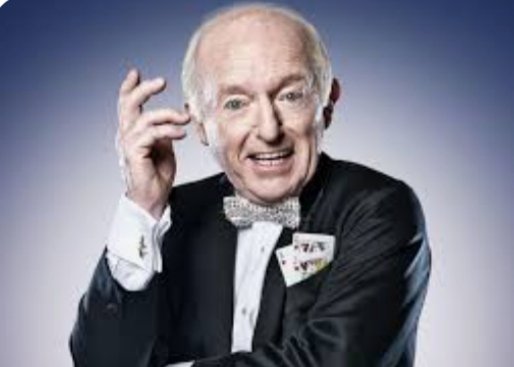
As a kid I used to love watching magic shows. From Paul Daniels producing a rabbit from a hat to David Blaine’s street performances of him levitating and having the crowd of onlookers agog at his seemingly supernatural abilities.
After a while though, perhaps around the time I realized that Santa wasn’t real, the magic wasn’t real for me anymore. I much preferred knowing the how and why of a magician’s trickery than becoming submerged in the mystery of it. I had seen people ‘magically’ being sawn in half a thousand times and even entire buildings disappear, but I just wanted to know how it was done.
Back in the 90’s a masked magician turned up on our screens called Val Valentino. The show was called Breaking The Magician’s Code where he would perform the trick and then explain how it was done. This didn’t go down well with traditional magicians who were in the Magician’s Circle, where you take the secrets of magic to your grave. Valentino was seen among his peers as a magician who had betrayed his community.
Valentino justified his actions by saying that he “wanted to get people talking again about the magical arts” as he began to recognize the impact that technology and the internet would have in the profession and “magicians were becoming complacent”. Maybe he did change the world of magic. Pulling a rabbit out if a hat became old skool. Along came the likes of Blaine and Derren Brown to revamp the art.
Keeping The Audience Interested
I’ll be totally honest. My profession needs a kick up the arse too. I hear so much about different methods, techniques and formulas from Coaches and Personal Trainers and I have my own methods that I introduce to my clients too. I’m not disrespecting anybody’s work here. But it’s time that we were honest with the public. Whatever plan, method or technique a PT wishes to use and endorse it is not reinventing the wheel. They have not just come up with the newest ‘fat burning plan that will change the world’. What they have done is come up with a catchy title and a workout that keeps you active, a programme that keeps you interested. and a mindset that empowers your nutritional choices.
A trainer’s method should include…
* A plan that works for YOU and YOUR lifestyle. Not a copy and paste.
* Achievable goals. This can include a new Personal best in how far you have walked/run or it could be a certain weight lifted. It could also be goals to hit a certain macro target this week. Achieving this will create a better chance of hitting your big goals.
* Regular check ins and discussion opportunities. You should be able to talk to your trainer whenever you need to.
There are many good trainers that are providing this service, but it doesn’t matter if they call their programme…
* 60 day fat shred
* 16 week couch to 5k
* 6 week summer body
* The little Black Dress
* 40 day toner
Or the latest method that I have recently created…
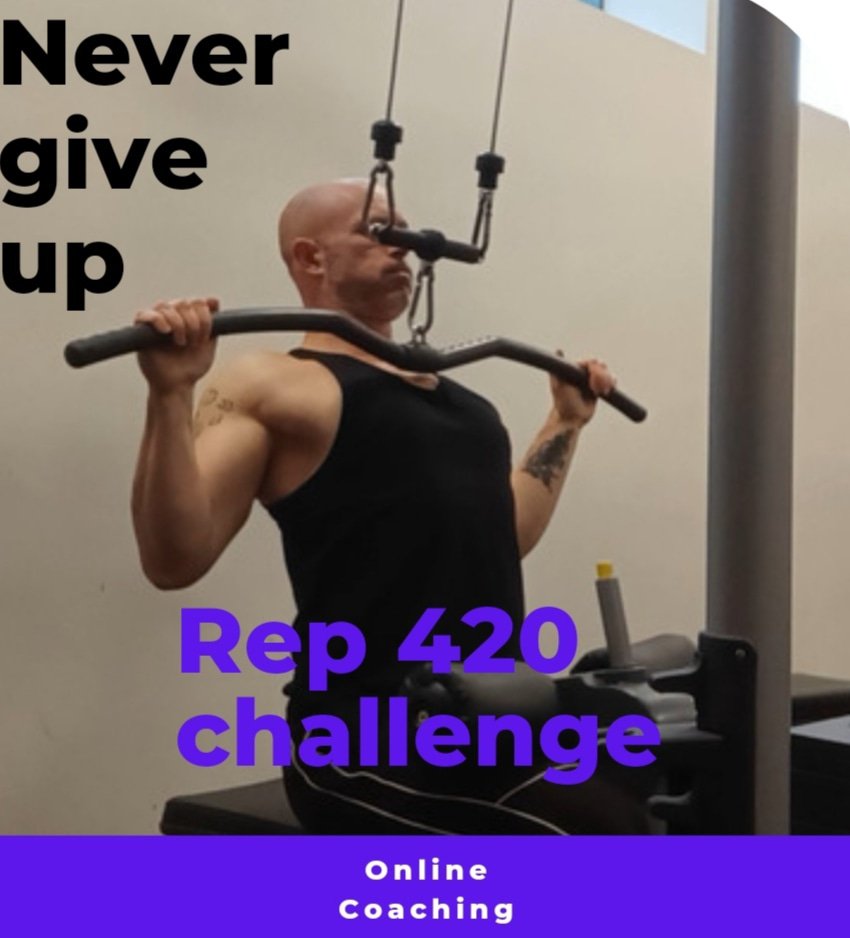
* Rep 420 Challenge
They should all have the same theme. It should encourage more movement in a fun and engaging way which promotes mindful eating and a healthy lifestyle. There is no secret formula that a coach has invented. They have simply created a method that they feel will inspire their client to stick to it. Because a method that nobody wants to stick to is not going to work. No tricks. No magic or mystery. Just a method that keeps the audience interested.
My Rep 420 Challenge is a method of creating full body workouts for busy people in a fun and achievable way. It allows the trainee to hit every muscle group without the tedious task of completing a ‘leg day’ or a ‘chest day’. How many gym visits do you need to hit every individual muscle group? I work in a gym. I usually have the time. But the regular person wanting to tone up a little and lose a few pounds doesn’t. I understand that.
The Final Act
But I haven’t waved a magic wand and made the Statue Of Liberty disappear by creating it. I simply engaged the audience and gave them a direction on what to focus on. They become as committed to the final act as I do not through any art of deception or hocus pocus, but by providing simple answers to their questions.
Telling someone to move a bit more and eat a bit less to lose weight is not the greatest advice. But providing a sustainable structure to build into their lifestyle is. That’s where the real magic happens.
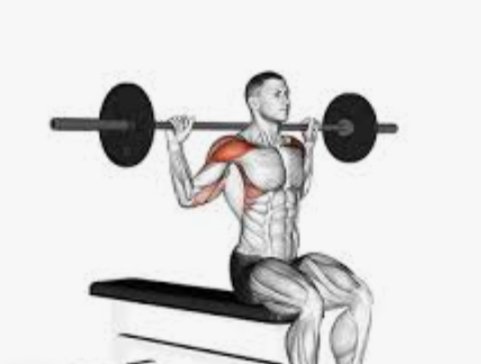
Over the past few years I have started to hear reports that the behind-the-neck shoulder press is dangerous and is best to sack it off from your workout. In this article I will give you the pros and cons of this technique and delve into the reasons why this movement is increasingly becoming a dinosaur.
Ok, so first here’s my story and my background on the BNSP…
The Wheely Bin?!
This used to be a staple move for me to perform some 20 years ago as I felt that it completed my shoulder workout. Later I will explain why. I knew that the range in which I was exposing my rotator cuffs was putting them under extra stress, yet I continued to perform them with good results (no apparent injury with trapezius and rear delt hypertrophy).
But I did sustain an injury about 10 years ago which had nothing to do with any exercise in the gym. During my weekly task of putting the wheely bin out at home I grabbed the handle to pull it down the garden path. The wheely bin was obviously heavier than I had anticipated and as I pulled the handle the bin stayed in place. I heard a tear come from my rotator cuff. My fault of course as I hadn’t made a full assessment of the load I wanted to move. It was late, I was tired and my Homer Simpson pyjamas weren’t the height of fashion for the neighbors to see. I wanted the job done quickly. Doh!
Take Injury Rehab Seriously
Fortunately, I knew how to repair such an injury as I have lots of experience in doing so. I continued to train, but I left out any techniques that could damage it further. That included the BNSP. In fact anything that involved lifting above the head was dealt with extreme care. The amount of injuries that I see from gym goers that don’t heal or get worse is saddening. Injury rehabilitation is a skill that too many people aren’t prepared to pay for. I don’t enjoy having to pay for a car mechanic when my car is knackered, but I appreciate and enjoy the benefits of doing so.
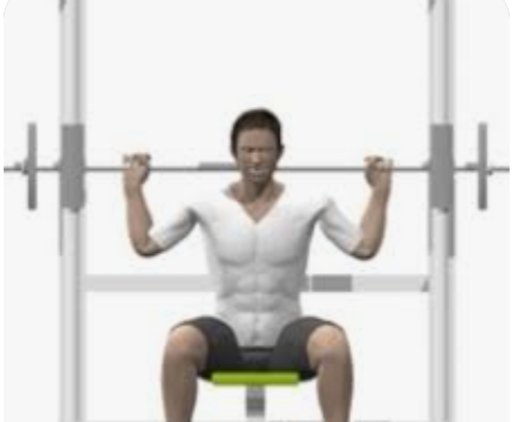
There’s no denying that a BNSP is very beneficial in hitting the rear delts like no other press. And to train muscle groups equally without creating an imbalance then it should remain a useful technique to perform. However, consider using a lighter barbell or even using a Smith machine to keep your movement flush.
The Smith machine could provide an alternative way of performing a free weight BNSP
The Bottom Line…
Any exercise can cause injury if it is performed incorrectly. And sometimes you get unlucky. Injury occured even with impeccable form. There are instances where I would not prescribe a BNSP to my clients but I know their abilities and past injuries so, although I am a PT, I am not your PT. So if you have poor shoulder mobility it is likely that this is not an exercise that you should be doing without support and advice from a professional who knows you.
Thanks for reading! If you enjoy my content take a look on my home page for gym advice and motivation.





 Never Give Up PT