Top Tips For Overcoming A Plateau Through Progressive Overload

Progressive Overload is a technique used to avoid training plateau and to meet set goals. Whatever your goals might be it could be that this needs to be incorporated into your schedule as this can enable you to become stronger and more flexible, increase endurance and make you feel pretty good about yourself which will keep you interested in going back for more!
Here’s my top 10 tips for Progressive Overload…

1. Add extra weight. Probably the most common way of Progressive Overload is to add more weight to the bar once you have mastered a certain weight. Be careful not to rush this though, there are other steps you might want to take first…

2. Add extra reps. If you feel comfortable after a while with a set of 16’s for 12 reps then challenge yourself at 15 reps.

3. Add extra sets. You might have benched X amount for 12 reps and 3 sets for a while now. Adding an extra set, just like adding extra reps, is adding volume to your routine.

4. Reduce rest periods. You don’t have to time yourself or have a stop watch, but being mindful of how long you are resting can help. Reducing your rest will challenge your next set.

5. Run instead of walk. Whether on the treadmill or in a park decide on an interval routine such as Fartlek training to mix things up.

6. Increase endurance. Make your workouts longer. If you have been used to a 30 minute routing then add a little bit of extra time on.

7. Slow the reps down or Time Under Tension (TUT). Your downward phase of a bench press is the eccentric phase. This increases the pressure on your muscle for each rep. Lowering a weight for 3,4,5 or more seconds adds better technique and good progression.

8. Add a different exercise. Its not advised to change your whole routine with every gym visit. You need consistency for your body to learn and adapt, but throwing in something different along with your current programme can help you come through a plateau. Challenge yourself with a Cooper run or a deadlift PB for motivation.

9. Perform supersets. Instead of doing a bicep curl routine and then a tricep routine, complete sets doing both together. So as soon as you finish your bicep curl for 12 go straight into 12 skull crushers.

10. Add an extra training day. If you are currently training 4 days a week, move to 5 days. This could be something that you do just to overcome your plateau as it might not suit your lifestyle in the long term, but you might also find that it does and you enjoy fitting in an extra session!

The general rule is that volume should come before intensity. In other words, adding more reps, sets or lowering rest periods should be done before adding more weight. With any progression, ensure that you are happy with your current form before advancing. There’s no point adding more reps or plates to a poor set of bench presses.

Contact me for further advice on your goals and ask about my training app for more workout ideas!
Do You Need To Deload?

What is a Deload, do you need to do it and if so, when?!

A Deload is a period of time that is structured within a resistance programme to either stop your regular training routine or lower your weights considerably. During your programming, you will lift weights at around 65-80% to 90-100% of a 1 rep max depending on your phase. During a Deload this can be reduced to below 50%. Other activities might be introduced such as walking, light running, cycling or swimming. It is sometimes known as a Deload Week, however this can be for a longer period if you need to.

Not everyone needs to do it. If you think of the average gym goer with muscle hypertrophy and weight maintenance goals, they will encounter the Christmas period, illness, vacations and other commitments that take them away from their training programme. In essence, life provides most people with a Deload whether they want or need one. But once their unforeseen Deload has ended, I would recommend not going straight into the training that they had prior to their time off. It might take a few sessions to get back to where they left it.

A clever programme designer, however, can plan the year to allow for certain events such as vacations. This is known as microcycling, mesocycling and macrocycling. Each week, month, year and beyond can be considered. For the average gym goer I would stick to a 4 month period though. Years of planning is generally used for athletes, Olympians and bodybuilders.

My own programming consists of hypertrophy (4-6 weeks), strength (4weeks), power (4 weeks), peak performance (4 weeks) and Deload (2 weeks). This has been designed to end during the warmer months when I tend to eat less naturally and I can feel my best in a T-shirt. Hitting my peak during the winter seems a little pointless when aesthetics plays a part in my goals. I eat more and wear big coats when it’s cold!

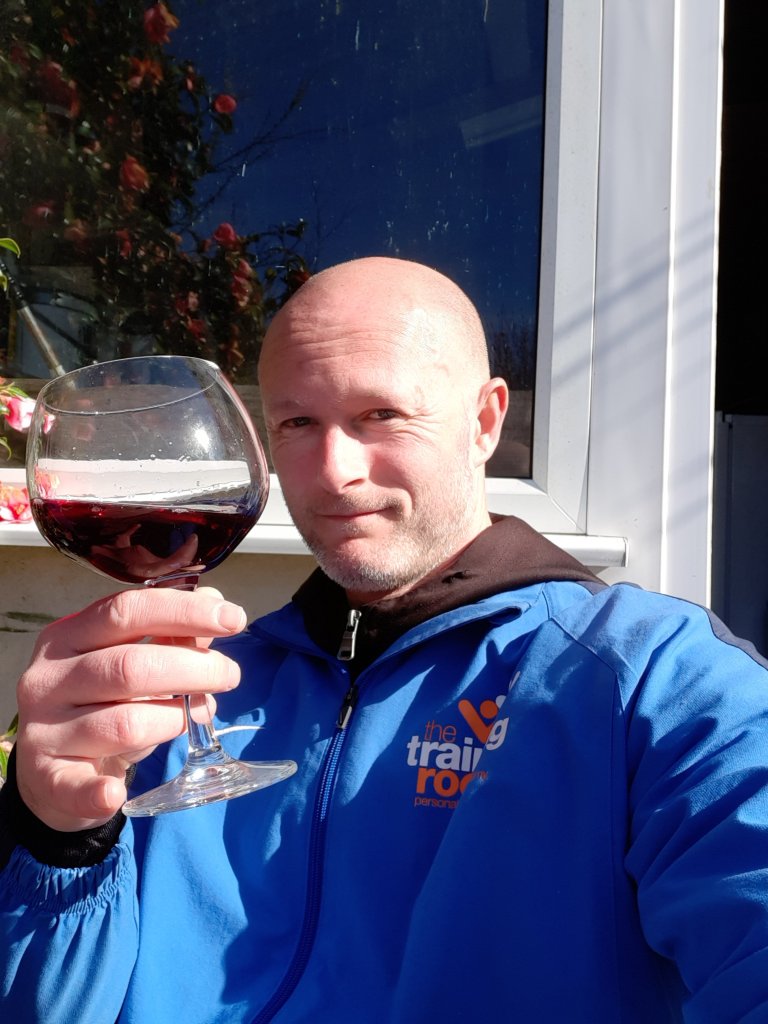
Deload or not, you might find me having a glass of wine

During the peak performance period you can hybrid your workouts to meet your Deload needs too. This would entail scaling the weights back and focussing more on your form in certain sessions. Regression, as it is known, allows your body to recover before hitting it again through beginning the programming process again. The muscles, so the research suggests, adapt and grow due to the new load subscribed.

So to avoid injury and to strategically schedule a period of regression might be something to consider for your hypertrophy goals.

Consistency, Variety And How To Put It Right

We are constantly being told that our training must be consistent for us to get the results that we seek. How true is this? And is there any room for variety in our training. Variety, after all, is the spice of life.

Consistency in your training is very important, but the levels and types of consistency will vary depending on your goals. For example, for fat loss goals you need to develop a consistent routine of when you exercise. This plays a big part in your overall lifestyle goals such as mood and eating habits. Yet for muscle hypertrophy it is essential that not only a consistent routine is developed, but a consistent type of movement is too. But let’s focus on fat loss for today as the two goals are like different sports.

Let’s take a look a person A, who has fat loss goals. Here is a list of mistakes that I see on a daily basis and how he can put this right…

Probably not Person A

× he says that he wants to lose weight.

✓ when an individual understands what it is that they want to lose from their body the process becomes easier straight away. It’s fat that he wants to lose. Not muscle, an arm or an organ.

× he doesn’t plan his week around exercise.

✓ like any goal, it needs a certain amount of planning. At the beginning of the week, he should choose the days and times that he will exercise.

× his plan of a home workout in Monday could not happen because of work commitments so he ditched the whole week in plans.

✓ sticking to a plan, even if it doesn’t happen on a certain day, will still help him achieve his goals. His Monday workout could either be done on a different day or he can go for a walk when the time is right to make up for it.

× he follows a ‘diet’ that his mate told him about.

✓ every diet must have the same conclusion…it has to be in a calorie deficit. This means that he must eat fewer calories than he burns. This can be done by eating food that he enjoys with good nutrition and protein options.

× his exercise program becomes demotivating. Johnny Gainz from Gainz Bruh YouTube channel gave his followers two kick ass ab exercises to do.

Probably not Johnny Gainz.

✓ he needs a consistent exercise routine, but those exercises should be fun and varied. Although certain compounds will remain a constant throughout his training, these can be done with different equipment, rep ranges, as a circuit or as supersets. And full body workouts with a calorie deficit will get rid of belly fat. Not a hundred hanging leg raises. Johnny Gainz forgot to tell his followers that.

Person A became annoyed at not planning and when he did he found that other commitments got in the way. He listened to his pal regarding diet tips who’s own weight goes up and down more than an elevator at Trump Towers and he watches YouTube clips of jacked topless dudes talking him through a human flag routine. In the end the only consistency he maintained is the part where he says that he’ll start again in January. His variety comes from a box of Celebrations.

Attempting positive, consistent routines in his life doesn’t make him a control freak. Building structure and setting weekly targets is not anal retentive.

From being a baby a human will develop routines that work for them. They will crawl to a certain bit of furniture each day to climb to their feet and attempt to walk until eventually they will walk by doing it consistently. Many times they will fall and cry. But they will walk one day through development and persistence.

As we get older and life becomes much more chaotic, it is easy to forget how we were all that baby once. We attempt to be swan like above the surface but the feet are frantically trying to navigate us through another day below it.

Person A has already got the experience of achieving his goals, he just can’t remember them.

A Safe Ship Hides Away From It’s Full Potential

It helps having a past full of ‘what ifs’ as a PT. I can draw from my own experiences and, 9 times out of 10, instantly connect with a new trainee because they have the same ‘what ifs’ as me.

Most of the subject matters might be different of course. For me it’s my lack of traveling when I was younger or not saving money when I had the chance. I chose to spend my money on nights out in Leeds and clothes that I didn’t need. One night out in Leeds, even 15 years ago, would easily cost £100. Most weeks I’d go out clubbing twice a week. That’s a lot of the world I could have seen. Instead, I got no further than Majestic’s in Quebec Street, Leeds 1.

I had fun. Regrets don’t weigh too heavily on me. But there is often a ‘what if’ moment as I look back.

Another of those moments and this I can guarantee is something that is identifiable with my trainees is the feeling of unlocking my fitness potential. What if I’d have done this sooner, or done it properly first time round?

Fitter than I’ve ever been now at 43, had I had this knowledge and application 25 years ago could I have saved years of physical pain and mental anguish? I think I know the answer, but it will forever remain a ‘what if’.

I am convinced that, as human beings, we were meant to climb, lift, run, squat, throw and jump. And yet we became so clever that we practically abolished these great human traits and replaced them with lifts, cars, trams, supermarkets, takeaways, online ordering and anything else that required us to do as little as possible in order to get what we wanted. We wanted convenience.

Physically we can still do all of these things that we were designed (or evolved) to do but mentally we are becoming so tied up in the notion that we don’t have to do it.

Our society is becoming fatter and more depressed. We know what we should do. We have a history of millions of years telling us what we should do, but the comfort of convenience takes over.

And it’s not about how many miles you can run or how much weight you can lift. Unlocking your full potential begins by moving. That’s it. That’s the first part and it’s a huge step for lots of people.

But fear engulfs us. We feel safer in doing what we know, even if it niggles away at us as we complain on Facebook about our weight or our latest ailment. We want the replies of ‘You ok Hun?’. We get the rant off of our chest to anyone who will listen for another week or two.

A ship is always safe a shore but it is not what it is built for. No matter how slow it needs to go, a ship is built to move. In doing so it heads into dangerous waters with unprecedented conditions, but it is built to deal with it and reach it’s destination. With a captain and a map the journey is less treacherous too.

We must realise our full potential and set sail ourselves. Another day a shore is another wondering.

My trainees become their own captain. That is the deal, that one day they can train without me. They create an active lifestyle that involves consistent training and a diet that they can enjoy guilt free. Because I know how they felt in the very first day they approached me. And I know how to manage the ‘what if’.

Not A True Story

The other day I had been training for an hour and i noticed a guy training beside me for a while. We gave a few nods to one another as we selected our weights and at one point I muttered “have you finished with those 22’s pal”. Our training intensified. I felt pretty good that day and this guy was obviously a veteran of the free weights area. We ended up simultaneously grunting out each rep which, to the other side of the gym, must have sounded like a porno you order on Wish. We were scraping ourselves off of the floor by the end, obviously being spurred on by each other. He turned to me, smiled and said”Why do we do it to ourselves?”

I get this question a lot. I usually just smile and say “I dunno. I’m getting too old for this.” But on that particular day, I said….

“Training can help boost energy levels, self esteem, sleep quality and mood. It helps us combat health conditions and diseases including strokes, type 2 diabetes, arthritis, depression and cancer. Research also tells us that performing regular exercise reduces our chance of becoming seriously ill from Covid.

Resistance training not only helps us in the now but we are giving ourselves the best chance to be as independent as possible in later life. It shapes our body through increasing bone density and muscle firmness and keeps us from wanting to eat and drink poor food choices because we are proud of our goal setting and our achievements and we don’t want to destroy our good work.

I become a better dad and husband after training. My mindset is in a much better place because I feel strong both physically and mentally. People meet friends while working out and a gym can be a place of sanctuary and a social hub.

I can wear T-shirts and feel proud of my body. I sometimes tense my bicep and say ‘Hello Mr Bicep’ in the same voice as Phoebe did to Chandler in Friends. I could even squeeze into skinny jeans if I were into that kind of fashion because after a few squats I think my ass looks like Beyonce’s. It probably doesn’t, but I don’t care because I think it does and it is my body and I have to live in it every single day and if I think I’ve got a good ass then I have a good ass.”

As I stood towards the mirror and twerked my booty whilst giving it a firm slap, he walked away shaking his head. I’ve not seen him since.

Who needs Beyonce’s ass when you’ve got a hat like this?

If You Walk With A Stick You Develop A Limp

I have a question.

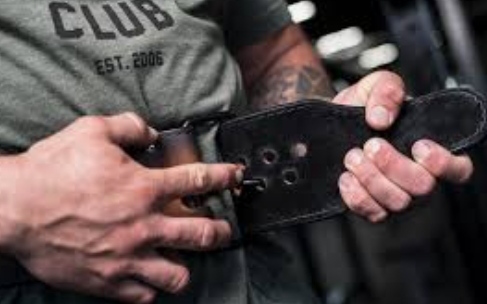
When you play football, run, bend down to pick your kids up, carry shopping bags, have sex, decorate your home or do the gardening do you wear a weightlifting belt?

I think I might know your answer but I can tell you that I don’t. So why would I wear a belt in the gym? In my opinion, only powerlifters who are competing in lifting heavier than their opponent or attempting a PB really need to wear a belt. And even then, they won’t need to wear it for every minute of every training session.

So why do I see people in the gym squeezing the life out of themselves like they’re fitting into an 18th century corset?

Seeing as this was one of my mistakes in the gym before I knew what I was doing I might be able to answer.

* I felt part of a group of men in the weights section who thought they were the dogs bollocks. The gym bro.

* I had severe back pain so I wore a belt so that I could lift far too heavy weight and damage my back further.

* I felt like a wrestler walking onto the gym floor, buckled up, gloves on, straps on knees and shoulders and heavy metal playing in the ear phones and my hood over my head. More like the Ultimate Prat than the Ultimate Warrior.

* I wanted to stabilise my core. Rather than actually work on my core to become stronger, I wanted a belt to do it for me.

Absolutely, a power lifter will need to work on their core, but when their success can depend on just one almighty lift that can cause serious injury in the moment or in their future lives then a belt can give them just enough stability to get that lift out. It is their sport. They need a belt.

But I’m not convinced the regular gym goer does. They can do more harm and cause more regression than good.

It’s like using a hiking stick when you take the dog to the grass verge for it’s morning poo. You don’t need it.

The average gym goer can learn so much more from their own strength, technique, movement, core and general fitness if they were to ditch the gym regalia. The mind to muscle can’t develop if it needs to break through a weightlifting belt. Over use the belt and we are in danger of under using our core.

You might find that you deadlift and squat less without the belt, but unless you are training to be in Strongman competition or a Power lifter, you could see much more progress in your over all fitness experience.

Workout Supplements?

I used to go to the likes of Holland & Barrets and gym bro supplement shops regularly. The mindset of many gyms that I frequented was ‘what is the point of putting in the hard work without supplementing your gainz?!’

It became just as important to me to take the pre workout, creatine, taurine, ZMA, BCAA and protein powder as it was to do my workout. With a short spell of injecting dianobol too, I could be found crawling the gym ceiling more often than achieving anything on the gym floor. We live and learn.

And I guess a moment of change for me was meeting my wife. Not only did she clean up my lifestyle but she could cook. And I’m talking using ingredients that I didn’t even know existed! Ingredients that had all of the natural benefits of what I was trying to find from a capsule or a powder. Fifteen years on and with me exploring my own culinary skills it has been life changing to find that I don’t need all of the supplements in my diet. Eating food will always be the best way to fuel my body.

Back in the gym floor rather than the ceiling.

However, I wouldn’t discredit the supplements I listed above as they can be useful tools depending on your goals and your training period. You need to know how and when to take them and importantly you must realise that there is still the hard work to do in the gym.

Today I was asked twice about protein powder and if it is worth them taking it. Its a common question in my job and yet my answer cannot always be the same. It depends on the person asking. But I have a general rule in protein shakes. Only drink it if you have been unable to eat a decent meal with good a portion of protein. Perhaps you got stuck at work or you’d prefer not to pay a tenner for a dry sandwich at a motorway garage. Then it’s a good time to open up your car boot with your emergency protein powder and shaker bottle inside.

A protein drink shouldn’t be shoe horned into a diet unless you want to gain size. Then you might want to add the calories. Sure, there are low calorie versions, but if you’re being careful with your calories then adding any extra calories from a protein shake seems pointless. Surely when you limit your daily calories your meals become even more important. You need the nutrients, the vitamins and the almost full feeling from real food, not a drink.

For anybody going into training in the gym properly then I would advise a good training program and a sensible nutritional approach. Both of which escaped me for years and is why I became desperate with my supplements hoping for something magical to happen.

At 43 my drive comes from getting stronger and remaining ‘in good shape’. This would see me well as I get older. And the only things that can keep me on the right path is consistent training and nutrition. Not pills and potions.

So be cautious about your supplementation. Speak to a fit pro who you know and trust, I find this much more helpful than asking Gloria from Holland & Barrets. And the gym bro supplement shops are likely to sell you any crap anyway, especially if you come across as a novice.

Rosie The Riveter

I am no longer surprised when I am approached from a female about PT whether 1-1 or online programming that a part of their goals is to become stronger.

Where once I had to reassure a female trainee that they would not become bulky by performing resistance training in the weights area, they are now actively seeking out the barbells and dumbbells to train with.

And if you are confused at this point let me confirm…eating more food makes you bulky. Then I’ll address the elephant in the room and say that added testosterone levels are necessary for unnatural bulk. So females of any age and myself on the wrong side of 40 have no chance, like it or not.

Performing a few deadlifts won’t make you flat chested, look orange and pose on stage like you’re constipated in a sequinned bikini. But, as I say, females seem to be coming round to the fact that you can be strong and lift weights without talking like Dolph Lundgren.

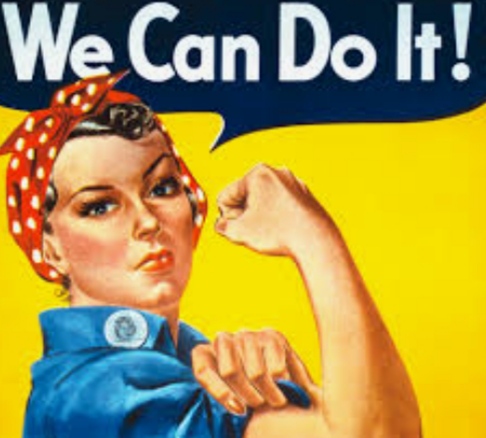
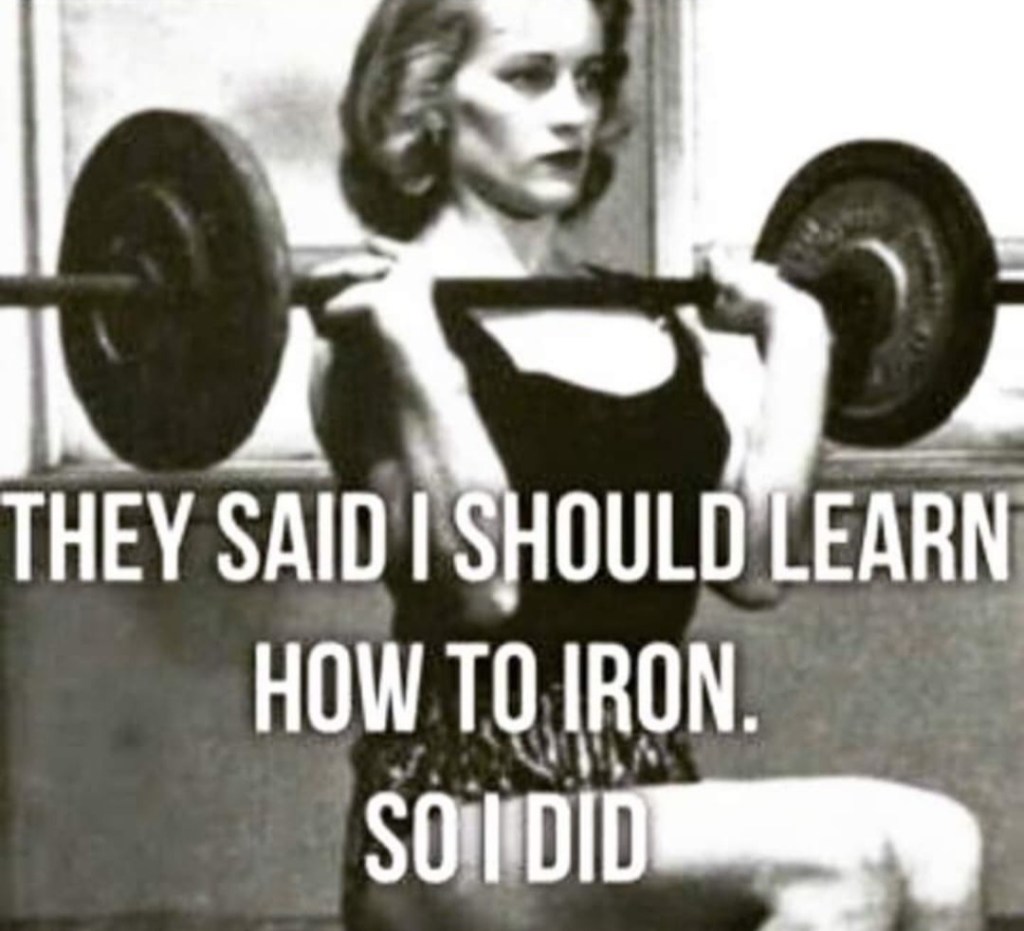
As I reflected on International Women’s Day I wondered when this shift in attitude started. And I recall the posters such as Rosie The Riveter which became a symbolic picture of the female’s efforts in the USA during World War Two when they had to take on predominantly male roles as the men fought in the war.

Rosie The Riveter

Much like the females in the UK, the women kept the country going in jobs that would have only been offered to men previously. And a show of strength is not just physical. I see footage of strong women protecting their children as they flee war in Ukraine. I watch as 90 year old women, born during World Wars, now fight and protect their family with their last bit of energy.

These women are stronger than me.

Females have had to fight for a vote, to sit on a bus and social mysoginy while raising children, running households, gaining careers and now, as I witness daily, getting strong.

As I conduct a consultation with a prospective client, male or female, I make it very clear that resistance training will be a part of their program. Unless they are training specifically for a marathon, I cannot think of any reason why it shouldn’t be. With the correct diet for a trainee’s goals, resistance training can contribute to fat loss, muscle gain, physical and mental strength and wellness, confidence and the ability to self care in later life. I want the short snippet of time that they have with me to impact them for the rest of their lives.

And due to the attitude of my trainees they inspire me too. They do become stronger. They do get results. They do learn and continue training hard long after they work with me. And many of them are females.

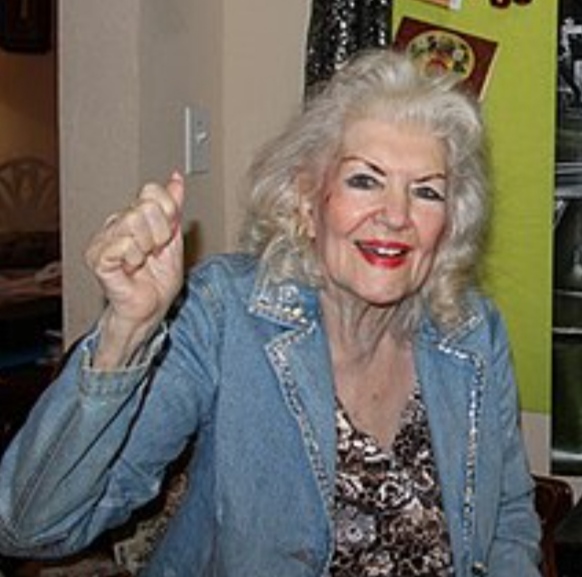
Rosie The Riveter was actually a lady called Naomi Parker Rodgers who died at the age of 97. Forever remembered as a strong independent woman.

Naomi Parker Rodgers AKA Rosie The Riveter

Young People And Resistance Training

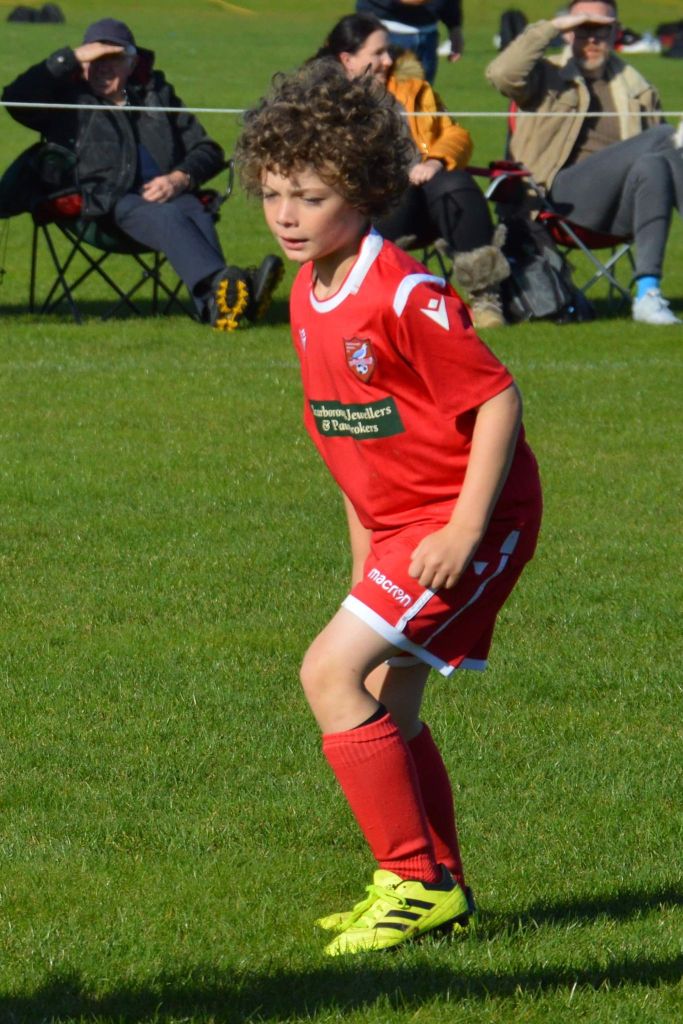
My kids are beginning to ask about the work that I do. My eldest, who is 8, goes to football practice at the same sports centre as where I do the majority of my personal training so he often sees the inside of a gym and is very inquisitive about what each piece of equipment does. His first love is football, but ever since he did gymnastics from 4 years old I could see his love for all sports and movement.

There is a big debate about what age a child should be introduced to resistance training and, although many people say that a child as young as 8 is too young and can stump growth due to damaged growth plates, more recent research strongly suggests that it is the perfect age.

So, my view is this…

If you are going to train incorrectly then you shouldn’t begin resistance training at all until you know what to do. And that’s at any age. You will almost certainly cause more harm than good.

An 8 year old can do very light resistance training if they are being taught correctly. Studies show that it can strengthen a child’s bones, joints and muscle, improve movement as they grow and are able to avoid injury or recover from injury quicker. It is also a great discipline that improves self esteem.

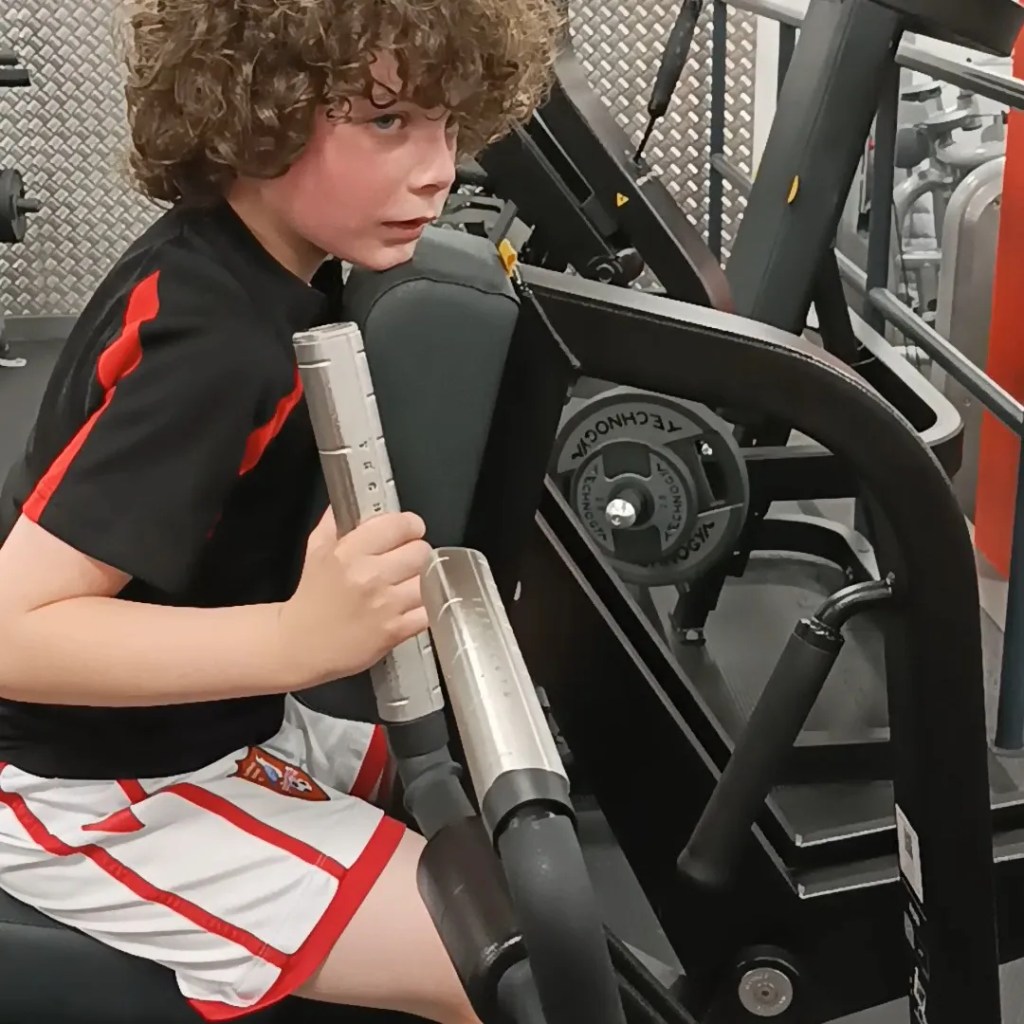
Jonas trying out the chest press machine

Resistance training can do everything for a child that it can for an adult, but for a young developing body it has a great advantage over an older body that has stopped growing. The idea that it can have a detrimental effect to a child’s body was amplified in reports by the American Academy of Pediatrics almost 40 years ago and their concerns shouldn’t be discounted even now.

However, due to a much greater knowledge of resistance training and hundreds of papers later, it is understood that it can be done safety.  And it is a calculated risk that I’m willing to take with my kids. After all, they’ll be guided by a qualified PT. Not many kids will have that luxury. Indeed, due to not having PT parents and the reports on young people performing resistance training being largely negative as I were growing up, it is something that never even entered my mind to want to do.

My idea of a gym back in the 80’s were of a backstreet garage and grunting men. Maybe that isn’t wholly accurate, but nevertheless, gyms have most definitely changed since then. The gym I train at, which calls itself a Sports Center and homes the town’s football team Scarborough Athletic FC, caters for the young and old with a variety of sports to play. For a young athlete, it is a kid’s dream. I can’t deny my kids a little taster of it’s gym equipment.

With no added weight to the machine, Jonas attempts a seated row

My eldest has an appetite for being in the gym and learning about what and why certain movements are performed. Many activities are often body weight only, such as squats, press up or a plank. We don’t need to load the bar just yet! But just getting the taste for it right now is a positive step in him becoming an active and strong (both mentally and physically) young man.

And I’m hoping that when both of my boys are strong athletic men they’ll be able to push their dear old dad to the shops.

Mastering the one handed press up