The Sea Needs To be Sailed

As I was finishing my workout yesterday I reflected back on what I had achieved during  the session. Using unconventional methods, breeze blocks, trees and bottles filled with sand  I recognized that, despite not having the equipment I was used to, I had a damn good workout. Was it perfect? No. Was it effective? Yes.

Bob Marley, when asked about perfection, said it best. “The moon is not perfect. It is full of craters. The Sea is incredibly beautiful but salty and dark in depth. The sky is always infinite but often cloudy. Not everything that is beautiful has to be perfect.”

The Sea needs to be sailed, swam and viewed to be appreciated and admired. It doesn’t have to be perfect.

Far too often as I watch fitness influencers I see a common theme. They aim to teach us the perfect form and the perfect diet. I also see many of them mock those who have poor gym form and much of their content becomes just a dig at their competitors or some poor random bloke performing lat raises.

Sure, poor form can lead to injuries, so practicing each day is very useful. But condemning those who don’t fall into the ‘gym bunny’ category with the perfect form with the perfect kit is not helpful.

I’m not a fitness influencer, but as a trainer who represents the industry I see my job as encouraging people to give it a go and discover activities that will help their health and fitness goals.

You don’t have to be the perfect runner, have the greatest knowledge or form in the gym, be the best swimmer or be able to walk for miles. You do, though, have to be open to trying out these things that make you move to find out what it is that you actually like to do.

There is no one method to get you healthier, fitter, stronger, faster etc (whatever your goal might be) apart from the method that you enjoy. The perfect routine doesn’t exist. The perfect gym form doesn’t even exist. There’s only a simple set of rules that can keep us safe from injury.

Stop looking for perfection and just find what you enjoy and work with it. It might not be right for the next person as long as it is right for you.

And now, in my moment, I think I’ve found what is right for me.

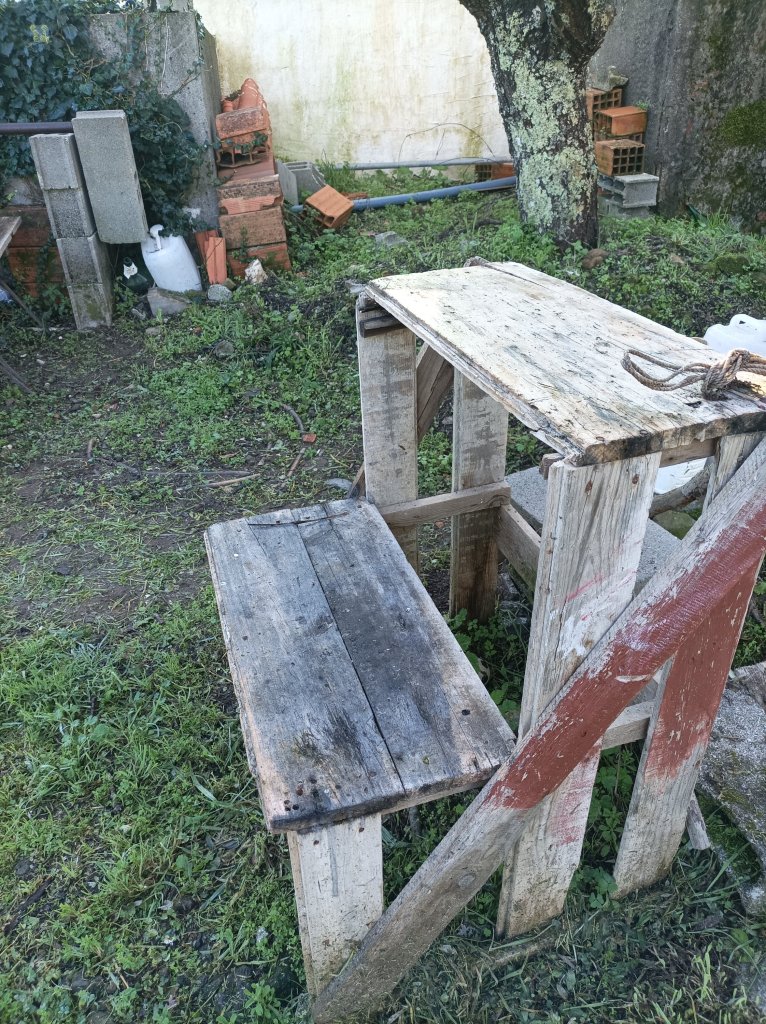
Here is my ‘gym’ that is working for my mental and physical health at the moment…
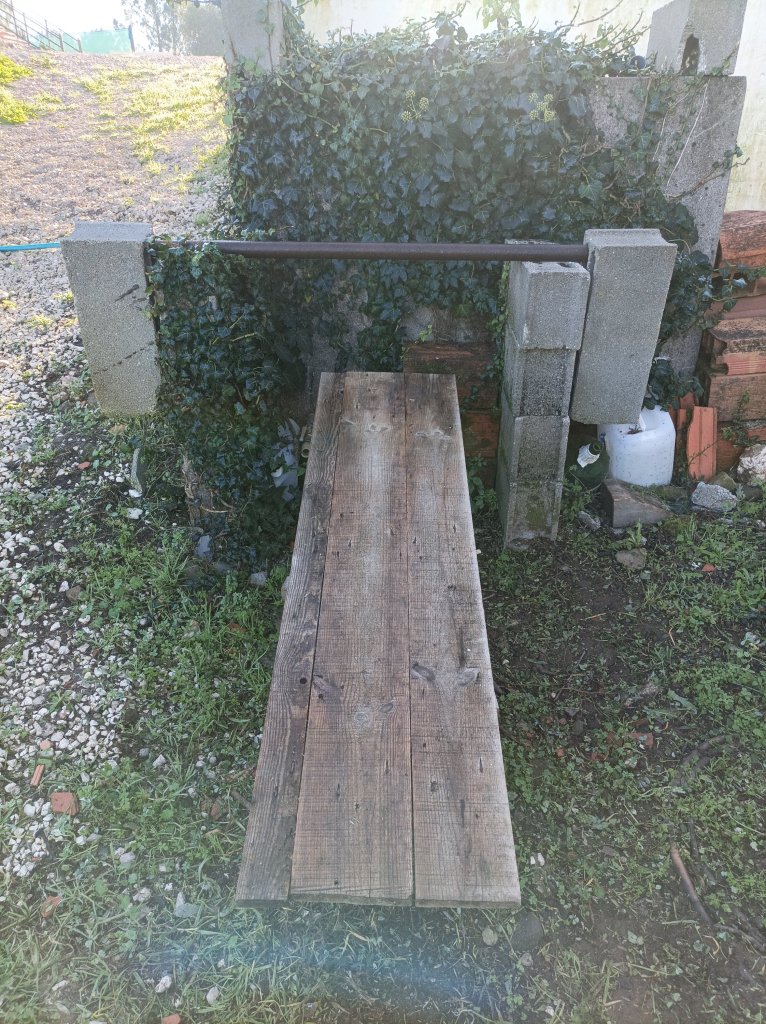
A wooden bench, a bar and two breeze blocks
A bar lodged between two branches for pull ups
A rickety old work stool to sit on for seated shoulder press
The weight rack AKA the detergent bottles filled with sand

Spotting Is A Skill

Your session is going well. After a series of successful barbell back squats you decide to go for a PB with a one rep max. You look around the gym to find someone to ask to spot you for your next set.

The person you choose is vital for you to complete the rep successfully, avoid injury and the possibility of death. I’m not kidding here. A recent death of a bodybuilder with over 200k on his neck tells you that I am being extremely serious. Choose your spotter wisely.

So who do you ask? The obvious choice would be to ask a trainer who works in the gym. But be careful here. You need to know what they specialise in. Have you ever seen them perform a barbell squat or instruct their clients? A trainer with an ego might agree without really knowing what to do. And that goes for other gym members too. They want to help but haven’t got the skill (or strength) to if assistance is needed.

The person with the legs like tree trunks who you see hanging around the squat rack every time you’re in there is a good start. Tell them what you’re wanting to do. It is important that they know your expectations for the lift such as time under tension, reps, your weaknesses etc.

Spotting is indeed a skill. So what are the main points to know if you have a spotter or you are the spotter of a barbell back squat?

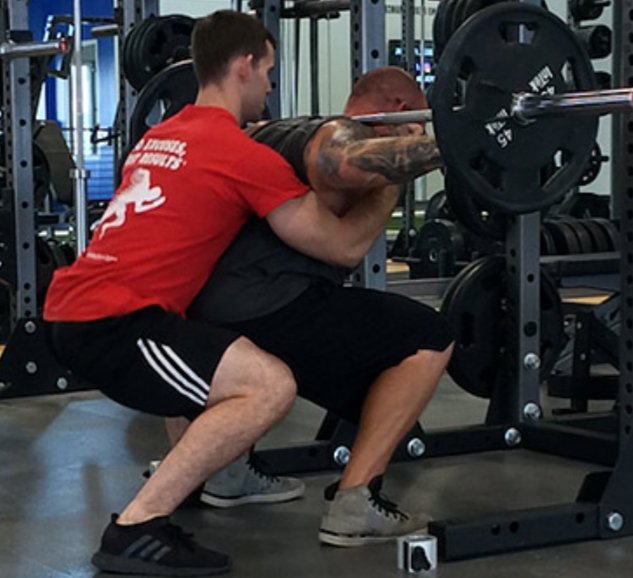
1. For a heavy lift, the spotter should place their arms under the lifter’s arms.

Holding the waist can be fine for moderate weight and can be more comfortable if it is a male spotter and a female lifter. The spotter should not place their hands on the bar. They’re not supporting the bar, they’re supporting the lifter.

2. The spotter should mimic the lifter’s movement on the way down. This is why a good squatter usually makes a good spotter. They must keep a straight back and use their core to get the lifter to the starting position if needed.

3. The spotter should be stood close. There’s no need to look like you’re dirty dancing though, not if the spotter and lifter are using their hips correctly.

4. If it is a very heavy weight, not only can a spotter be crucial in the lift but a person at either side of the bar should be considered. The body can buckle at any point when under pressure and there’s only so much a spotter can do if they’re having to deal with a collapsing person and a weight falling on top of them.

It’s worth pointing out that the body can give way with any amount of weight and this extra weight can still cause serious injury, so extra help at either side of the bar is something that can be considered at any time.

Lifting heavy can be fun and rewarding, but it is essential that you do it correctly. A part of that is finding a good spotter!

The Bench Press Back Arch

Go into any gym or click onto any fitness/training page and there will be a debate that has been around since the first person laid on their back and pushed something heavy above their head.

I’m now picturing Fred Flintstone pressing a rock, but that’s silly.

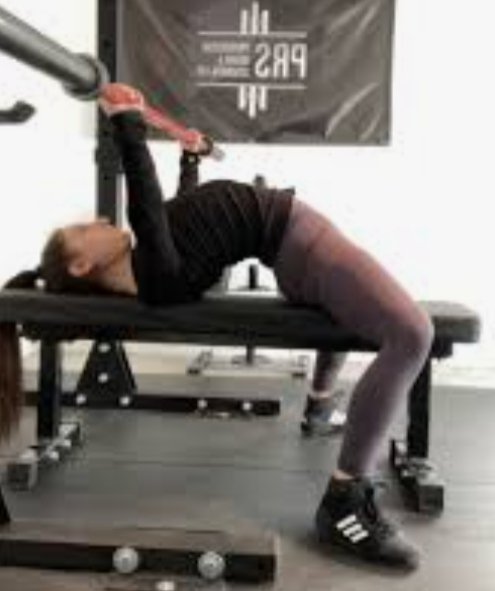
The debate is whether or not we should arch the back during the bench press. And I mention this now because it has once again been brought up in conversation at my gym today. After somebody saw me arch my back during a bench press, they asked,”Are you supposed to arch your back?”

Knowing that the questioner was a football fan I came back with a football analogy. I replied,”If you are taking a corner kick should you knock it into the box or go short?”

The answer, of course, is that it depends on the circumstances. It depends on the stage of the game and the tactics that you or your coach wish to deploy. There’s no right or wrong, but the timing can be right or wrong. I’ll explain…

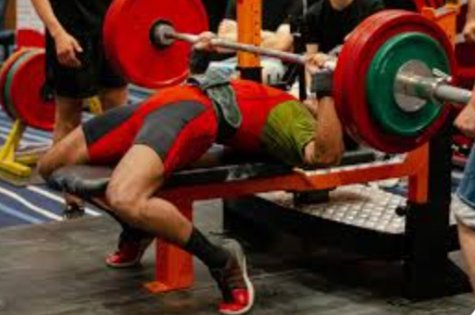
Arching the back is great for lifting heavier weights. It provides a more compound movement which recruits different muscle groups and helps create more power. And this is my reason for arching my back. In fact, I always bench press with my back arched because I don’t find it the best hypertrophy exercise, despite it’s many other qualities.

So, a chest press in order to promote pectoral hypertrophy would be to use a set of dumbbells at around 70% of your 1 rep max for 10-12 reps. Dumbbells allow a longer range of motion which can result in more muscle activation. The bar just can’t give you that sort of range, so a bench press with a bar without an arch, in my opinion, just gives you a ‘pump’. A few pics in the changing rooms for your Instagram look great but by tomorrow there will be nothing to show for it in real life.

I always use compound movements as my primary exercise and I often start with the bench press. Now in my 40’s, I have to look at ways of increasing my testosterone and compounds have the greatest success at doing this. I don’t bench press to ‘grow muscle’, just testosterone levels. However, once I pick up the dumbbells it’s all about weight management and hypertrophy.

Let the debate continue!

Fitness Auditing And Why We Need It

You have this cool programme that you developed/got off YouTube/received from a trainer about 6 months ago and it was fantastic.

It excited you, gave you a new purpose in the gym and got you some kick ass results. For the first time in a long time, you had a new belief in reaching your goals.

It was amazing. WAS.

But now, 6 months on, it all feels like a slog. The thought of going to the gym isn’t exciting you any more like it did. The results are slow if any at all and you’ve started to feel the injury niggles from repeating the same old exercises. Day in… Day out.

>sigh< “here we go again” you say as you enter the gym doors.

You start to blame yourself. Are you tired? Is your mind just not in the game anymore? Is it just an age thing? Are you eating right?

The odd day off creeps in where you would usually have gotten to the gym. A few mates are having a pint after work. It’s tempting. The gym bag gets thrown back into the boot of the car. Or the early morning start where you once jumped out of bed to get a workout in before work has gone. Now the snooze button seems like a better option.

If any of this sounds familiar then the chances are is that your programme has run its course. I’d estimate that it’s probably a good four months out of date.

Not only does a progressive programme last over months and in some cases years, but keeping a check on the finer details like rest periods, weights, reps and sets becomes essential to a trainees goals.

If you have a workout plan that you repeat every week without a direction beyond that plan then it will become stagnant. You become demoralised and you give up. Or you become demoralised and injury gives you little option but to give up.

Internet workouts perplex me. They appeal to people because they are free. I’ve been there. The free option was like finding a cheat sheet. A short cut that didn’t cost a penny. And the guy posting it was jacked. ‘That’ll be me soon,” I thought.

Programming isn’t a one size fits all. And if you are lucky enough to find something that works to begin with, then eventually, without auditing, you will be forever treading water. It will become a tired workout. You’ll become tired.

Assessing your progress every 6-8 weeks should be as much a part of your training as perfecting your squat or your bench. Knowing how and when to tweak your workouts is a skill. I only acquired this skill when I was studying for my PT qualifications. Since then I’ve written thousands of programmes.

If only I’d have known how to audit my fitness 20 years ago when I was at my physical prime. In truth, I didn’t have a clue back then.

I don’t blame myself or anyone else for not auditing and following a progressive programme. There’s so much confusing information out there and, as I say, it’s a skill. A skill that I learnt and became qualified in.

Why wouldn’t you try out free workouts online? After all, I wouldn’t trust most PT’s in mainstream gyms anyway. I honestly can’t tell if they’re giving the gym member an induction or a training session, such is the lack of passion in their approach.

But very good PT’s do exist. Ones who are fully self employed are generally 100% committed and knowledgeable to their clients. They have to be. If they fail then nobody will pay them. If they don’t get paid they don’t have a job. I literally go to sleep at night thinking about programmes or tomorrow’s sessions. I have to. I’m the one who will help my clients audit their workouts. I need to know every tweak for over 20 programmes at any one time.

The Bottom Line

Any new workout usually works for a time. They often work muscle groups that haven’t been worked before and muscle soreness feels intense but satisfying. But the body adapts and with it so must your programme. How you adapt it is what will keep getting you the results.

Resistance Machines

My usual gym routine is from Monday to Friday. The weekends are generally for family time and relaxing away from formal exercise. It works for me. There’s no set rule that works regarding a training plan. Perhaps my ideal plan would be having two rest days that aren’t together but personal circumstances have to be accounted for.

What training a full five days in a row allows me to do is have a definitive day in which I can begin a wind down in the intensity of my workouts. I can’t hammer my body every single day with heavy compounds. Indeed, I believe in my 420 reps workout that I have developed for others so much so that I am doing it myself. This means that once Thursday’s session is over I have completed over 1500 reps. By Friday, my body is telling me that I need a little assistance from machines!

And this is exactly what the resistance machines are perfect for. They provide much more relief for the body and it isn’t just the physical aspect that needs the respite. Neuromuscular Innovation, or more commonly known as the mind-muscle connection, takes its toll on the brain. The thought process of connecting with your target muscle in a bench press scenario is much greater than on a press machine.

Foot positioning, core engagement, time under tension, breathing and the contraction are all crucial components of a bench press. Sure, there’s still the necessary check list to go through on a machine but in no way is it as thorough. Therefore, instead of risking injury with sloppy end of the week technique, I still get to workout without breaking myself.

It does concern me, however, how overused these machines get. I get the impression that lots of gym goers use them because they haven’t been shown how to squat, deadlift, bench press or barbell row. Their inductions usually include a brisk talk through these machines, so why would they use anything else?!

When I did gym inductions I went through deadlift form as a priority. It is a free weight compounds that requires the whole body to move and work together as one. I can analyse the hip extensors and knee flexors of the participant and get an understanding of overall strength and fitness levels. Without it, I would struggle to know what machine or what type of exercises a new gym member should be doing. So I am perplexed as to how the gym staff know. Introducing them to an ab crunch machine is way way off of where most new gym members need to be.

And don’t get me started on an ab crunch machine. An over reliance on a resistance machine can cause injury, but an ab machine can be particularly dangerous. The deep abdominal muscles, together with the back muscles support and protects the spine. I cringe as I see yet another gym member rocking wildly like a wound up toy trying to work their abs. Back pain is the biggest reason for staff sickness in the UK and until we begin to train our lower backs correctly this statistic won’t change.

The Final Word

Resistance machines are a great way to supplement your workouts. A heavy session on the bench or in the dumbbell section takes a lot out of us physically and on the nervous system. Rounding off a session on the machines or cables can be a perfect finish. But we can’t rely on them to reach our goals, be it injury rehabilitation, weight control, muscle gain or movement. If you are completely new to the gym then I would recommend starting in the free weights area with a trainer who knows what they’re doing.

That you for reading this article. If you have any questions on this or any of my practices then do get in touch!

Shay PT.

Gym Fitness Classes

Gym Classes are an excellent way to introduce yourself to formal exercises, meet new people with similar goals and to plan your fitness routine for consistency. From Stretch classes, Zumba, Spin and Boxercise the mainstream gym have covered it all. And being a Fitness Instructor myself I can see the fantastic benefits of booking onto a regular gym class….but it should come with a warning.

Here are my gripes on classes…

* Gyms that I am aware of are regularly putting on virtual classes. This seems to limit the cost of paying for a live instructor and can run throughout the day. I find this counterproductive from a gym going by the feedback that I receive as many gym members want live instructors and some have moved to other gyms to find them. A trained fitness instructor can manage the pace and intensity of the class and adapt workouts each week to fit the needs of their participants.

* I see more injuries occur in fitness classes than I do in the gym. An instructor cannot check the form of 30 class members. The classic exercises for poor form are deadlifts, bent over rows and kettlebell swings. In fact kettlebell classes are an injury waiting to happen. When you need to teach hip hinges, breathing and core control to a room full of people who see their half hour class as a way to ‘blast their abs’ or ‘fat burn’ it becomes an impossible task.

* When you think about the titles that they are given, such as those above (abs blast and fat burn are real life class titles) it is very misleading. An abs class once a week won’t get anybody a six pack. An abs class won’t do a great deal for stabilising core muscles. A fat burn class usually consists of fast paced reps that use exercises that require slow, controlled movement to focus on target muscles and avoid injury. Getting these movements right and incorporating them in a fitness programme is essential for all types of fitness goals, but repping out as many deadlifts as you can in 60 seconds won’t. Yes it burns calories, but put your back out and you won’t be burning those calories again until you’ve recovered from your injury.

* Classes can be demoralising for lots of people. They feel inferior compared to those around them. Yet many class goers have been going to the same class for years and might know what to do. If they know the instructor then they will probably know what equipment is used and what exercise is next. They probably even know that the class starts with Rock DJ and finishes on a club version of Castle On The Hill. But new people might feel out of their depth. Which leads me onto my recommendation…

Oh do tell Shay!!

Well, for anyone going to a new gym and are a little apprehensive or have never been to one before I would suggest hiring a good PT (a good one! Not a Poundland special) and learning how to move correctly. Of course I would say that, I’m a PT right?! Yeah but Brian who is reading this at his home in Penikuik won’t be hiring me 1-1 so it’s of no great advantage to me. It is, however, sound advice.

5 sets of ten deadlifts will be far more important to a gym goers goals than a class when they first start out on their journey. When to breath, how to engage the core, foot placement, hip hinge, strength and stamina building, morale boosting and goal setting are all of things that will be learnt fairly early on in regular PT sessions. None of which are taught with any great depth (if at all) by Mr Motivator at the front of the class whooping and jumping like a Duracell Bunny on speed.

The Journey should begin on the gym floor, not collapsing on a class floor.

Thanks for reading! If you enjoy my blogs then check out some of the other stuff too. See you soon!

Practice Falling Over And You’ll Be The Best Faller Overer Ever

We’ve all heard of the phrase ‘Practice makes perfect’ right?

Well as much as I agree with the sentiment, I’m going to explain to you what it actually means to me. Because it comes with a caveat.

I believe that you can practice something really badly. You could be perfectly bad at it I suppose, but I don’t think that is the purpose of the phrase ‘Practice makes perfect’.

I’ll use the bench press as an example. Repeating the bench press incorrectly each day will undoubtedly cause injury. Shoulder injuries around the rotator cuff, which are muscles and tendons that surround the shoulder joint, are very common due to poor technique.

I have seen some very impressive weight being pushed in the gym but with horrendous form! Form doesn’t just allow us to actually train the muscle that we are supposed to be training, but it helps us avoid injury.

Practicing correct form AND doing the right things specific to your goals is important. My son wants to practice a rainbow flick in the garden for an hour each day because he has seen Neymar do it. I go through this technique with him for a certain length of time because he enjoys it and then I encourage him to move onto his practical skills. Pass and move, target practice, ball shielding and tackling are all part of the game that he will need to do withing a match. There has to be a sensible mix of the fun stuff and the stuff that gets the job done!

Awards for playing football, not for rainbow flicks

It’s like the row of dudes training their nightclub muscles in front of the gym mirror every day. A pumped up bicep made up of sarcoplasm (blood and water) bulging from their T-Shirt looks good and probably makes them feel great. Fine. But over working the bicep instead of training all of the muscle groups equally will not provide an overall athletic, healthy and practical body. The older they get, this will become apparent. Age can be unkind and pumped up biceps won’t hide the years of neglect in other areas.

And as for my son, unless he becomes Neymar or goes into the circus he will probably never need to perform a rainbow flick for any great purpose (even Neymar gets booked for doing it).

I always say to my trainees ‘practice, practice, practice’. It’s not always popular when I prescribe yet another 5 sets of squats for them to perform but it is necessary. I know that they have good form and I also know that, through progressive overload, they will continue to get better and stronger.

I fear that the regular gym goer won’t ask a PT or gym staff about good form anymore. Either there’s no point in asking because they don’t really know (watch them train themselves, I wouldn’t ask some of them how to lift something heavy above my head) or it is perceived that a PT will try to sell you their services. Often this is true, they’re at work after all. But if you find a dedicated fitness professional they will happily discuss gym form with you. It should be their passion. So ask one who you see regularly and doesn’t seem pushy with their sales. Who knows, if they impress you and you feel that you can progress with them as your coach then you might choose to have them as your PT.

So don’t continue doing something wrong. It’s not impressive getting a PB if it means you put your back out. Start practicing doing it right and make progress injury free.

Becoming Process Focussed, Not Outcome Focussed

I want to share with you the difference between a Process Focussed attitude and an Outcome Focussed attitude. Because when you can give yourself a little tap on the shoulder and remind yourself of the process then the outcome will eventually happen. I promise.

It All Needs A Process

I am so, so good at this in the gym with myself and my clients. I focus entirely on the process. That is my job. It’s what I am trained and disciplined in. But outside of the gym I have goals that I want now…right this second! And in frustration of not being able to get them right now means that the process gets crumpled up and torn like a handy pocket road map that has been stomped on during my tantrums. Had I kept a level head, the road map would still be intact and it would be easier to follow. The tap on the shoulder from myself, a professional, a partner or a friend can work wonders in working out the process for anything. A career move, a life skill, family life and health and fitness goals. It all needs a process.

Sometimes we just see a 10k run, a dress size, a one rep max or a weight loss target. The finer details of how we are getting there is the real key.

In football, the skill isn’t knowing that you need to score more goals than the opposition, it is how you’re going to do it. You can give any sporting example of this and it remains the same. The process needs to be the focus. The outcome harbours great rewards, but without the process you won’t get there.

Frustrations Of The Outcome Focus

So I’m not getting on my high horse here and telling you that I do everything perfectly and you need to step up. You might be able to help me find my process in other aspects of life with your skills. But I’m here to talk about fitness goals. And I’ve been prompted to give it a mention because the gym is full of outcome focussed people. They press, lift, run and jump without any attention to their process. They just want the results. And this can lead to frustration and in many cases injury.

And when you figure out a process for one thing, other parts of your life can begin to take shape too. Have you ever experienced getting a promotion in your career and found that your relationships in your private life improved? You have followed a process and met deadlines, hit targets, gave your colleagues morale boosts or took them under your wing and you got rewarded in your promotion. This made you feel good in other aspects of your life too.

It’s the same in your fitness goals. Once you begin a process in your fitness goals then you begin to focus on your day to day tasks that make up the little wins. And it’s not just about doing this in a gym. Imagine going for a walk with a friend or a partner away from the daily grind. Here you can discuss your ambitions, your feelings or put the world to rights. You feel great and you’ve managed a few thousand steps as well. Make this a regular exercise and you have started the process for your mental and physical health.

Becoming process focussed takes away the big issue that seems, at times, unobtainable…the outcome. To grow muscle you can’t just lift heavy stuff a lot. To lose weight healthily you can’t just eat less. To get a job promotion you can’t just turn up to an interview. To make a relationship work you can’t just add them as a Facebook friend. You need to work hard at a process that works to get the things that you want.

Small Victories Are Important

Focussing on the outcome will keep us bitter and when we have no way of getting there we give up. In my Coaching App it’s exactly what I do for hundreds of people. I’m the tap on the shoulder that reminds them of the process and enables people to reach their goals without even realising. That’s because they have enjoyed a journey that took them way beyond the anxieties of ‘ needing to lose a couple of stone’. They did that, but also found that they were in control of their life much more than when they had no direction. It became a foundation for their success. Focus and celebrate the small victories. It’s those that become the big ones.

Thank you for reading my article. If you need further advice on where to begin with your fitness process then do get in touch. I might be able to help.

The Smith Machine Donkey Kick

A little introduction to the Smith machine…

The Smith machine is becoming more and more popular due to its versatility. And yet when LA gym owner Jack LaLanne first rigged a sliding bar in his gym back in the 50’s I don’t think that the piece of kit was necessarily designed to be versatile. Even when it was modified by a trainer called Rudi Smith to what we now know as the Smith machine I doubt that it was ever supposed to be anything but a squat and press machine.

As a squat and press machine the jury is still out. Unless you are also performing free weight squats the Smith is a poor alternative according to a recent report stating that free weight squats activated muscle 43% more than with a Smith.

“So why big up the Smith machine if it’s no good, Shay?!”

Well it’s a great bit of kit if you are going to Smith squat as well as free weight squat. But on top of that, for the past 70 years trainers and gym goers have been coming up with some very clever ideas to isolate their muscles to further enhance their hypertrophy and ‘toning’. After all, squats are one of the best compounds that you can perform but without the finishing touches then we might not always get the shape that we desire.

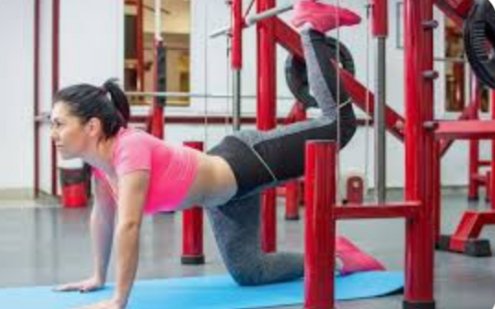
Enter the Smith Donkey Kick!

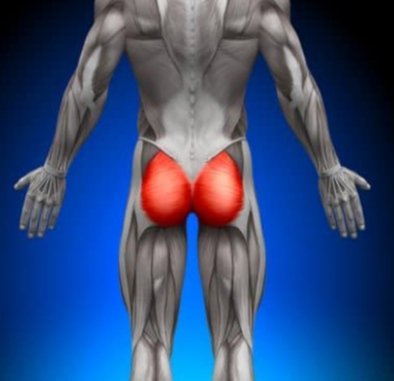
I would consider the Donkey Kick to be up there with the very best of glute isolation techniques, especially on a Smith. Remember I’ve talked about the need for progression in our workouts? Well eventually you will need a new way to stimulate your gluteals past your usual body weight kicks. If you’re a man reading this you might not think that Smith Donkey kicks apply to you. Wrong! Just because you don’t see other men perform them doesn’t mean you shouldn’t. A recent survey by Gentleman’s Journal showed that 62% of females find a good ass attractive. And if you’re like me and you’re already taken and you don’t feel the need to peacock anymore then a good ass can be satisfying for your own self esteem too. We all turn in the mirror to give our own ass a good squeeze right?!….Or is that just me? Ok…. Moving on!

The vast majority of Smith Donkey kickers are female, that’s true. And if you were to ask any of them to give up one aspect of their training they wouldn’t choose the SDK. It has become an essential part of booty isolation because of the results that they get from performing it. But they also do the tough free weight squats and deadlifts too, so don’t think you can kick your way out of doing the heavy stuff too.

The BOTTOM Line

The fact is that our muscles need as much stimulus as possible to produce new lean muscle that can make us look and feel great in a pair of jeans, dress or shirt. But not just that. It enhances performance for our sport, general fitness goals and in every day life. An independent 80 year old who can still walk, stand from a seated position and climb out of a bath tub will more than likely have a history in participating in a sport, performing compound movements and working on muscle development as a younger person.

So seeing as I enjoy a quote from the great philosophers of our time, as Ice Cube once said…”You can do it. Put your back in to it. Put your ass in to it.”

Thank you for reading! Please check out my other articles on gym life, family life and nutrition on my site.

Breaking The Magician’s Code

That’s Magic!

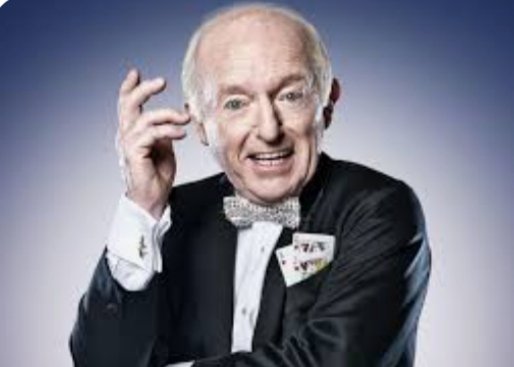
As a kid I used to love watching magic shows. From Paul Daniels producing a rabbit from a hat to David Blaine’s street performances of him levitating and having the crowd of onlookers agog at his seemingly supernatural abilities.

After a while though, perhaps around the time I realized that Santa wasn’t real, the magic wasn’t real for me anymore. I much preferred knowing the how and why of a magician’s trickery than becoming submerged in the mystery of it. I had seen people ‘magically’ being sawn in half a thousand times and even entire buildings disappear, but I just wanted to know how it was done.

Back in the 90’s a masked magician turned up on our screens called Val Valentino. The show was called Breaking The Magician’s Code where he would perform the trick and then explain how it was done. This didn’t go down well with traditional magicians who were in the Magician’s Circle, where you take the secrets of magic to your grave. Valentino was seen among his peers as a magician who had betrayed his community.

Valentino justified his actions by saying that he “wanted to get people talking again about the magical arts” as he began to recognize the impact that technology and the internet would have in the profession and “magicians were becoming complacent”. Maybe he did change the world of magic. Pulling a rabbit out if a hat became old skool. Along came the likes of Blaine and Derren Brown to revamp the art.

Keeping The Audience Interested

I’ll be totally honest. My profession needs a kick up the arse too. I hear so much about different methods, techniques and formulas from Coaches and Personal Trainers and I have my own methods that I introduce to my clients too. I’m not disrespecting anybody’s work here. But it’s time that we were honest with the public. Whatever plan, method or technique a PT wishes to use and endorse it is not reinventing the wheel. They have not just come up with the newest ‘fat burning plan that will change the world’. What they have done is come up with a catchy title and a workout that keeps you active, a programme that keeps you interested. and a mindset that empowers your nutritional choices.

A trainer’s method should include…

* A plan that works for YOU and YOUR lifestyle. Not a copy and paste.

* Achievable goals. This can include a new Personal best in how far you have walked/run or it could be a certain weight lifted. It could also be goals to hit a certain macro target this week. Achieving this will create a better chance of hitting your big goals.

* Regular check ins and discussion opportunities. You should be able to talk to your trainer whenever you need to.

There are many good trainers that are providing this service, but it doesn’t matter if they call their programme…

* 60 day fat shred

* 16 week couch to 5k

* 6 week summer body

* The little Black Dress

* 40 day toner

Or the latest method that I have recently created…

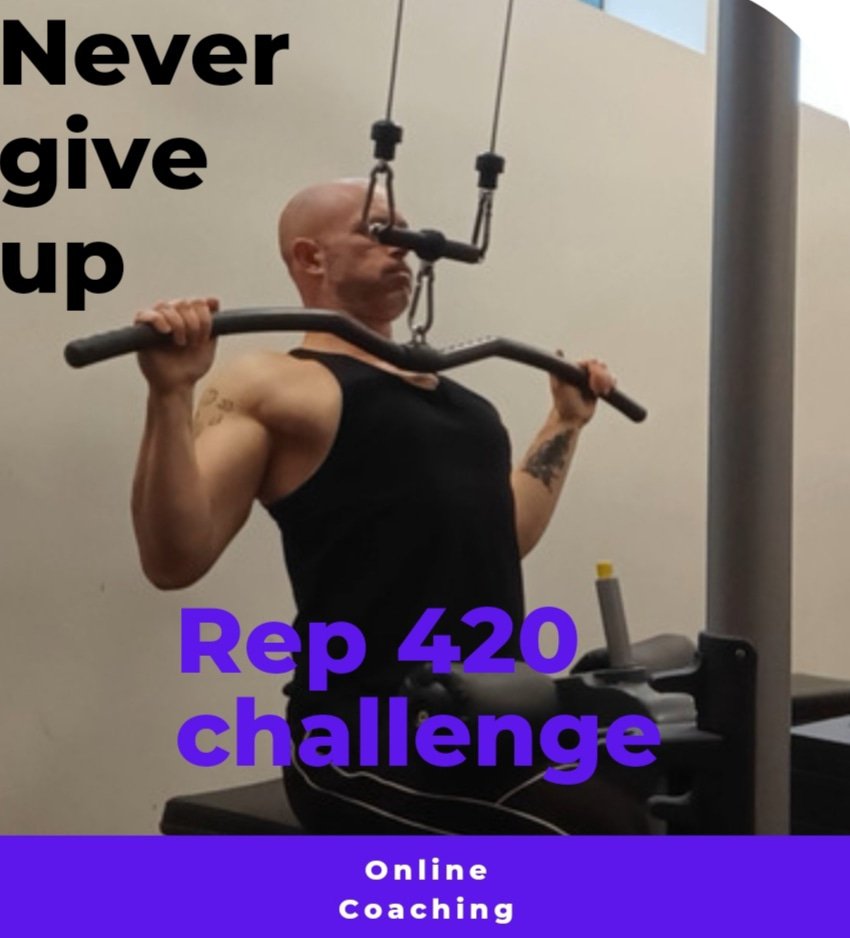
* Rep 420 Challenge

They should all have the same theme. It should encourage more movement in a fun and engaging way which promotes mindful eating and a healthy lifestyle. There is no secret formula that a coach has invented. They have simply created a method that they feel will inspire their client to stick to it. Because a method that nobody wants to stick to is not going to work. No tricks. No magic or mystery. Just a method that keeps the audience interested.

My Rep 420 Challenge is a method of creating full body workouts for busy people in a fun and achievable way. It allows the trainee to hit every muscle group without the tedious task of completing a ‘leg day’ or a ‘chest day’. How many gym visits do you need to hit every individual muscle group? I work in a gym. I usually have the time. But the regular person wanting to tone up a little and lose a few pounds doesn’t. I understand that.

The Final Act

But I haven’t waved a magic wand and made the Statue Of Liberty disappear by creating it. I simply engaged the audience and gave them a direction on what to focus on. They become as committed to the final act as I do not through any art of deception or hocus pocus, but by providing simple answers to their questions.

Telling someone to move a bit more and eat a bit less to lose weight is not the greatest advice. But providing a sustainable structure to build into their lifestyle is. That’s where the real magic happens.