I tend to leave our sitting room with the door wide open. My wife, who sits on the sofa as I dash past her for a loo trip, finds it most irritating.
My wife argues that, seeing as it is very cold and we’re trying to heat the room with expensive gas, we need to keep the doors shut to keep the heat in.
“Yes, but…” Is how I often start my comeback. “Yes, but I was in a rush.” I quickly unpause the fourth episode of Wednesday and hope that she doesn’t reply to my feeble excuse. I had time to close the door. I just forgot or couldn’t be bothered.
My kids do the same. When I ask why they aren’t dressed for school even though I told them to do it half an hour ago they reply, “Yes, but…”
“Yes, but there’s only 5 minutes left of this program.” Or, “Yes, but I can’t find my tie.”
And I’m also in an industry that makes us all say the same with equally terrible excuses.
We use work, illness, the cold, the heat, the dog chewing up our trainers. Anything we can do to excuse ourselves from not getting the workout done. Or the walk. Or the run. Or eating the nutritious option.
We will even say “Yes, but,” to ourselves in an attempt to make ourselves believe it.
Yet 9 times out of 10 these occasions can be reasoned with a little bit of planning. You see, missing one session at the gym or not completing a home workout for the past two days or choosing the cheesy chips instead of a side salad aren’t the deal breakers here. Everybody needs a rest, a bit of down time and definitely a bowl of cheesy chips now and again!
The habits we allow ourselves to form almost always start with a “Yes, but.”
We begin to push the boundaries. My kids want to fit in one more YouTube clip before they start to get dressed. Yet Mr Mellor won’t wait for them at the school gates if their clip runs over and they don’t make it to the gates on time. They have to take responsibility now before the habit takes over and they become regularly late due to poor time keeping.
I need to start closing the doors in order to keep the rooms warm. My bad habit will cost me money and I will regret it when I receive my gas bill.
“Yes, but” simply isn’t good enough. If we take time to reflect on our habits then we can plan to fix them. We can begin to accept that, whilst missing a gym visit due to snow or an illness is totally fine, allowing ourselves to go into weeks of poor decision making and bad habits with a “Yes, but” is not fine.
So if you see a bad habit trying to get in, firmly put wood in ‘tole and slam the door in its face.
I’m already starting to see the frustration in many newcomers to the gym that I train at. Their new years resolution and ‘new year, new start’ good intentions are beginning to wobble already.
This isn’t new. Professionally I’ve witnessed this for 10 years and personally for almost 30 years. The average person who begins a fitness journey generally calls it a day before they’ve had a chance to make any serious impact on their health, fitness or aesthetics.
Why?
My theory is that restricting oneself to a set date can be dull, uninspiring and demotivating if you simply are not ‘in the mood’ at that specific time. We cannot simply switch on and become something that we have not been for the past several months or years and in many cases, forever.
I use the term ‘catching the wave’ when it comes to specific life goals, be it in the gym or in general ambitions. Timing is important.
Catching the wave is an idiom that refers to taking advantage of a moment of good fortune or an occurrence in time and creating a sustainable, practical routine that can help you achieve your goals.
Riding the crest of this wave might not last forever, but because your memories of your successes are still fresh in your mind, you will find it much easier to catch the next wave. Much like the surfer, getting back onto the surf board after falling into the sea becomes much easier with practice.
But if we ignore the signs, most commonly our bodies and our minds, then all we have is a dreaded day in which we have to do something that we don’t really want to do.
Let’s take Jeremy as an example. He promised himself that he would join a gym on the second of January. He had never joined a gym before and, apart from the occasional 5 a side football game with his friends, had never been into a fitness centre at all.
But he had started to feel sluggish and lethargic. He couldn’t run with his young children or pick them up. His diet suffered due to the difficult cycle of feeling depressed because of his health and appearance so he comforted himself with food.
His new year’s resolution was to join the gym. The problem is that not only did the wave not come, he didn’t actually know how to catch it even if it had. After a few weeks of going to the gym and slogging out a few sessions a week he felt demoralised by not seeing any changes to his health or appearance and a few niggling injuries had started to occur. Jeremy became one of the many numbers of people who join the gym in January and don’t continue to go after February.
How to fix it!
As I have stated, a new year’s resolution gives a restrictive time frame. You must start at the beginning of a new year! Yet a few new tweaks towards a healthier outlook can, and should, happen at ANY time of year.
Rather than beginning a regime of a fad diet and 5 gym sessions a week, try starting by walking more. Research a few local areas that are popular for walkers and give them a go. It doesn’t have to be a full day of rambling. Just an hour will do.
Pick out a few of your favourite fruit and veg and start adding these to your plate more. These will add numerous nutritional benefits and create satiety, which allows you to feel fuller for longer. Also, making fruit and veg smoothies can help you get your required amounts if you don’t usually eat them in a meal.
Hire a PT. The feeling is that Personal Training can be a ‘no pain, no gain’ sort of attitude full of Burpees and just about everything else that is horrible. The reality is that a good PT, as long as you tell them that you are new to exercise, will give you advice similar to my first two points. Move a little bit more and add fruit and veg to your diet. If they go straight into Burpees then sack them. Also, PT can be done online these days which is cheaper. A good PT will get to know you and develop a routine for you that you enjoy and will even know when you are on the crest of a wave or if you’re in the sea!
And finally, to really find that wave, if you feel like doing it, just do it! Start saying yes to the 5 a side games more. Go for a walk or a run. Start swimming. Or just join the gym at any time of year!
You might find that one of these activities becomes a passion and something that really motivates you. Eventually , you find yourself riding a wave. And if you ever fall off, rather than wait until a new year, you’ll know how to get back on much easier, much sooner.
I am a Personal Trainer, meditation teacher, health and fitness blogger, husband and dad.
Ah social media. As much as I love it, I hate it too. For all the good advice that we can find out there, there’s the bloody awful stuff that can be misleading and potentially dangerous.
Let’s take the latest weight loss pill that entered my feed recently. Take one a day and watch the fat roll off, apparently. Oh, and you don’t need to exercise. The ads have always got before and after pics as evidence of course.
The problem with before and after pics on advertisements are…
A. Did this person genuinely lose weight through taking this pill or were they actually just on a calorie deficit?
B. How long did this transformation take? Because I’ve seen timelines that are either impossible or would need a dangerously low calorie deficit to get there.
C. Anybody can get a generic before and after pic from the internet. Does this person even know that they’re being used in this ad?!
As far as a magic pill goes, the ingredients are probably harmless. It might be mostly caffeine and therefore make you feel like you’ve had a shot of espresso. But the real dangers are the idea that you don’t need to exercise if you are taking them.
Pills, drinks, vibrating attachments to bellies and bums and fad diets are all contributing to the ever increasing obesity levels in the western world. The reason for this is the idea that’s given that it is some sort of short cut. A fast track trick for a firmer tummy.
I’ve been in the industry for too long to know that none of the above work. And whatever you choose to put into your body or attach to your wobbly bits it isn’t going to work unless you move more.
Moving. That is exercise. Staying active and eating a balanced diet works. That is the key.
And if you have been given the advice from a PT that you need to run marathons, pump iron everyday or sign up for the next Tough Mudder, that’s bull too. You just need to walk or run a bit more, join a few fun fitness classes with friends, lift a few weights and keep moving.
Although weight loss, fitness and muscle hypertrophy can be a science, the basic principle is simple…
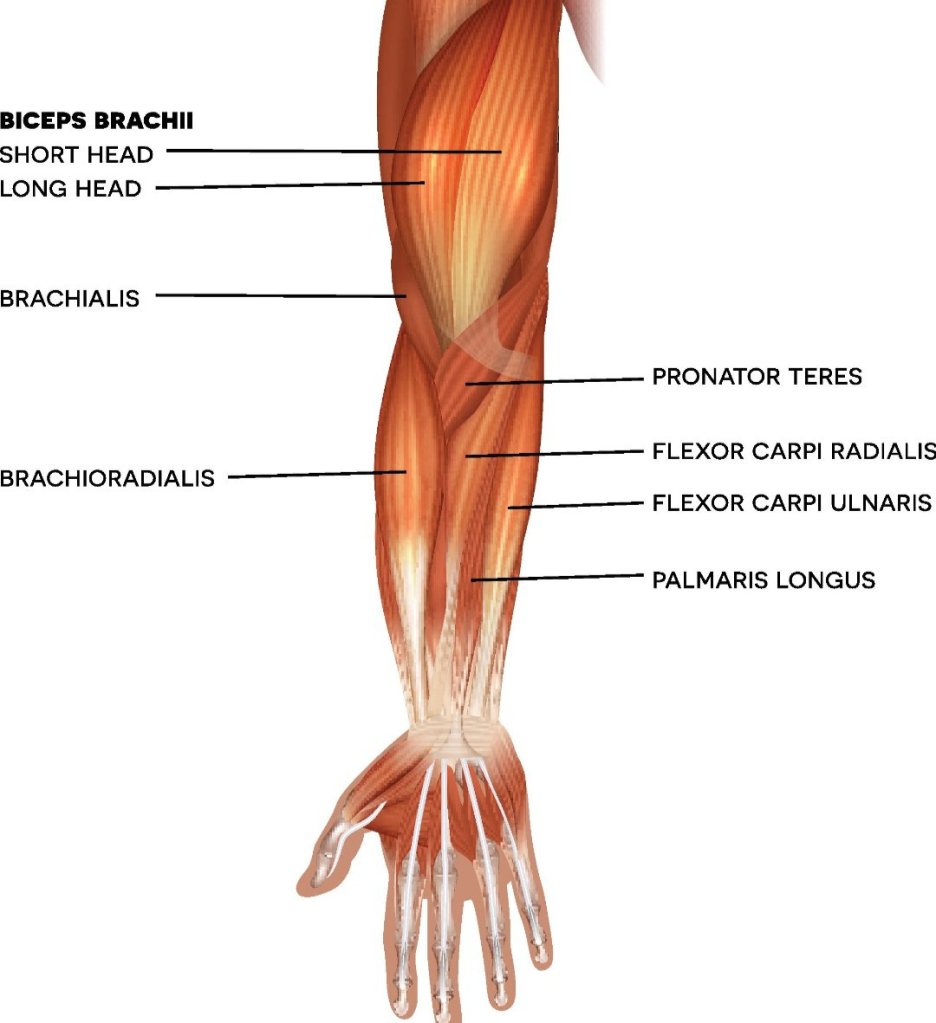
An unusual pain came over my elbow as I trained a couple of weeks ago. I say elbow, but it seems to stem from the brachialis. It wasn’t debilitating, but it was noticeable in my everyday movement which was uncomfortable.
Having trained Monday to Friday plus a few occasions where I’ve trained twice a day, I put it down to over training. Ok, I thought, with the half term holiday for a week around the corner, I decided to take a step back to recover. My readers will be aware that I will take school half term holiday off from the gym for a number of reasons, but the biggest by far is that my kids are at home and I appreciate spending time with them. Of course, I still have to be in the gym for my clients, but I rarely stick around to train myself. It gives me a natural break from it. And on this occasion, it seemed like I needed it.
But as the week went by, my arm became even worse. It went from a sharp pain to becoming a constant dull ache.
My advice to my trainees in this situation is…
* Always listen to your body. If you can’t train then take it easy and have a few days off (or train a different part of the body) but
* If you feel that you can train through the pain, you might find that the pain will ease.
It was totally coincidental that I had to take it easy after my injury due to the half term holiday, but I didn’t feel that my lay off was doing it any good at all. In fact, the pain was getting worse. Once I got back to the gym, plan B was in place. I trained through the pain.
And now, after a week back at training as normal, my injury has almost totally disappeared.
When my kids have a fall at football and start crying I assess the situation very quickly. I need to know where it hurts. Are there any cuts? Is it bleeding? But 99% of the time it has been a case of telling them to ‘run it off’. I’ve no doubt that it hurts at the time and there might be niggling pain associated with it afterwards, but I think that there’s usually a good case for ‘running it off’.
Training through minor injuries allows the body to maintain strength and conditioning, therefore enabling an injury to heal. But this must be up to each individual’s honest assessment. If you blame any twinge or niggle on not training because you can’t be bothered, then you might as well just be honest with yourself and admit that you can’t be bothered. However, if an injury is seriously affecting your performance or your life outside of the gym then giving the gym a miss and seeking professional advice might be an appropriate course of action.
I don’t know if anyone else has noticed, but the TV adverts are all of a sudden looking a lot more Christmassy this week. It seems like one minute I was collecting sweets with my two little devils and then the next minute I’m buying my box of Bounty-less Celebrations ready to open on Christmas day!
Oh how holiday consumerism flies.
And for 54% of the UK at least, what will be around the corner not long after a repeat of Morecambe and Wise will be the new years resolutions. A quarter of those resolutions will be health based, but only 9% of new years resolutioners will continue into the new year with their goals and actually achieve what they set out to do.
My theory is that when January arrives there has been very little planning involved in starting a fitness goal, if any at all. I can’t imagine many programs or meal menus being created over an episode of Jools Holland’s Hootenanny. In fact, due to the upheaval of the previous two weeks before January starts, it is probably the hardest month to commit to in regards to health and fitness.
So what is the best time?
Now is the short and easy answer. Today you can get a gym membership. Today you can write down a few healthy nutritious meals ideas and buy the ingredients for them. Today you can read an article like this and think ‘What am I waiting for?!’
What are you waiting for? My guess is that you don’t see any point in starting now seeing as silly season is just around the corner. But if we do the math then you might feel differently.
There are 57 days until New Year’s Day. So even if you take two weeks off of training over the festive period that’s 43 days left to train.
But you don’t need to train every day. Let’s be sensible and meet around half way. If you trained 3 days a week at an hour each time from now until a Christmas break, that is 18 hours.
One hour of light training can burn 200 calories per hour. Times that by 18 and you have burnt 3600 calories before the Christmas break.
One hour of vigorous training can burn 600 calories per hour. Times that by 18 and you have burnt 10,800 calories before the Christmas break.
These estimates are without the additional ‘after burn’ effect that you get, especially through resistance training, where your body will still be burning calories during the recovery phase.
Not only do the numbers look impressive, but the whole package does.
* You have already built up momentum before January arrives
* Beginning different eating habits straight after such an indulgent period as Christmas is extremely tough
* If you wanted to hire a PT, this time of year is good and you might be able to strike a deal. January can be a bit pricier during their busier months such as January.
So if you’re looking to get started on a health and fitness journey and you find yourself saying “I’ll wait until January”, think again. The sleigh is waiting for you now. Your journey can begin today.
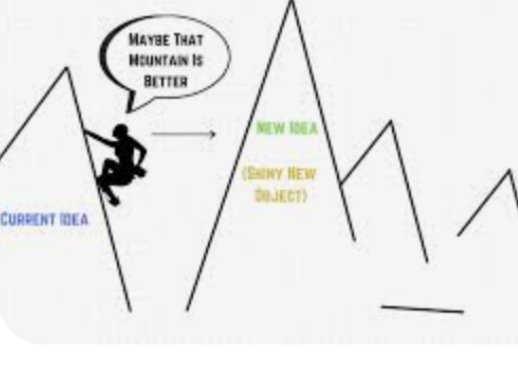
The bright shiny object is a term that is used particularly in business, but can be relevant in many different situations in life.
It is the belief that, although you have put a plan in place, a new venture or interest catches your eye that attracts you to it. This new thing being the bright and shiny object. In the psychology field they have even called it a syndrome (Shiny Object Syndrome, SOS).
It can often be derailing to our original commitments and the extra cost and time devoted to the shiny object begins to affect a plan that was actually already working rather well.
In the gym I see it daily and, make no mistake, the shiny object is as alluring to me as for anyone else. But I have trained my mind to move on and stick to the plan as difficult as that might be sometimes. So let’s give a couple of examples of what it means in our health and fitness goals and our diets.
Case 1. The Inconsistent Trainer.
This is the shiny object that often tries to put me off of my stride. And it did for Jack. Jack had committed to the gym four times a week to follow a program plan by his trainer which would eventually see extra muscle mass and a leaner, aesthetic physique. He was fully focussed, made the investment in time and money and, after a few weeks, began to notice subtle changes to the way he looked and felt.
His program continued to be challenging as he progressed through the different phases of training, but after 3 months a friend had started to send him YouTube videos of a few different fitness influencers. They became Jack’s new, bright and shiny new object. He wanted to try the sort of techniques and ‘kick ass’ moves that would quicken the process and reach his results in less time.
He began only loosely following his program as he diverted from it during his training to try the new stuff that he had seen from the influencers. He no longer practiced conventional deadlifts. Instead he was keen to master the Jefferson deadlift, which was described as ‘quad killers’ by the influencer. However, whilst the Jefferson might be a useful lift for many of their subscribers, for Jack it put pressure on his spine. Over time, he began to suffer with lower back pain. His PT advised him to stick closely to his original plan, as he still needed to master the original deadlift before trying different variations.
Jack became frustrated. He understood what his PT was saying, but the pull of an influencer with thousands of followers was too much of a draw. Surely they knew their stuff, he thought. And of course he was right, they did know their stuff, but they didn’t know Jack. However, Jack decided to stop the services of his PT and try to pursue his own routine.
As the year progressed, Jack went from having moments of motivation where he would manage to get to the gym four or five days a week to not managing to get there at all for weeks at a time. Either through injuries or simply feeling demoralised, Jack didn’t reach his goals. He ditched his original plan designed specifically for him for the bright shiny object. He found that one influencer would tell their audience to do one thing and another influencer would tell their subscribers something totally different. Jack’s consistency and motivation had gone.
Case 2. The Yo-Yo Dieter.
Jill had promised herself that she would lose some weight and started to be more careful about the food that she ate. Having a sweet tooth and grazing throughout the day meant that she had put on a certain amount of weight that left her feeling lethargic and uncomfortable about herself.
Jill decided that she would download a calorie counting app to keep a check on the amount of calories that she was consuming. She didn’t want to be too restrictive, so along with meal plans of some of her favourite nutritious meals, she allowed herself some of her more indulgent treats a couple of days a week. Jill knew that, as long as she could track her calories, she could remain in control of her portions and enjoy her efforts to lose the weight that she wanted. After a few weeks, Jill felt that she wasn’t so tired all the time and she decided to join a local running group and also began enjoying long walks with her partner.
After 6 months of the positive lifestyle change, Jill was talking to a friend. They were discussing weight loss and it was apparent that her friend had lost a considerable amount of weight. Jill’s friend told her that she was on a diet which allowed just 800 calories a day and, although she felt too tired to exercise from the lack of energy, she was losing lots of weight each week.
Jill had been happy with her progress, but her friend’s impressive story had made her wonder if she could do the same. Jill concluded that, due to the darker cold nights setting in, she wouldn’t want to go running anyway. Plus, if she can make the sort of progress that her friend did, she could hit her target weight for Christmas, 6 months earlier than she’d expected.
Jill started the new diet. But it wasn’t long before her energy fell and she quit the running club. Her mood changed too. She felt snappy with her partner and didn’t want to attend special occasions because she was unable to eat or drink the same as anyone else. She lost weight quickly, but she wasn’t happy. Eventually, she would have binge days and this left her even more frustrated as she felt like she was failing.
Jill came off of the diet and tried to go back to her original plan. This proved to be more difficult than she’d expected though as all of her positive habits that she had worked on had gone. She found herself grazing and eating all of the wrong things again. Despite having bouts of motivation, Jill has not found the consistency that she had once enjoyed.
Summary
In both scenarios, Jack and Jill had found something that worked for them and their lifestyle. There is nothing wrong with what a friend might be doing differently or what an influencer might suggest, but what Jack and Jill were doing was successful to THEM. Yet something new and exciting swayed them into boycotting their plans. The very plans that were working.
Alterations, tweaks or little changes to a plan are fine as long as it is exactly that…the plan. Nobody wants a training program to stagnate or a nutritional menu to become boring with the same meals each day. But the foundations in which it was first created need to remain the same.
The bright shiny object will always have us wondering and the newness to try alternative methods is intriguing, but take it from someone who has had his fingers burnt on many occasions before becoming a Personal Trainer, it will often end in derailing our good work and possibly even ending it with nothing in return.
Brian Clough was right about football. It is a simple game.
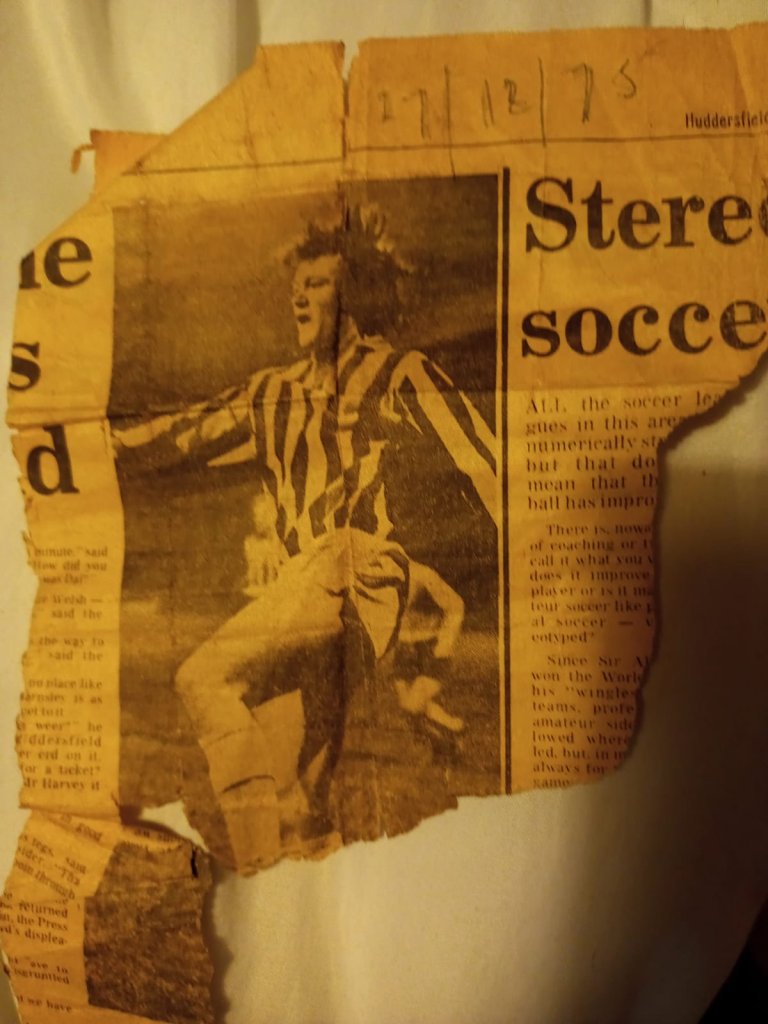
“All you have to do is get that pig’s bladder into that onion bag” is something I always remember my dad telling me just before a game. Maybe he got it from Clough. It sounds like Clough. Or maybe he made it up himself. As a footballer who would often get the pig’s bladder into the onion bag, I wouldn’t be surprised if it was one of my dad’s original mantras before entering the field. He was one of the best football players I’ve ever seen live. He kept it simple. He scored goals and won football games.
My dad playing for Huddersfield in 1975
In my profession, what I try to convey to 90% of my clients is to keep it simple. Now, if you are training for a particular sport, event or for aesthetic bodybuilding purposes who make up my 10%, then I have lots of great advice on training splits and various techniques in other articles but the principal should remain the same. Keep it simple.
Just like the footballer or the athlete, they have to turn up if they want to compete. They have to enter the football pitch or athletic field. So your priority, too, is to make sure that you turn up. Turn up to the gym when you have scheduled it. I see so many missed opportunities from people which, can I be truthful? It’s usually because they found an excuse to not go as they couldn’t be arsed that day.
And life gets in the way. I understand. But this is where we begin to overcomplicate the game. If completing an exercise routine is as engrained into your life as eating, sleeping and breathing then it remains simple. You just do it.
Here are the main culprits when it comes to overcomplicating your fitness goals and how to simplify it…
You don’t go to a gym. Either you don’t feel that you can afford a membership or there isn’t a local gym to you.
Simple. Exercise is free. Training in a gym can be good motivation and it has lots of equipment, but bodyweight exercises or a few weights that you can store away after use at home will suit most fitness goals. And for general fitness, walking is one of the best exercises you can do.
You don’t have time. You work long hours. You have meals to prepare, kids to sort out and by the time everything is done you have run out of time and energy for exercise.
Simple. An exercise routine doesn’t have to be some elaborate plan that takes over your life. The general advice is to complete 150 minutes of moderate intensity a week for aerobic fitness. That’s just over 20 minutes a day per week. For weight loss, increase the intensity by taking less rest periods or adding more difficult exercises over time. You’ll find that you have more energy for your work, social life and your home life by sticking to it.
You can’t stick to a diet plan to lose weight. Everything from 5:2 to the paleo diet has failed leaving you frustrated and demoralised.
Simple. Every diet plan needs to have one common criteria…they need to put you in a calorie deficit. That is consuming less calories than you burn. You don’t need an overhaul of your cupboards and fridge contents. You just need a sensible approach to what you eat. I would recommend a calorie counter app, log your food entries for a few weeks and see where you are going wrong and where you can put it right. It could be just cutting back on a bottle of wine each week, switching to wholegrain instead of white or reassessing your portion sizes. You don’t need to completely ban any food that you enjoy.
It hurts your knees when you squat. You are put off by exercise because certain exercises hurt.
Simple. Don’t do them. I would advise that you ask a professional about your pain and either they can correct your form (which is what is causing the pain) or they will find alternative exercises that don’t cause pain.
We often form some long elaborate web of plans to reach a fairly simple goal. Most of it is highly unnecessary, leading to over thinking and a target that becomes impossible to reach. We forget the simple things. You can’t lose two stone without losing your first kilogram. You can’t run a marathon without running your first mile and you can’t put the pig’s bladder in the onion bag without entering the field of play.
If you’re struggling with your fitness goals, have a think about how you might be able to bring it back to being simple.
The term ‘false choice’ is used to describe a situation where we believe that we only have two options to get the answer.
Examples of this include…
Which came first, the chicken or the egg?
If you want to protect the environment, you must want the economy to crash.
If you support Utd, you must hate City.
If you are proud of your nation, you must be xenophobic towards all other countries.
You like horror movies? So you don’t like comedies?
Marmite. You either love it or hate it.
All of the above gives us very little option. It is an either/or dilemma. Which is not very helpful.
And it is not very helpful when it comes to fitness goals. We often restrict ourselves to two categories. Our pigeon holes are…
A. I don’t go to the gym therefore it doesn’t matter what I eat so much because I haven’t got any time to make fitness goals.
B. I often workout therefore I restrict my diet to look and feel my best in order to reach my goals.
These two extremities are unhelpful when it comes to planning your health, wellbeing, nutrition and quality of life. It doesn’t have to be down to choosing between two options.
As much as lots of people begin their exercise routines in September and start a particular diet in time for looking their best for Christmas parties, there are more people that decide on leaving it until January when they will make it a New Year’s Resolution. Yet both options often lead to disappointment.
The September starter will find that they have hit the gym hard, restricted their calories too much and still run out of time to reach their (usually) unachievable goal.
The January starter finds it even harder. They procrastinated back in September for a reason and it’s because they don’t like exercise or they have never been shown any exercise or food that they like to sustain it. So they decide to leave it until after the summer. Then decide to wait until January where they can make a New Year’s Resolution. The cycle continues.
So what if I told you that there were multiple choices? Options that were all shades of grey and not just a black or white view. A consistent, sensible lifestyle approach that didn’t leave you with anxiety about your body and your health.
You don’t need a program that you would expect to see from an Olympian. You don’t need to spend hours each week in the gym. In fact, for most fitness goals you don’t even need a gym. And you never have to quit your favourite snacks.
When you enter a false choice scenario, it is easy to reach a dead end. The all or nothing method can leave us unfulfilled, demoralised and either ends up in quitting or never getting started.
The chicken and the egg question is a prime example of a puzzle that only becomes a puzzle because of how the question is posed. Whilst both options are correct, the only way of explaining the conclusion to this is by exploring the grey areas. This is because the original question is poorly delivered.
We ask ourselves poorly delivered questions all the time. Would I prefer the chocolate cake or the spinach smoothie tonight? If this was my only choice, then the chocolate cake would win every time. But again, if you were to explore the possibilities you would find that a small portion of chocolate cake would be great and you can have the smoothie too!
Should you begin an exercise routine for weight loss or not? Once again, this question is poor. If you find yourself motivated in that specific moment, you might answer yes. Tomorrow, you might feel differently.
To get your answers, first you need to discover why you should exercise more and why choosing nutritional meals is important to you.
My answer is easy. I don’t want my kids to have to bury me when they’re just young men and if I do live to be a ripe old age I want to be as independent as possible. I want a certain quality of life. So yes, I do want to exercise and I do want to choose healthier options.
However, I don’t want this to dictate my life. I enjoy not moving too. I enjoy laying on the sofa watching four episodes of Better Call Saul back to back with a glass of wine. But I can rest easy knowing that I walked the kids to school instead of driving, or I took the stairs instead of the elevator, or I went to the gym or… whatever I did, I moved. I had an active day and I made sure that I had nutritional meals.
I’m not training to run a marathon or for a bodybuilding competition. The only event I’m training for is in the event of old age I can get in and out of a chair, that I can play football with my grandkids, that I can get to the toilet in time. That doesn’t require me to hammer the gym for two hours a day.
Your false choices will kill your goals if you let them. If you look closer, you have many options to choose from. You just need to start answering them honestly.
A few weeks ago I wrote an article on a doctor’s appointment that I had made. This was my first visit to see a doctor in over 3 years. With a dash of procrastination and a good sprinkling of Covid lockdowns I had created a recipe of anxiety and paranoia regarding going to see my GP.
I was prompted in making this long overdue appointment because I had noticed a few aches and pains in my abdomen that seemed new. I had to do it.
Anyway, yesterday I saw my doctor who prodded and poked, asked me lots of questions and took readings. He surmised that my discomfort was probably musculoskeletal pain which was down to my job and the work I do in the gym.
Now, DOMS (delayed onset of muscle soreness) is a pain like no other. I know this pain and I can confidently identify this in my clients. But musculoskeletal pain such as sprains, strains or tendon and ligament damage due to overuse and over stretching (or under use) are pretty common too. The doctor booked me in for blood tests just to be safe but he was quite satisfied with what he’d heard and seen for it to be nothing more than musculoskeletal pain that will heal over time.
With the self diagnosis and Dr Google keeping me awake at night, I was happy with his verdict. It was much better than what I’d imagined in my irrational mind.
But there was something else he said that, well, quite frankly I wanted the very words framing and hanging on my sitting room wall. He called me an athlete.
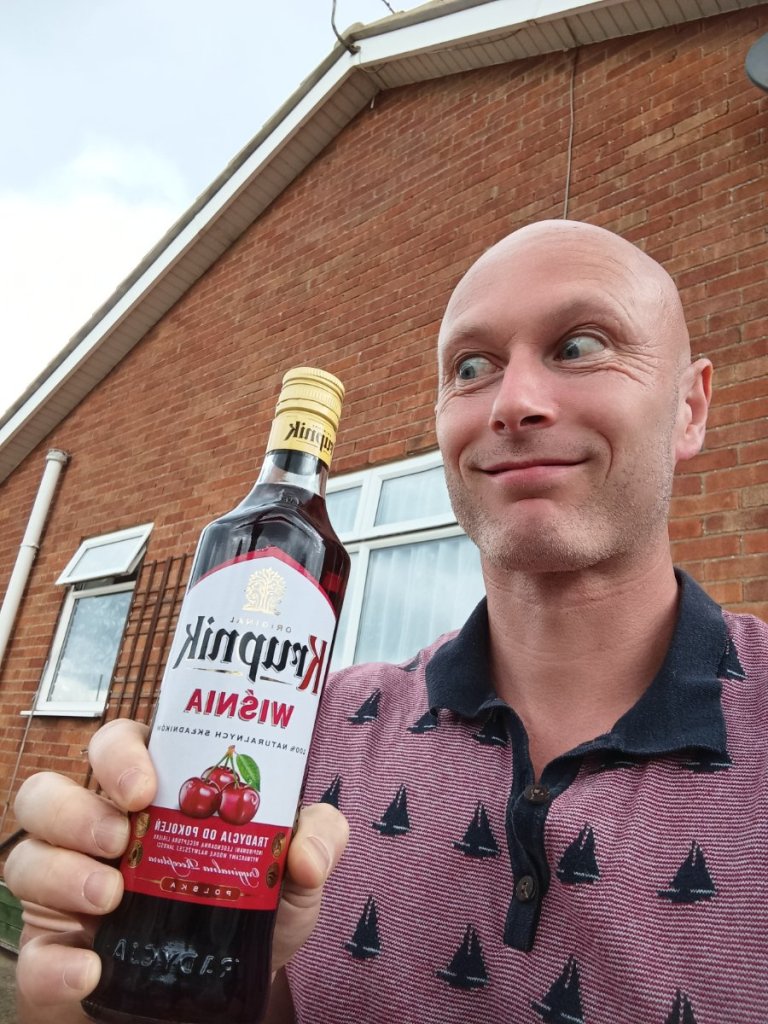
Me
Yes. As he listened to my heart beat he referred to me as an athlete.
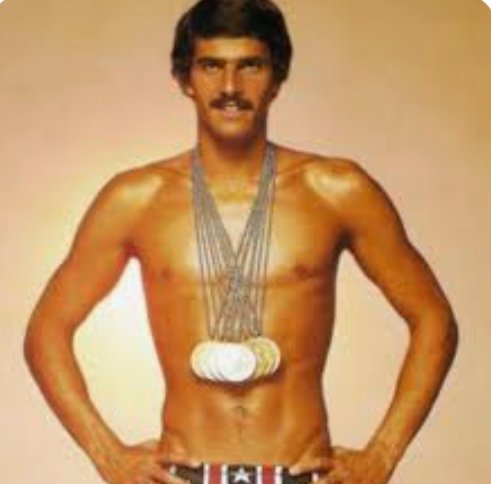
Images of Jessica Ennis hurdling to Olympic gold came to mind. Mark Spitz swimming towards breaking another record. Mo Salah sprinting through the opposition defence to score a goal. And then me. I’m not a record breaker or an Olympian and I’m not a Golden Boot winner in the Premier League. But I am an athlete. The good news is that, if you exercise regularly, you might well be an athlete too.
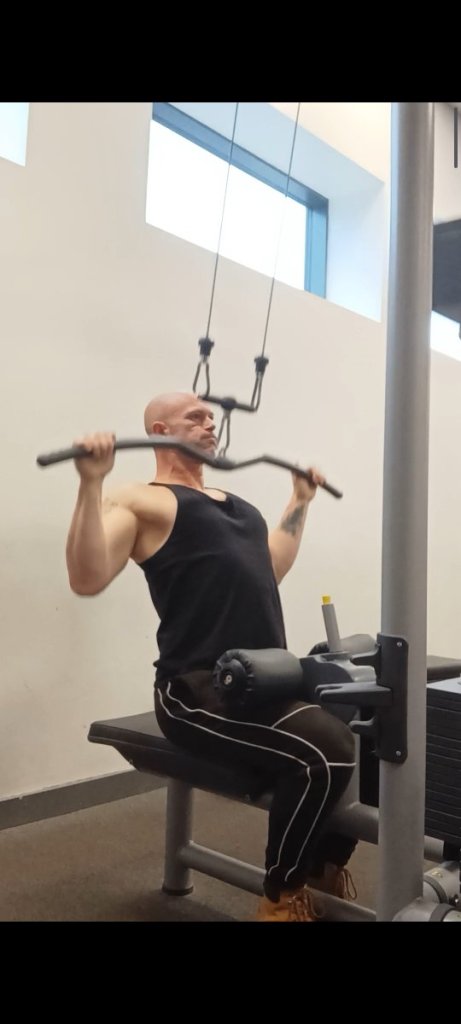
Me
The doctor went on to say that due to my exercise routine I have shallower breathing because my heart is pumping oxygen to my working muscles. To cope with this demand, my breathing increases to remove carbon dioxide from my body. And depending on the intensity of my training, breathing can become shallower but with an increase in my breathing long after the exercise routine.
This regularly puts my body in the ‘fat burning zone’ due to the work I am expecting my body to do for its recovery.
Me
Ok. I jest when I put myself into the same category of professionals and those who dedicate their lives to their sport. They live and breathe it. What they eat, their sleep patterns and the years and years of practice. They get sponsored and paid to do it too! As a PT I’m dedicated alright, but I’m also an average gym goer who has a life outside of the gym.
But isn’t it amazing what the average gym goer can achieve with the right routines and intensity? We can be athletes too. We can achieve goals by knowing what our bodies are capable of and fine tuning it to do what we ask of it.
A lot of what an athlete must do is what we need to do too, of course. We need to be mindful of what we eat. We need regular sleep. And we simply just need to turn up even if we don’t fancy it sometimes. Yes, even on a cold and windy night in Stoke. We can’t pretend to be athletes. We need to play the part and become one. And even at 43 I am one. My doctor told me so.
We are told that the more experienced we are in our muscle hypertrophy journey, the harder it becomes to create more growth. My own experience can confirm that the science seems annoyingly accurate on this. But it’s not impossible. In fact if you just take a step back and take a look at your own current workouts it’s probably very fixable.
The more advanced we get, the more we tend to add to our workouts. But this takes up more time and before you know it your head is spinning with a myriad of techniques and workouts from YouTube to start stimulating your sluggish muscle growth. And in trying to fit all of this new routine into your sessions you forget about what got you where you currently are in the first place. Sometimes less is more, so let’s get back to basics.
Sure, adding supersets or drop sets to promote stress to the muscle is a good idea, but what you include in your sets (supers or drops) will be an important factor.
I often see traditional compound lifts such as bench press, barbell rows, deadlifts, squats and lunges left behind for more ‘adventurous’ workouts. The problem with this is that the traditional compound exercises are your bread and butter muscle building moves that haven’t been perfected yet.
From close grip bench press, pendlay rows, jump squats, resistance band deadlifts, deficits and animal flow, they can all contribute to your workouts but also you need to stay grounded. Never ditch the traditional lift that the alternative bases itself on.
We can become bogged down with alternative methods and, rather than use them to accompany your routine, they begin to take over. But muscles like consistency. They need to grow into each technique. And perhaps we begin to think that we have outgrown the bench press and the muscle needs a different stimulus, but the muscle still needs to keep learning for it to truly adapt. Chopping and changing a routine just because we see a cool technique from another gym goer or a YouTube guru won’t benefit us unless we stick to our principals.
Regain your passion for a 1 rep max on your bench. Aim to add a little bit more weight over time. Increase the reps. Decrease rest periods. Do what works first and then have a play with alternative methods. Get back to basics.







 Never Give Up PT