Your session is going well. After a series of successful barbell back squats you decide to go for a PB with a one rep max. You look around the gym to find someone to ask to spot you for your next set.
The person you choose is vital for you to complete the rep successfully, avoid injury and the possibility of death. I’m not kidding here. A recent death of a bodybuilder with over 200k on his neck tells you that I am being extremely serious. Choose your spotter wisely.
So who do you ask? The obvious choice would be to ask a trainer who works in the gym. But be careful here. You need to know what they specialise in. Have you ever seen them perform a barbell squat or instruct their clients? A trainer with an ego might agree without really knowing what to do. And that goes for other gym members too. They want to help but haven’t got the skill (or strength) to if assistance is needed.
The person with the legs like tree trunks who you see hanging around the squat rack every time you’re in there is a good start. Tell them what you’re wanting to do. It is important that they know your expectations for the lift such as time under tension, reps, your weaknesses etc.
Spotting is indeed a skill. So what are the main points to know if you have a spotter or you are the spotter of a barbell back squat?
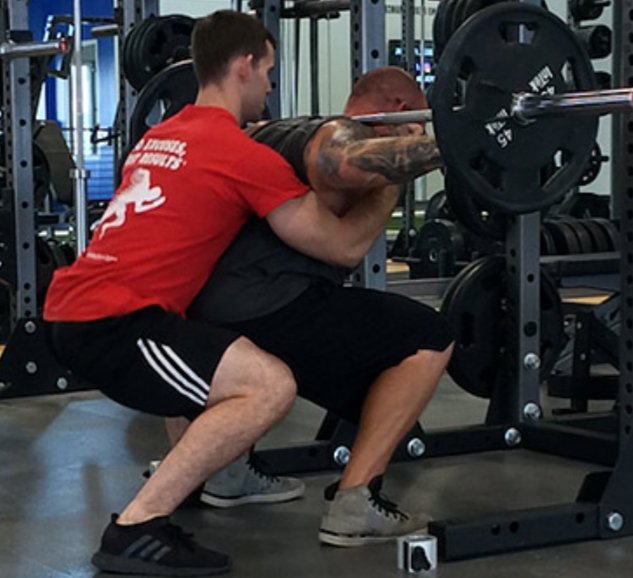
1. For a heavy lift, the spotter should place their arms under the lifter’s arms.
Holding the waist can be fine for moderate weight and can be more comfortable if it is a male spotter and a female lifter. The spotter should not place their hands on the bar. They’re not supporting the bar, they’re supporting the lifter.
2. The spotter should mimic the lifter’s movement on the way down. This is why a good squatter usually makes a good spotter. They must keep a straight back and use their core to get the lifter to the starting position if needed.
3. The spotter should be stood close. There’s no need to look like you’re dirty dancing though, not if the spotter and lifter are using their hips correctly.
4. If it is a very heavy weight, not only can a spotter be crucial in the lift but a person at either side of the bar should be considered. The body can buckle at any point when under pressure and there’s only so much a spotter can do if they’re having to deal with a collapsing person and a weight falling on top of them.
It’s worth pointing out that the body can give way with any amount of weight and this extra weight can still cause serious injury, so extra help at either side of the bar is something that can be considered at any time.
Lifting heavy can be fun and rewarding, but it is essential that you do it correctly. A part of that is finding a good spotter!
Well here I go. After all my constant talk of planning for your fitness goals I feel as though I am at a point where I can’t really plan for my own fitness goals. Not with any great precision anyway.
I have no gym and my time is compromised coming into a very busy summer period with work and the kids being off school. Oh, and with a house search in another country to plan, my health and fitness goals are getting further away.
I hope, seeing as I have now left training people in commercial gyms, that the legacy I left is that I am a ‘real life’ trainer. I’m honest, work to a client’s strengths and I am motivated in reaching realistic goals. So then, if I were having a chat with Shay the personal trainer, what would he say to me?
Me: I’ve not got any training plan in place for the rest of this year. I will have no time during the summer holidays as I will be busy with work each day. After the summer holidays I will be finishing off my packing to move to Portugal. Once I’m there there’s going to be lots of driving, researching and preparing for my business.
Shay PT: Your work will involve coaching sports to kids. Last year you were counting over 20,000 steps per day. That’s at least 10,000 extra steps than the recommended daily target for the average person. Also, a lot of preparation for your business will involve landscaping the land. Physical work such as this can burn around 500 calories per hour. So your NEAT (non exercise activity thermogenesis) is looking very healthy indeed!
Also, you have a selection of resistance equipment that you will eventually be taking to Portugal. Before you pack them up, think of a 30 minute routine that you can do in the garden on a decent summer’s evening after you’ve put the kids to bed. Promise yourself 3 of these sessions a week. And I know you have the time. It just means watching one less episode of the series you’re watching.
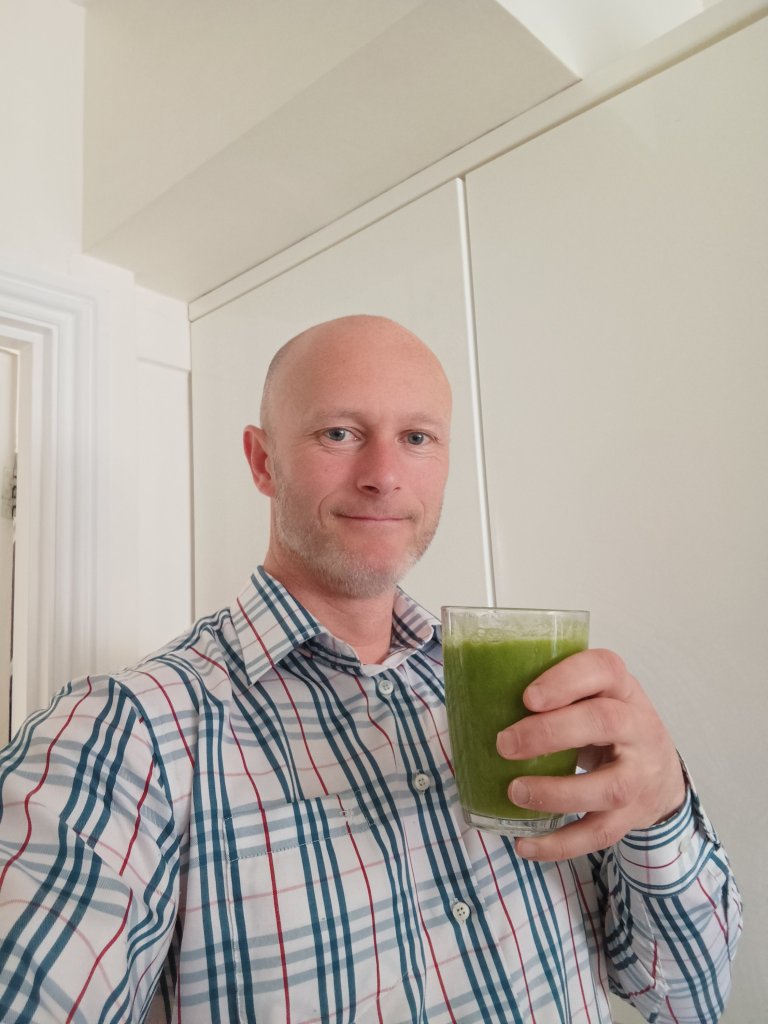
So your activity levels are looking pretty good, but it’ll mean nothing unless you keep your nutrition on track. That takes a little preparation. Make your lunch in the evening for the next day. For breakfast, stick to drinking your fruit and oat smoothies. Make sure that vegetables are available for every evening meal. Keep convenient, fast food to a minimum but don’t be too restrictive. No food should be banned.
A plan doesn’t have to involve regimented routines and dull food. Nothing I have just mentioned is life changing stuff. It’s just a sensible few tweaks to ensure that you stay on track for when you have more time and you are more settled in your new home.
When I first started out as a PT I had absolutely no idea how I would execute my business. I wanted to be full time, that I was sure of. There are many PTs who go into PT as a side job to subsidise a full time income or as a hobby. But I wanted to jump straight in and give my clients my full attention. And from day one I encouraged my clients to call or message me at any time if they needed me. I never saw my one hour session a week as an ‘hourly rate’. It was more of a package. I was their PT 24/7, not just for that hour in the gym.
And I did get the odd midnight phone call and the messaging back and forth at unsociable hours, but that’s what I wanted. If that’s what my client needed at that time, then that’s what I wanted.
Your job doesn’t stop when you leave the gym. In fact, if you are developing training plans, replying back to messages and working on building your business, then the hard work starts after your sessions. I learnt that the hard way after a couple of years. Clients dropped off, I had no other income. I needed to become much more business savvy as a PT. I needed to be better at client retention. If times of the year were difficult to get new clients such as the summer, then I had to take good care of the ones that I had if I were to keep them.
If you go straight into a commercial gym after PT school, you’ll need to earn your credibility and stand out among the other PTs.
There were 14 other PTs at my first gym in Leeds. Although it was a busy gym it was difficult to get new clients because of this. I had to find a niche. Something that could make me stand out. What stood out was accidental to begin with, but then I made it a trademark…
To mask my nerves during my first few fitness classes, I became overly enthusiastic in my routines. I would bounce about, run around the studio, shout what would become familiar catchphrases and wouldn’t stop until the participants (and myself) were laid out on the floor in a pool of sweat. But I added comedy value too. I didn’t take myself seriously. I told crap jokes and had fun with it.
What started out as anxiety and adrenaline became a successful character in the gym. Most of my 1-1 clients started from doing fitness classes with me because they ‘wanted someone who would push them’ and ‘who had fun and energy’.
Don’t forget, I was trying to earn my stripes against PTs who were more experienced, were younger, were athletes, models and bodybuilders in their spare time. I was a 30 something year old, balding dad of two. I looked physically fit but I also looked ‘normal’. Along with acting like a deranged clown in my classes, I became appealing to a certain demographic.
I left a busy commercial gym near the centre of a major city in England to a much quieter gym just outside a seaside town. I knew early on that my style of fitness class wouldn’t catch on. The Deranged Clown would not fit in here. There was no way I could recreate the ‘theatre’ of my previous gym. And so I had to change direction. The jokes stayed, that’s just my personality , but I had to tone down the act.
Due to the closure of gyms during the pandemic, I will never truly know if my new direction worked. Gyms, PTs and how we approach fitness in general had to reinvent itself after lockdown. Not just me. But, although my enthusiasm for coaching has never waned, my enthusiasm for reinvention has. Perhaps lockdown was a final straw for me regarding commercial gyms.
And now my future still involves PT and coaching, but it will be very different again and it won’t be my only source of income. In fact I’ll have to wear many different caps if I am to pull off my next venture successfully.
My biggest piece of advice to a new PT trying to make it in a commercial gym would be to find your niche. If you enjoy calisthenics then talk about it to everyone who comes through the door. Or if training for marathons or tough mudder events is your thing, make sure that everyone knows that you’re the go to trainer for them. Be yourself. Yes, I am a deranged clown. I find it difficult to be serious and I find humour in most things. It wasn’t actually an act. Only yesterday I was on a field with 40 six year old kids teaching them how to Gangnam Style. I didn’t care what the other coaches or parents thought I was doing. The kids loved it!
And my other bit of advice is to realise that you won’t be able to stay in the comfort zone of a commercial gym forever. Not to make it a decent income long term anyway. Whether you set your own studio up, go online, coach children in schools or move to Portugal and set up a glamping site with an assault course, you will need to evolve eventually.
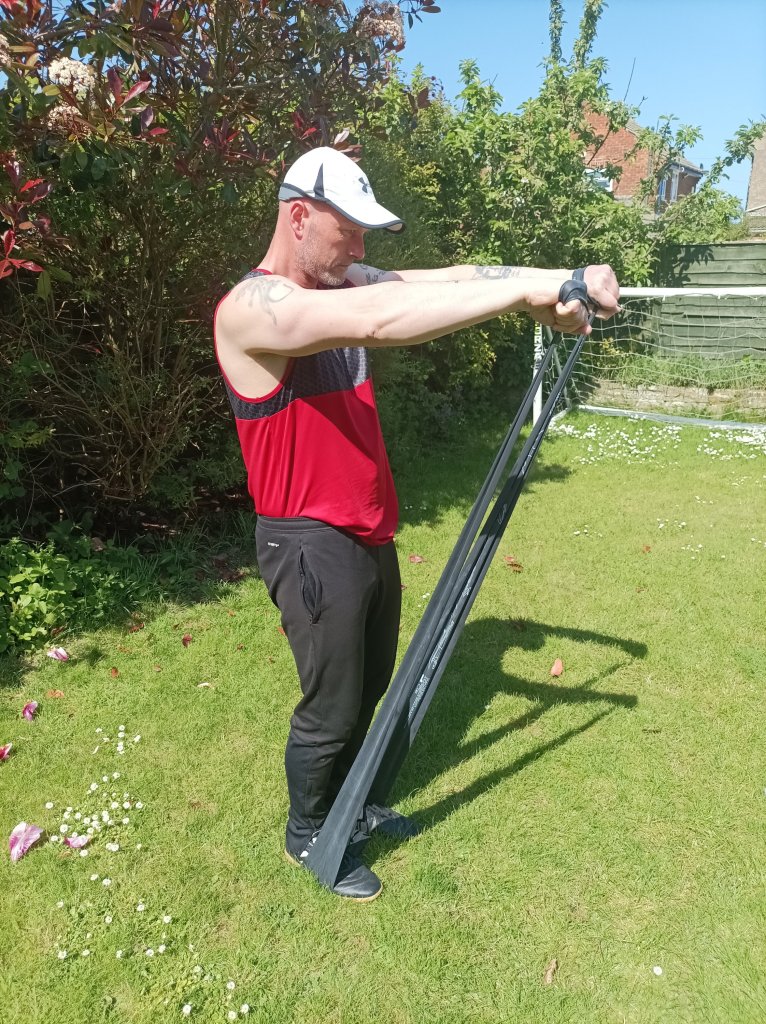
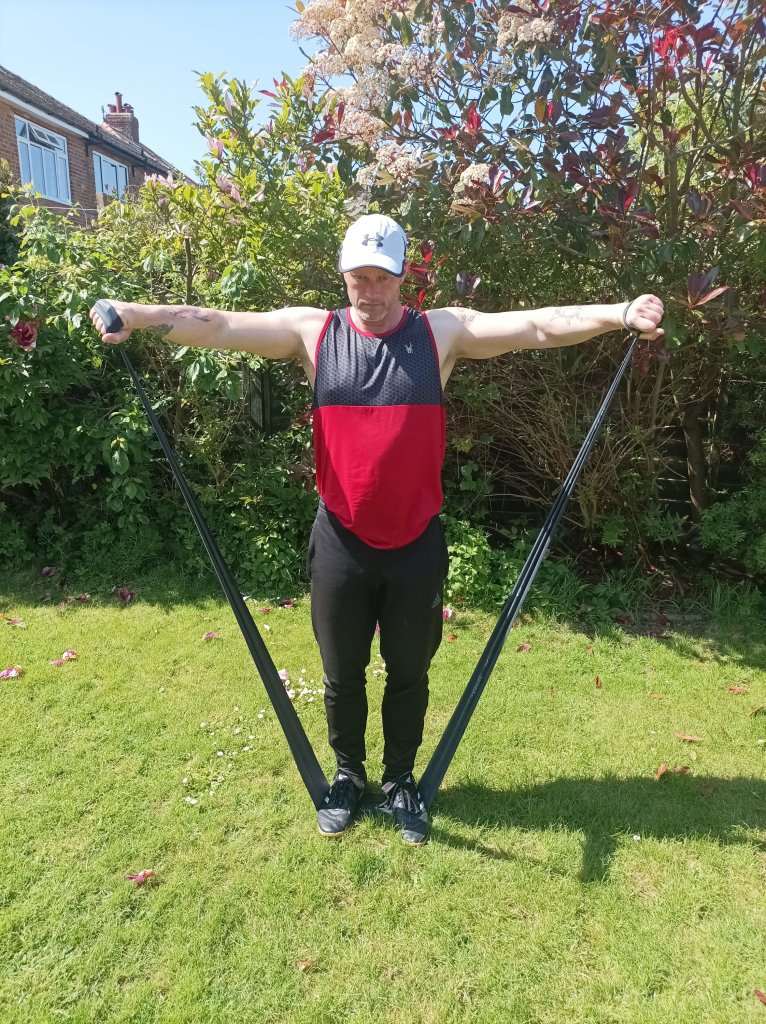
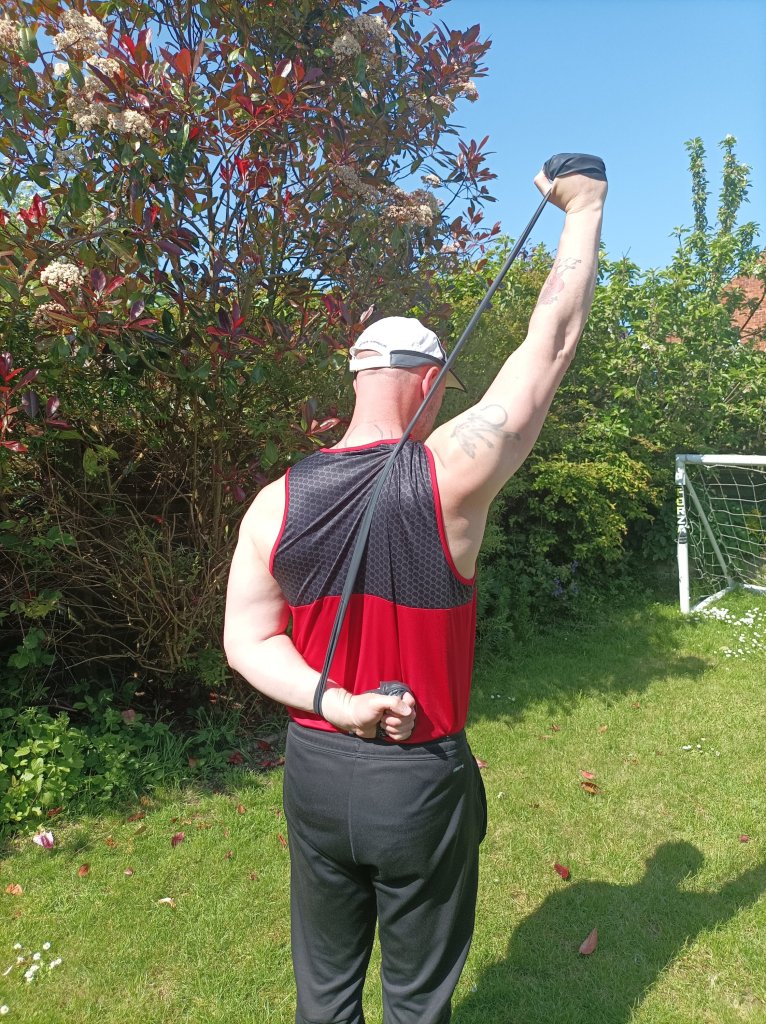
Exercise should be like any other activity…variety is important. If you don’t seek variety now and again, it can become a little stale. And so whatever your goals are, I’m here to give a shout out to using resistance bands as part of your training.
The Benefits
* They are convenient. You could easily do a good exercise routine during an episode of Corrie. This means that you have not had to leave your house to get a workout in. And these days time is precious and you just don’t always have time to get there.
* They are small. Storage is an issue with traditional training equipment, but with these bands they can just fold away back into their case. They make terrible door stops though, so keep a kettlebell nearby for that job.
* They are cheap. Very cheap in fact. Shops like Lidl and TK Max will often stock them for under £5 and the bands will come with a variety of resistance. But be careful, it’s easy to go into these shops for one item and come out with a George Foreman grill, a snorkel and a car cleaning kit as well.
* Variety in your workouts. It’s easy to get bored, especially if exercise isn’t your hobby. Also, your muscles get bored too. Trying out different equipment should be part of the fun for your mind and your body.
* They are good for injury rehabilitation and general aches and pains. After an injury or with sensitive areas it isn’t always a good idea to go straight back to using dumbbells etc. Let your body recover with some simple routines with the resistance bands before hitting the heavy stuff.
So I hope that I’ve managed to convince you that a set of resistance bands can be useful toward your fitness goals.
If someone were to give me a choice in having abs or not, then I would gratefully receive them.
If they then explained what I had to do to maintain and keep the abs I would decline the offer.
One of the most difficult things for a personal trainer to coach is a client wanting abs, AKA a six pack.
So here’s the thing. We all have them, it’s just some are more covered than others. And it is fat that covers them.
It is said that a man needs to be below 12% body fat to actually see a six pack and around 18% for a female. And, although this is achievable for people in general, maintaining this is very difficult indeed.
I regularly go from 12% to 18% depending on the time of year and at my lowest body fat there is a decent amount of definition in the six pack area. However, due to my diet it is impossible for me to edge past down to the 10% mark, where the definition would be very impressive.
And yet my diet is not poor. My calories per day average around 2800 (taken from an annual calculation) and most of my meals are nutritional. But it is nowhere near the strict regime that would be necessary for more definition on my abs or anywhere else!
It was a long time ago that I ditched the idea of going to the gym to get a six pack and it’s around the same time I decided that I liked going for a pint with colleagues after work. Now, I enjoy sneaking in an extra fish finger in the air fryer while I’m making the kids tea.
Abs are made in the kitchen. Indeed, muscle definition anywhere on the body is made in the kitchen. However, that doesn’t mean that having a physically fit physique means a life of chicken, broccoli and rice, washed down with a protein shake every meal time.
An 80/20 rule might not be the clean diet that is necessary for abs of steel, but it is sensible for the majority of people. 80% of your diet is nutritional and balanced while 20% is the other stuff that might not help towards a six pack but it tastes bloody nice!
A popular gym quote goes something like this…”People need to understand the difference between wants and needs. Like I want abs, but I need tacos.”
I could replace tacos with the leftover fish finger, that bit of mayo on the spoon before it goes in the dishwasher, brie cheese with cream crackers, my wife’s homemade ice cream, crumpets with too much butter and pringles and this quote would apply to me. But I make sure that it remains within that 20% of food that I have accounted for. Therefore, even though my abs aren’t defined, I keep a physique that I am happy with. After all, a six pack isn’t the definition of fit and healthy.
So, maybe considering your eating habits a little more and trying to achieve the 80/20 could be a good way for you to progress in your fitness goals. This way, you get to enjoy your workouts and you don’t have to ban your favourite foods.
It’s a strange relationship that I have with the fitness industry. I love it. I truly do. It has enabled me to follow my ambitions and dreams that I thought were beyond me or that had passed me by. I get to meet like-minded people which means I don’t need to bore my wife with news on my new bench press personal best. And the gym is my go to place for getting my head straight. Not many people get to say that about their workplace.
But it is also full of crap. For all the good it can do, there is an element of the industry that feeds off our insecurities.
Dr Gail Hines said,”If tomorrow, women woke up and decided that they really liked their bodies, just think of how many industries would go out of business.”
The fitness industry would be one of them. And in the past couple of decades I believe that the industry has begun to target the other half of the population too. Since the end of the degradation of women in magazines such as FHM and Zoo and newspapers putting a stop to page 3 in the UK, publishers had to target men in a different way. So now they put half naked pictures of male physique models in their magazines and tell them that is what they’re supposed to look like followed by an ad for creatine tablets.
But, despite it being important for the fitness industry to have men across the world feeling inadequate, it is far more lucrative for females to hate their bodies. Or to put it another way, it is more lucrative for the industry to tell women that they should hate their bodies.
For example, we join a weight loss group and go through the torturous weekly weigh ins whilst discussing our ‘syns’. Gym classes are attended mostly by women who are promised that they will burn fat, tone legs bum and tums and blast their abs. Personal Trainers are qualified in form and rep ranges but are way out of their depth when it comes to the emotional side of WHY a person has approached them for help in losing 2 stone in a month. (Some trainers are very good, by the way, but do your homework on them before you give them your money.)
The industry wouldn’t survive if we woke up tomorrow, looked in the mirror and said to ourselves “I am good enough. I am worthy.”
And that doesn’t mean that if we did this we couldn’t still train and eat nutritious food. But we would have a completely different outlook on how we approach our goals. We can always want to achieve a fitness goal that entails lower body weight or bigger muscles, but we would start to do it on our own terms.
The industry wants to confuse us.
When I go to the telly shop for a new telly, I immediately regret the whole process. It’s not that I don’t want a new telly, it’s because I am confronted by a salesperson who begins to fill the air with jargon. Yet, even though this is off putting, I do get excited about stuff that a TV can do that I never thought would float my boat. It draws me in. All of a sudden, things like OLED, QLED, 4k UHD, refresh rates, bezels, quantum dots, low latency and resolutions are the most important things in my life.
Before I know it, I’m leaving the shop with a screen as big as the one at The Odeon and if I can figure out the settings I’m sure it can make me a cuppa tea and give me a foot rub.
Now, I’m not saying that these fancy things aren’t useful on a TV, but I would question if I really needed something so glitzy as the TV that I bought. They are buzzwords. They make us want and need something that we think we don’t already have. It makes us feel inadequate if we leave the shop without a TV to go home to our own TV. Our own TV that might have a wobbly button and it’s a few years old but it still works perfectly fine.
The fitness industry sells us our fitness like a TV shop sells us our TV. They make it sexy and an absolute necessity for our lives. Their jargon and their buzzwords, their special offers and their ‘must have’ product means that we fall for their pitch.
I’ll get a new telly that does what I want it to do in my own time and with the advice of those that I trust. And if we say the same thing about our fitness goals, then we could all sit back and watch the industry do a bit of sweating of its own.
Having spent the past two weeks with kids obsessed with football at a multi sports camp and having two footy mad kids myself, the question “Who is better, Messi Or Ronaldo?” Is asked to me almost daily.
But this question isn’t just something that kids ask. People debating on the terraces, in the workplace, online and in pubs must be one of the most frequently asked questions in the footballing world for over ten years.
So, my answer is usually pretty boring to most people.
The problem with finding the answer here is that we are talking about two of the most gifted footballers to ever play the game. They both have different strengths to each other but they are considered some of the greatest ever because even their weaknesses are pretty strong.
But these footballers are once in a generation freaks who are exceptionally gifted. They are so good that players such as Neymar, Modric, Salah, Mbappe and Haarland simply get overlooked as the best in the world because, even though Messi is in his later years as a footballer, is still winning some of the greatest trophies in world football.
Kids score a goal and instantly celebrate with Ronaldo’s ‘Suuuuiii’ celebration. They are more than great footballers. They are icons. Kids want to be just like them. And when I watch some adults play football in the local park, I suspect they do too.
And whilst this enthusiasm for mimicking heroes is all good fun, I can see an issue with how we view ourselves and how it can affect our own expectations of our own abilities.
I’ll take you back to when I first started going to the gym. I would see the most physically imposing guy in there and want to look like him. He was the gym GOAT (greatest of all time). I would watch how he trained. I would notice the protein shakes he was drinking.
Yet all I was managing to do is raise the bar to a height that might have been way too high for me, my genetics, my lifestyle and crucially my health and physical development.
I didn’t need to be anybody else or aspire to anyone else’s goals. Sure, I can always ask questions and get training tips, but trying to become the same size as Triple H was a poor start to my gym journey. It can be demoralising and, for many people, ends in quitting the gym altogether.
My son Jonas is a terrific footballer for his age. As an under 9’s player he is currently playing in an under 10’s league and looks comfortable. But I do try to keep his feet on the ground. He watches lots of football on YouTube. Rather than watching video after video of Ronaldo and Messi, I would much rather he watched the leadership of Jordan Henderson on TV or even go to the local stadium of Scarborough Athletic and aspire to have the passion of their team captain Michael Coulson.
SMART
When you are wanting to create your fitness goals I would recommend the SMART approach. This stands for Specific, Measurable, Achievable, Relevant, Time. And I’m going to look at the achievable bit for this article.
As I have stated above, I believe that many of us raise our bar to unrealistic levels and if we were to lower it then we would get to where we want to be much easier. It doesn’t mean that we can’t be brilliant at what we do, in fact, if we can look at our achievable goals realistically, then there’s a much greater chance of being brilliant at what we do.
Firstly, you need to recognise your competition. The only competition is YOU. Nobody else. You want to achieve just as much, if not better, than yesterday’s you. This could be by maintaining your physical activities from week to week, looking to achieve an extra mile on the treadmill, putting an extra couple of kilos on the bar, aiming for higher reps or keeping a stable nutritional diet. It doesn’t matter what Hulk is lifting on the platform. It’s your journey, not theirs.
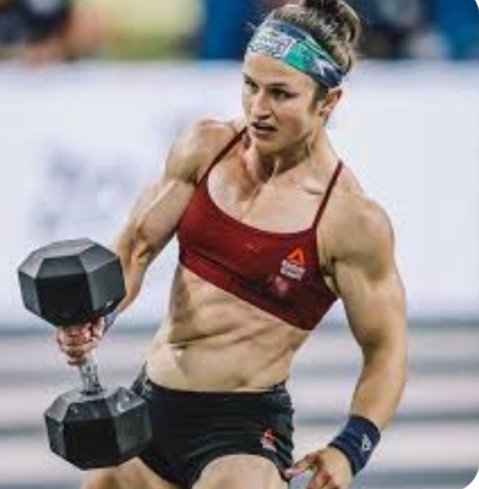
A few years ago I trained a very active 50 year old lady who wanted to gain muscle hypertrophy. As time progressed and her personal bests were increasing she began to show me pictures of Karissa Pearce, who is a CrossFit athlete. My client wanted her physique. I had to attempt to manage my clients expectations. It wasn’t that she didn’t work hard enough in the gym but it didn’t meet the criteria for her achievable goals. Karissa Pearce was a professional athlete in her mid 20’s who was able to train full time and stuck to an incredibly tight diet to get the physique that she had (and still does). My client, despite her levels of enthusiasm and spirit, did not live the same lifestyle and I would not have been doing my job correctly if I enabled unrealistic goals.
The saying goes “Reach for the moon and you’ll land among the stars”. But it can only refer to your moon and your stars. Not Messi or Ronaldo’s, Triple H or Karissa Pearce’s moon or stars. They have their journey, you have yours.
So many young people give up on their dreams because they could not interpret that dream into reality. And adults do it too, until we become a society of people giving up because we couldn’t manage our expectations.
A child should be able to dream about becoming a World Cup winning footballer, but the reality based on statistics in the UK is that a talented kid at football who manages to be invited to an academy has less than 1% chance of making it to becoming a professional at ANY level. However, that shouldn’t burst a kids bubble. If they aren’t one of the lucky ones to make the professional level, then it is worth noting that there are over 5,000 football teams in non-League divisions. This is an excellent standard to reach which is often paid (depending on the league and the club). Just because you don’t have Ronaldo’s career, it doesn’t mean you are rubbish at football.
As a kid I would dream about playing for Liverpool FC and, although I don’t earn the weekly wage of Mo Salah, I did follow my ‘sporty’ dream eventually by becoming a Personal Trainer and I currently coach sports to children. And so we should dream, as long as you manage the reality.
I encourage my own kids to dream about their goals. But, just to give you an example of the sort of stuff they aspire to achieve, it involves mansions, high performance cars, professional football, becoming a YouTuber with millions of followers and traveling to the moon. These are all great ideas, but I also want them to realise that just having a home is winning at life too. Affording any car is a luxury. Having your health and talent to play at any level of football is amazing. Having real friends that appreciate you is special and just being able to see the moon is a blessing.
Reflecting on my own fitness journey, i now understand that my achievable goals are to be able to run and lift as well today as I was doing ten years ago. It’s to fit into the same size jeans as last year. It’s to meet new and interesting people. It’s to keep a positive mindset and feel good about myself. If I continue what I’m doing then I have a good chance in achieving this.
Please, keep dreaming. Aspire in doing whatever you want in life. It really does keep the fire in the belly burning. But when it is time to form your plan of action in your life, be SMART.
A question I am often asked in the gym is how often do I train. I answered that I currently train 3 to 4 days a week and the lady was shocked that it wasn’t more.
My current lifestyle does not enable me to train myself in the gym as much as it used to. I have taken on a couple of different projects that have taken my time away from the gym, therefore when I do get the time it has to be time well spent.
Fortunately, even for busy lifestyles, training programmes can be created to fit into tight schedules. You just need to identify your goals and know what to do to achieve more ‘bang for your buck’. And unless it has been a seasoned athlete or bodybuilder in the gym I have never seen anybody execute this time management correctly without a good PT who will offer either 1-1 or programming.
It is often said that as long as you are moving in the gym you are doing something positive. Well, I have to disagree. I find it a cop out and a disservice to ourselves to have this attitude. Not only are we not going to achieve the best results in the best time, it can result in injury and a lack of motivation.
Moving is great. Going for walks and staying as active as possible doing sports you enjoy is very important. But once you are in the gym with a specific goal, it is a different game altogether.
In the last couple of years I’ve personally seen a big difference in the sort of person that now requires personal training. And this issue relates to a shift in lifestyle brought on by our time in lockdown. With gyms closing, we had to be inventive with how we exercised. During this time, many people felt that they either no longer needed a gym or that they didn’t need any help once they were in the gym. In fact, due to social distancing, the gym I train at cancelled inductions for new members and they aren’t mandatory anymore to this day.
During lockdown, we became self proclaimed professional bread makers, scientists, content creators, politicians and personal trainers.
I’m seeing the fall out of that in the gym now. Most people that approach me are asking how to fix injuries. Here are the most common examples…
Running became very popular over lockdown. But the correct footwear is vital if you are to run frequently. It can also create muscular imbalances and an overuse of certain muscle groups. Joints are also under pressure from the repetitive impact with the ground. Relying too heavily on running as your choice of exercise without the right precautions can also cause oxidative stress on the body, which will have a negative effect on your goals.
Home workouts became a staple for those wanting to continue their hypertrophy goals. Kettlebells and dumbbells are relatively cheap to buy at shops like Lidl and Aldi, who often stock them in their middle isles. But they don’t come with instructions. I have always been an advocate of the home workout, but it still has to be done correctly to get results and avoid injury. Lifting the wrong weights with the wrong equipment can easily do this. And a bench is useful. Sitting on the edge of your sofa to perform an overhead dumbbell press offers no protection to your spine. If repeated often enough, back pain will occur eventually. And deadlifts, bent over rows, kettlebell swing and squats are common exercises to get wrong and cause injury. Not a day goes by in the gym where I don’t wince at a deadlift technique. If this is gym technique, what are their home workouts looking like?
Personally, even if I’d looked up how to fix my car on YouTube and I gave it a go, if I were knackering up my car I would see a good mechanic. I need to get to work and get to social events. I can’t afford to go too long with my car being out of action. I have to swallow my pride and see a professional.
Now change the above statement from car to body and replace mechanic with personal trainer. You get the idea.
Joining a gym or embarking on any fitness goal doesn’t have to be 7 days a week, intense, gruelling or time consuming. But you do need to know how to use the time that you do have productively and safely.
Nike was almost right with their ‘Just Do It’ tag line. Mine is ‘Just Do It, But Do It Correctly.’
Go into any gym or click onto any fitness/training page and there will be a debate that has been around since the first person laid on their back and pushed something heavy above their head.
I’m now picturing Fred Flintstone pressing a rock, but that’s silly.
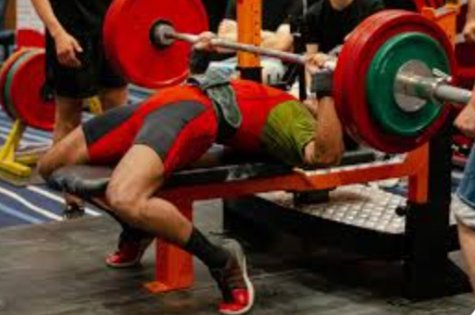
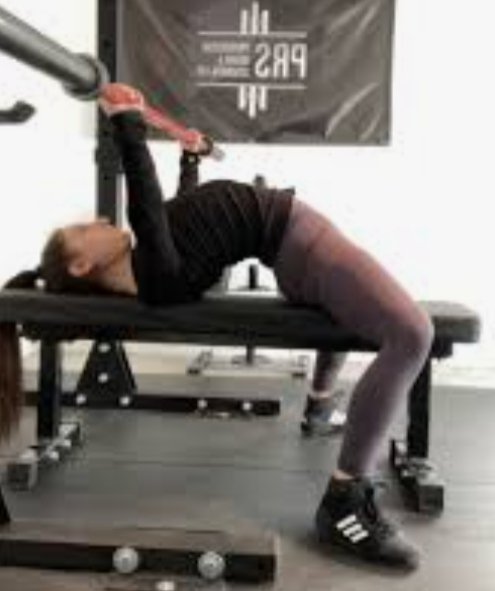
The debate is whether or not we should arch the back during the bench press. And I mention this now because it has once again been brought up in conversation at my gym today. After somebody saw me arch my back during a bench press, they asked,”Are you supposed to arch your back?”
Knowing that the questioner was a football fan I came back with a football analogy. I replied,”If you are taking a corner kick should you knock it into the box or go short?”
The answer, of course, is that it depends on the circumstances. It depends on the stage of the game and the tactics that you or your coach wish to deploy. There’s no right or wrong, but the timing can be right or wrong. I’ll explain…
Arching the back is great for lifting heavier weights. It provides a more compound movement which recruits different muscle groups and helps create more power. And this is my reason for arching my back. In fact, I always bench press with my back arched because I don’t find it the best hypertrophy exercise, despite it’s many other qualities.
So, a chest press in order to promote pectoral hypertrophy would be to use a set of dumbbells at around 70% of your 1 rep max for 10-12 reps. Dumbbells allow a longer range of motion which can result in more muscle activation. The bar just can’t give you that sort of range, so a bench press with a bar without an arch, in my opinion, just gives you a ‘pump’. A few pics in the changing rooms for your Instagram look great but by tomorrow there will be nothing to show for it in real life.
I always use compound movements as my primary exercise and I often start with the bench press. Now in my 40’s, I have to look at ways of increasing my testosterone and compounds have the greatest success at doing this. I don’t bench press to ‘grow muscle’, just testosterone levels. However, once I pick up the dumbbells it’s all about weight management and hypertrophy.
It seems that it doesn’t really matter who you are, you will, at some stage in your life, compare yourself and your abilities to someone else. This leads to us wanting what somebody else has.
It is totally natural and since our primate and then homo sapien descendants demonstrated, this need can evolve into producing more, working harder, becoming more creative and developing speech and the world around them.
So here we are.
This need, it could be argued, also leads to greed, destruction, war and division.
And as society needs to deal with this obsessive nature of ‘keeping up with the Joneses’ we as individuals need to take a long hard look at how we deal with this process.
Even now, I will walk into the gym and want to run as far as her. I want his hair style. I want the six pack and the teeth and shoulders and their ability to tell a joke and make people laugh. I want the tattooed sleeve.
I will watch in admiration as they push a 150k bar, but I might end my thought with ‘I wish I could lift that much weight’. I truly admire other people’s abilities and, as part of my job as a PT, I help in people reaching such great abilities. But as human nature as it, sometimes I want it too.
But whilst the evolution from primate to homo took billions of years, we want it now, today.
A book that was brought to my attention recently called The Boy, The Mole, The Fox And The Horse said,’What do you think is the biggest waste of time’, asked the boy. ‘Comparing yourself to others.’ Replied the mole.
Patiently watching and learning from others can be a wonderful attribute to have. But comparing yourself to others can be damaging and, as the mole quite rightly puts it… it’s a waste of time.
The difference between learning and comparing is massive. It’s the difference between peace and war. For you personally, it’s the difference between self love and self loathing.
So take a look in the mirror at yourself. The beautiful, intelligent you. And keep being you. Nobody else.








 Never Give Up PT