Understanding Muscle Contractions

Understanding muscle contractions are important if you are on a fitness journey that includes muscle growth, strength, fat loss, mobility and sports specific training. Once you understand the basics of muscle contraction I am convinced that you will speed up your ability to meet your goals. And I say basics because you don’t need to be a fit pro, a scientist or professional athlete to know your own body. Hopefully a little bit of reading of articles that leave out the jargon can help you to understand. So let’s jump straight in!

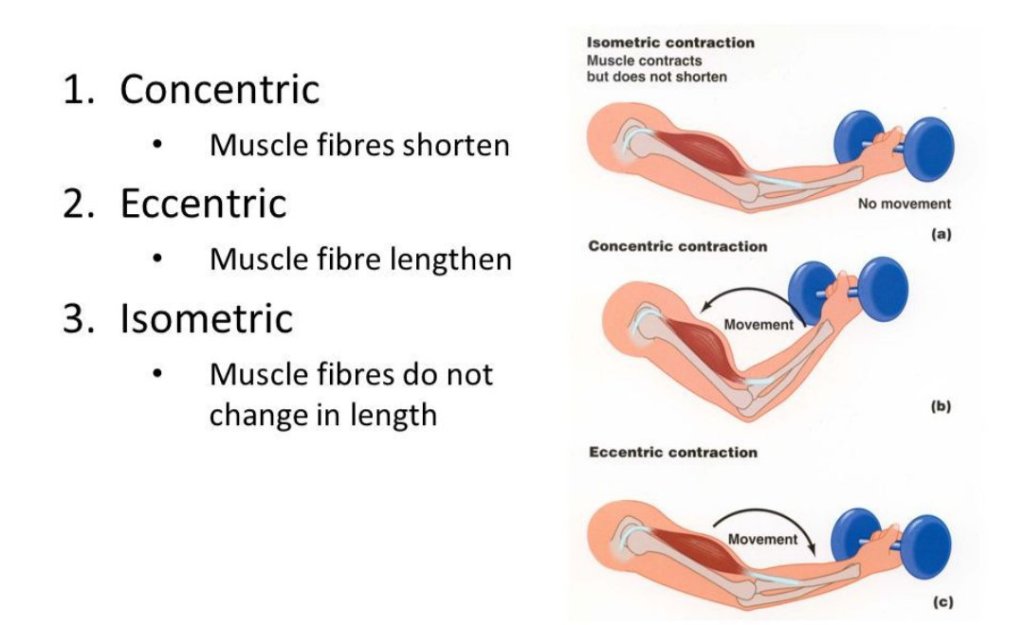
Your muscles perform three types of contractions when you exercise.

* Concentric

* Eccentric

* Isometric

A concentric movement shortens the muscle to force an object to move. Think of the bicep curl. As you force the weight towards your shoulder your bicep shortens to create a squeeze.

An eccentric movement lengthens the muscle and stretches the muscle fibres. Imagine the lowering of the weight during a bicep curl or the squatting part of a squat or leg press. This phase of the rep is regarded as the part that induces the most muscle growth as the muscle fibres are fully activated in lowering a weight under control. This is where delayed onset of muscle soreness (DOMS) are most like to occure and specific eccentric training is a popular training phase for many athletes.

An isometric movement is a contraction that does not require muscle to lengthen or shorten. Think of a plank or wall sit. There are no reps that use concentric or eccentric movement. These are particularly useful when sparing the joints from discomfort or injury but still strengthening the muscle.
Developing an understanding of these muscle contractions will give you a greater appreciation of time under tension (TUT). Powering through 12 reps in 15 seconds is fairly straightforward. However, this is not the best way to train. Once you imagine the muscle  lengthening and shortening through repeated exposure to the load of the weight then you can create a clear ‘mind to muscle’ pathway. You begin to think about each rep rather than just move a weight from A to B and it might need you to cut out the ego lift and go lighter. Just because you’re benching 100k doesn’t mean your muscle has gotten much out of the process. If you aren’t in control of your muscle contractions then your target muscle is unlikely to feel the need to change.

I ask my online trainees what their rate of perceived exertion (RPE) is after each exercise. As I’m not physically stood next to these clients I cannot see how easy or difficult they found the activity. If they are rating their workout at around 5/10 I would ask them to slow the tempo of each rep before adding more load in an attempt to challenge them to a high exertion level.

TUT and muscle hypertrophy
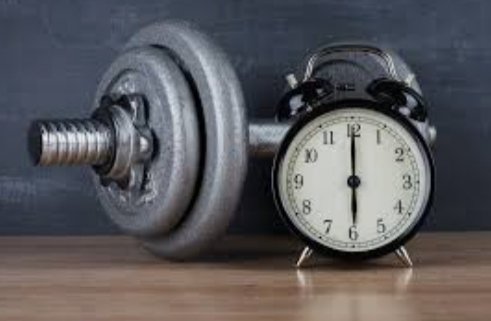
Earlier I mentioned time under tension as a significant factor in muscle development. Longer TUT will create a more challenging experience and much more rewarding for muscle hypertrophy. If I were to learn French for ten minutes a day I would get much less knowledge of the language than if I were to learn French for 30 minutes.

So, if I were to complete a set in ten seconds I would get much less chance to elicit muscle growth than if I were to complete a set in 30 seconds. Every rep and set is an opportunity for muscle growth. Moving a heavy object is easy. Thinking about it requires muscle engagement.

I hope that this article helps. I have tried to remove unnecessary jargon as I believe that resistance training should be enjoyed by everyone and we shouldn’t need a physiology degree to do it. And not just do it, but do it to ensure you get the benefits from it!
https://www.trainerize.me/profile/nevergiveup2/?planGUI

Repeat, Repeat, Repeat

My eldest must think I’m obsessed. At 8 he has certainly got a natural talent for football and he is always keen to have a kick about in the garden in-between matches and team training. He will often just want to take shots at me which is fine as I firmly believe that doing the bits that you enjoy the most is what keeps us interested. But I do try to get him to do the bits that aren’t really coached yet at his age.

Throw ins at under 8’s is a classic example. A throw in is usually a foul throw (which the ref allows due to their age), the length of the throw is week due to poor technique and the decision making in who to throw it to is questionable.

Passing is another example. Instead of trying to ‘Messi’ it past 5 opposing players in his own penalty area (8 year olds don’t like to pass) I want him to make good, confident decisions on when to pass and create openings.

To master these he needs coaching and, although I’m not an FA coach, I do know how to coach.

One piece of advice that I can take into any type of coaching, expert at it or not, is to repeat the process over, and over, and over, and over, and over again. And when you think you’ve mastered it, repeat it again.

We move on too quickly. Either because we think something is accomplished or because we haven’t discovered a purpose for continuing.

https://www.trainerize.me/profile/nevergiveup2/?planGUI

My eldest also brings home words to learn for a spelling test at the end of each week. It’s the same process. Tying his own show laces, eating foods that are nutritious but he doesn’t yet like the taste of, crossing a road, learning French all need repeating to be good at it. Despite some freakish ability by some people to have a natural talent at something, the rest of us have to work bloody hard to be good at it. And even then, don’t think that those with a natural talent don’t practice hard at what they do. They do, but what they do is just their knack. Their ‘thing’. We’ve all got a ‘thing’, we just need to find it. But if we are to persue different interests or to progress in certain areas then the chances are you will need to practice like mad to be any good at it. My son has a tendency to move on too quickly. Perhaps most kids do. Just because he has read his ten words for his spelling test doesn’t mean that he knows them.

I’d love to play guitar. I’ve even bought a couple in the past that look great as ornaments. Actually playing it will require time, patience, practice and repeating. I don’t do that. My excuses are time, my natural abilities aren’t good enough and getting blisters on my fingers. I know that I would be able to play a little if I stopped with the excuses. Maybe I’d never be Ed Sheeran, but I would learn the chords and be able to enjoy playing the guitar and far quicker if I hired a teacher.

My excuses for not playing guitar are exactly the same excuses that I hear on a daily basis in the gym.

Time, not good enough and injuries.

But me playing guitar or not isn’t affecting my health. Learning the chords won’t help my body fat percentage go down. Breaking into the intro to Smells like Teen Spirit won’t make me look and feel better in my clothes and my mental health won’t be any clearer if I can play the theme tune to Coranation Street. So I haven’t found my ‘why’. I haven’t found my purpose to playing guitar, therefore my motivation for doing it, as great as it would be, just isn’t there.

Passing a football through cones isn’t as exciting as smashing a ball into the top bins past his dad, but my son will develop and understand the game much quicker. And if he sees his work pay off on the pitch in a game then he will want to practice even more. He will want to repeat the process that allowed him to make the pass, shot, dribble or throw that won the game. Hopefully he discovers his reason for playing football. It might make him feel good. He might enjoy being part of a team. He might enjoy the buzz and excitement on match day or he might know how important exercise is to his physical and mental health. As long as he knows why he keeps going back for more he will keep progressing.

For best results I can’t help repeating certain movements for my clients to perform. Yet despite the repatition it is important to keep the reason for doing it fresh in their minds and also creating new challenges.

Yes you can squat, now can you squat deeper?

That is a good bench press, now create a slower eccentric movement for time under tension.

You can perform 10 reps, now do 12 reps.

Exactly the same for my eldest at football. You scored with your left foot, now can you kick the ball with you right foot. It is still football. It is still repeating the process, but now we have a new challenge to consider. And it will take time. Practice and time. Lots of it.

Remember your reasons for doing something. If it is so important to you then you will continue the process and you must repeat, repeat, repeat until your body and mind knows exactly what it is that you are wanting from it.

If it’s important enough to you then you will achieve it. You’ll never give up!

Why?

Why…adverb…for what cause, reason or purpose. Why did you do it?

Merriam-webster.com gave me the meaning of the word why on their website. Nothing that we didn’t already know really, is it?

And yet I’m not sure that many of us use it enough. I hear lots of motivational speakers and psychologists telling their audience to say ‘yes’ more or sometimes even ‘no’. But maybe we should be saying ‘why’ more.

My kids are very good at this. ‘Don’t do that.’ I’ll say. ‘Why?’ Is often the reply.

‘Because it is dangerous.’

‘Why?’

‘Because you might fall.’

‘Why?’

‘Because it is not safe.’

‘Why?’

‘Because the tree branch is 200 years old and ready to snap and the rain has caused bacterial wetwood that makes it slippy. Plus, you don’t have the appropriate footwear and the A&E waiting times are horrendous at the moment and I don’t fancy a day in the hospital sitting with the all day drinkers.’

My why

I never get to say that last bit. It’s usually more like ‘Just get down!’

But I don’t want to take their inquisitive nature away from them. And they’re kids who want to climb trees. I’m sure that there’s a grainy photo somewhere with me in my shell suit hanging from a branch. So asking ‘why’ is perfectly acceptable.

I ask myself ‘why?’ regularly. Sometimes it just gets me out of bed. Or it enables me to do the gym session I’ve been putting off that day. It makes me push myself in my work and I strive for better for my family’s future. It keeps me hungry. All because I reminded myself of my why.

My why

When I am talking to a potential client wanting to train with me I ask them why they want to train. I get the usual type of answers which are totally acceptable to begin with.

‘Id like to lose a few pounds.’

‘I want to lose my belly.’

‘I want to gain some muscle.’

‘I am entering an event.’

All of these require another why. And perhaps another. And another.

I train to stay trim…why? To look good in a T-shirt this summer…why? Because I’m conscious that I’m not getting any younger…why? I have had injuries in the past and I know that age could cause these injuries to be painful in later life…why? I began training many years ago to fix my injuries which helped my mental health too…why? Because I felt more confident, strong, pain free and I became a better person…why? Because I knew that I was giving my future self a chance to live comfortably which would provide a happier life for my family too.

Because I knew that I was giving my future self a chance to live comfortably which would provide a happier life for my family too.

This became my why.

My why

Mark Twain said,”The two most important days in your life are the day you are born and the day you find out why.”

It is the most enlightening thing there is to find your why, your reason, your purpose, your trigger.

Losing a few pounds is a credible goal, but it happens so much easier if you know your why. Your why is the ultimate goal. And as long as you keep reminding yourself of it, good things happen along the way to achieving it.

You need a good reason to lose a few pounds. If you don’t have one, or if it’s to please somebody else for instance, you have no real motivation to lose a few pounds. Even if you do there’s a good chance that you won’t keep it off. Motivation is just a fleeting emotion, your why lasts forever.

Keep that child like inquisitive mind and keep asking ‘why?’

And keep asking. And asking. And asking. And when you find your why, you will find your way.

My why

Skinnies

I feel that I might have been a little absent from y’all in the last couple of days. My wife and I managed to get away for an evening to a gig in York and, as much as I need my phone for my business, I managed to limit it to the necessities. Writing articles was not in my sights. However, plenty of inspiration for future blogs were always in my mind so here I am, back at home and back to real life. I enjoy my work and being daddy, but a couple of days away was a chance to recharge the batteries.

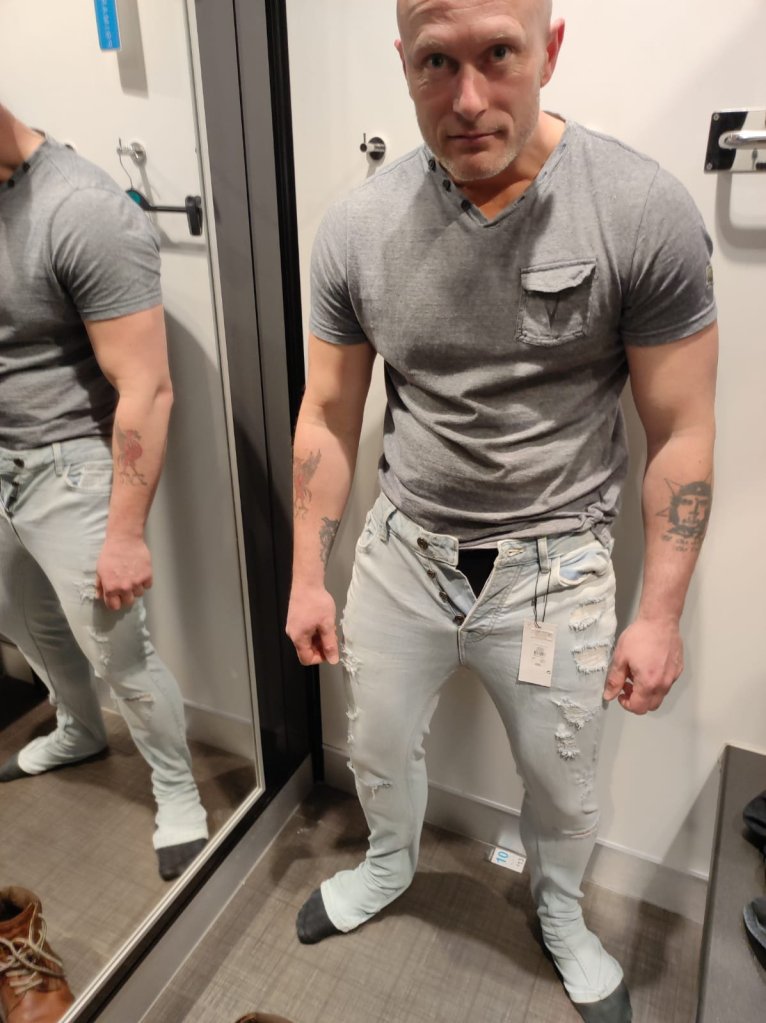
It was a chance to have a midlife crisis moment too! I bought some skinny jeans.

When skinny jeans first became fashionable for men I instantly said to my wife that I would never buy a pair. I liked straight leg, boot cut, baggy and even a daring grungy ripped look. But skinny was a bit 1980’s Axel Rose. Super cool at the time, but best left in the 80’s!

But yesterday I couldn’t resist trying on a pair. After all, I don’t do ‘leg day’ to keep my pins kept stored away like a Maradona world cup winning shirt. I’d like people to see them.

And seeing as I have an unfortunate tattoo on my calf from my youth days of a naked female I don’t feel like I can wear shorts. I must get that tattoo covered up one day. But, I thought as I held up the skinnies in the shop, this might do for now!

I have all of the insecurities of everyone else. Sometimes, even wearing the most normal clothes possible, I feel like a dick. I feel goofy, uncomfortable, different from those around me. I know by now that I’m not the only one. Every day I talk to people who want to be body confident. It’s what I do. I work on myself everyday just like I work on my clients. That’s what sets me apart from Jeremy in Berkshire telling Gav from Bradford that he needs to eat chicken and rice four times a day. I want to eat what I want AND fit into some skinnies. Gav should do the same too.

Gav can still stay within his calories and macros, eat the Pringles and wear the fuck out of those skinnies. It might not suit our Jeremy, but Gav is happy wearing what he wants and is in control of his life, so who gives a shit about Jeremy and his two grand ‘fit programme’ who prays on the insecurities of his clients. I want to be happy in what I wear. I want to shake my booty in a pair of skinnies. I want to eat a kebab occasionally and I want to do the windmill in front of my wife without being judged. Gav and his missus should do the same. If you are happy and confident, you’ll feel sexy and in control.

I had to try a few sizes of skinnies on. They were either too long or too tight. But I eventually found some that made me think ‘yeah, I’ve still got it dude!’. Whatever stage you are at in your fitness goal right now, this second, always know that you’ve still got it too.

Everybody…I mean every BODY, is beautiful. It’s just society and our own individual insecurities that need to realize that. Change is good. Wanting to change is fine, just remember that you are beautiful to begin with. It’s so much easier to change if you respect what you want to change in the first place.

I wore my skinny jeans today. In fact I totally owned this fashion malarky. And one day I might even go for the ‘no socks’ look. If Gav from Bradford can, so can I!

NEAT

I’m going to dive straight in with a phrase that you might have heard before but if not I don’t want you to think I’m getting all sciency. I’m not, but it is important in the context of this article.

Non-Exercise Activity Thermogenisis (NEAT)

Thermogenisis, according to sciencedirect.com, is defined as the dissipation of energy through the production of heat occuring in adipose tissue (fat) and skeletal muscle.

How I define it is if you move more you burn more calories due to the energy expenditure. The Non-Exercise Activity bit relates to the movement that you do outside of your exercise routines.

And by moving I mean by just being alive. The average person can burn 75 calories per hour by breathing. A person in a coma will generally lose weight as the body will still generate energy in order to maintain basic functions.

However, the latter is an extreme example of energy expenditure so let’s look at this sensibly!

If the average person were to stand for 6 hours instead of sitting they would burn an extra 100 calories. It doesn’t seem  like much but it adds up to 2.5k within the year!

And yet, I wouldn’t fancy standing through the final series of Ozark so maybe that’s a bit unrealistic still.

If you were to take the stairs instead of a lift then you would use up to 7 times more energy than taking a lift. Again, maybe it doesn’t sound like a great deal but if you have an office job that requires a few flights of stairs that is some serious energy expenditure by the end of the year.

In a previous post I’ve talked about parking further away from the gym to warm up. You can take this even further by applying it to your grocery shop or parking further away from town to get more steps in. The average person uses 300-400 calories from walking 10,000 steps.

Sex, on average, burns just over a hundred calories, but I have no idea who discovered this or how long the experiment lasted!!

In fact what we do with out NEAT each day will probably burn a considerable amount of calories compared to what we can achieve in a workout, especially if one is fairly active anyway. But if we were to put all three factors together…NEAT…Exercise at least 3 times a week and a balanced diet, then we can lose weight sensibly.

And they all compliment each other. Being NEAT often leads to a more proactive attitude towards exercise and exercise tends to lead to better food choices.

Perhaps if you have a weight loss goal, instead of being so daunted about the gym or when to exercise your first steps should be to think NEAT.

Paella

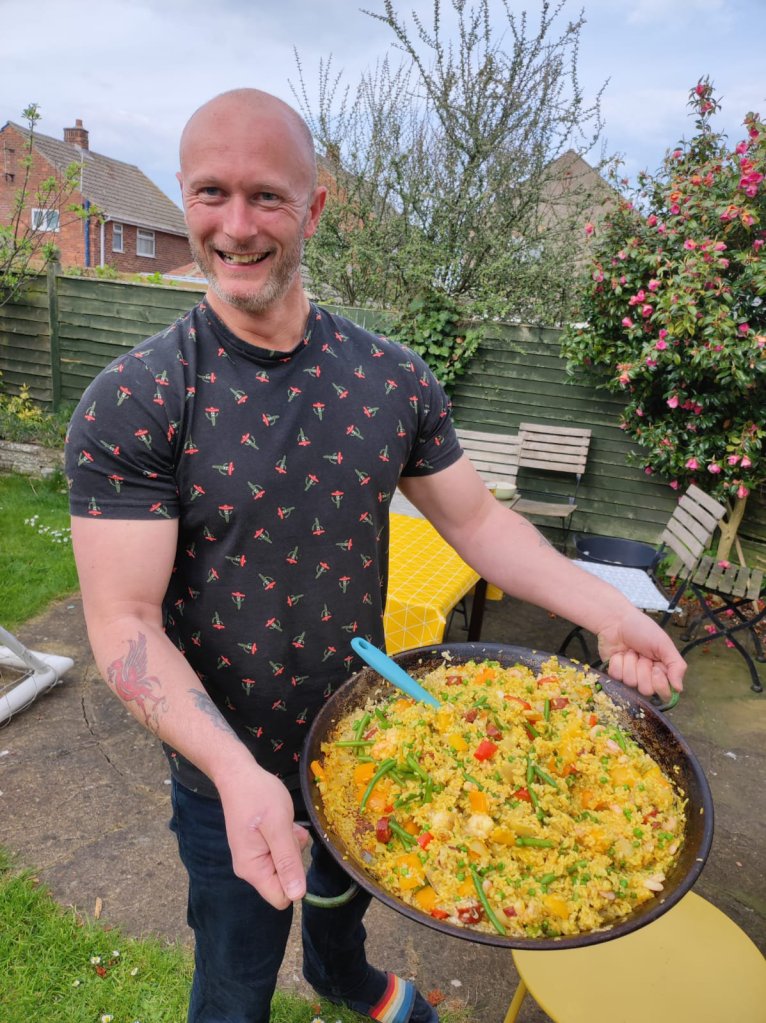
I know that we will eventually have the big debate today. We will discuss with our guests if chorizo has any place in the traditional Spanish Paella dish. The tripod, burner and the paella pan were all ordered from Spain to keep our paella events as authentic as possible and the rice is always Valencia bomba rice. We love Paella days!

I remember a few years ago when Jamie Oliver shared a paella recipe that included chorizo and he was absolutely slaughtered by the traditionalists on social media because paella was never invented with the intention of adding chorizo! Adding chorizo, said some commentators, made it a ‘rice dish’ and not Paella. If this is the case then for all our attempts to create an authentic Spanish Paella we fail at the final hurdle by throwing in chorizo. The years of entertaining our friends and unveiling the evento principal and calling it paella might be a lie. But I still think that it deserves a little bit more of a build up than inviting friends round for a ‘rice dish’. Perhaps if we lived in Spain and we were to invite our Spanish friends round for paella we would leave out the chorizo, but I’m not so sure our English friends care too much as long as it is tasty!

I’d much prefer to get the paella pan burner out than the BBQ on a sunny day. Yes, there’s the traditional way of cooking paella, but you can be a little adventurous too. And with two kids that have different tastes and preferences it is difficult to stick to a recipe. One likes prawns and the other one doesn’t. One likes paprika and the other doesn’t. So a little bit of improvising is necessary. The BBQ will get a good run out over the summer as well of course. If I’m stood outside flipping burgers I’m happy too!

The last 6 months has been a long, grey and cold period on the North East coast of England and for all it’s surrounding beauty, i don’t appreciate it enough because I hate the cold, dark months so much that I don’t see enough of the natural beauty that I live amongst. So the first weekend where I could sit outside in a T-shirt and eat paella with friends was a celebration to me. It felt like the start of summer.

When I get asked why we plan to move to France I could spend all day discussing politics and business ideas, but the short answer would be for the weather. An older gentleman at the gym said to me that he can hardly walk the length of his street before he gets tired and needs to sit down. Yet when he went to Spain for 2 weeks he was walking the mountains. I understand this because I too feel much better when I’m in a warmer climate. My back pain, although I keep this under control with my training, is eased considerably in warm weather. And the research provides lots of evidence on the older gent in the gym and myself being accurate on our own health assessment.

Vasodilation, which is the dilation of blood vessels which improves blood flow, happens when the body is subjected to heat. This improves circulation in the affected areas and transfers deep into the muscles. I’m sure after a couple of days in the Spanish sun the older gent at my gym was like Charlie’s Grandpa Jo, skipping and whizz popping over the mountains. Back in blighty, the blood flow slows down, muscle and joints seize up and he can’t even get out of his street.

So I welcome this year’s British summer. I just hope that our paella day wasn’t the last of it! After all, I’ve bought all of the chorizo now.

The Balanced Plate

Calorie counting apps are useful to see how many calories you consume each day. But none of them…

  • Have a qualified PT inputting your data to ensure that you are not going too restrictive with your daily calories
  • Provide information on alternatives to your current diet
  • Create workouts in your very own exercise library on your app specific to your goals
  • Enable you to talk through your difficult days and have a live conversation with your PT (which happens to be me!)

I have created this challenge because I am my everyday client. I want to feel better and fit into my clothes but I also like cheese and biscuits on an evening washed down with a glass of wine. I work hard and want to indulge sometimes. And this is where I can help. I can prove that we can still enjoy the food we enjoy without guilt. I can show you how to balance the necessary nutrients alongside the other foods too. Nothing is banned, not if WE take control.

Not only am I professionally qualified to help my trainees, but I live through the same anxieties as them. My takeaway habits have been out of control. I’ve had moments where I’ve gone through two, three, four packets of crisps on an evening. I created habits of eating chocolate every night after my main meal and I’ve had times where I haven’t given myself any days off of drinking alcohol for weeks. I became a personal trainer because I felt that I could connect with people like myself. I knew that if I could do that, armed with the knowledge of how to fix it, then I could help others.

Guilt around our food is the biggest obstacle. If you eat the high calorie food that takes you over your daily calories then I say,”I hope that you enjoyed it! Own it, you ate it. Now move on.” No guilt needed. We just try and get your next meal back on track.

I will probably have to check my takeaway, crisps, chocolate and alcohol intake again in the future. I have goals. I am confident at staying on track. But I’m human. I slip into old habits and when I do I’ll deal with it in the way that I know how. I don’t look for perfection from myself or my trainees. I look for effort and honesty.

The Balanced Plate Challenge has, by far, been my greatest online training success to date. The results have been amazing. But like anything that’s worth doing it isn’t always easy and the path is not linea. The challenge doesn’t stop there which is why I’ll continue to develope The Balanced Plate beyond its 4 week challenge. And like every challenge that I set for my trainees, whatever they achieve, this is just the beginning. Imagine what they can do moving forwards.

The 20 Minute Workout Challenge

The recent successes of my clients taking on the 20MWC has prompted me to keep the programme open. I often develop new challenges which I will announce in due course but the 20MWC is a keeper due to its high demand and the feedback I have received.

The beauty of this challenge is that it solves the issues of some of the biggest concerns for those wanting to begin a fitness journey. Time is the number one concern for most people and it holds them back at beginning an exercise routine in the first place. And then there’s the issue of where to exercise. I have worked with many people who chose to exercise without a gym membership and I think that we all discovered alternatives during gym closures in the past two years. You can exercise anywhere… especially for just 20 minutes a day.

But it’s not just about staying active. Build into the 20MWC is the calories and macro calculator for a trainee to keep on track of their nutrition targets. And the best bit is that I never ban any food. Those who have read my views already will know that I believe that banning foods can be counterproductive. By the end of week 4, my trainees have completed 400 minutes of exercise in their chosen environment and have been able to balance their calorie and macro intake without ommiting any food types with fantastic results.

Indeed, it has become such a huge success that some trainees who have completed this challenge want to take it up again. Of course, I raise the bar for round two!

If you would like to begin this challenge or enquire about any of my other online PT work that might be of interest to you email me at shay.pt@hotmail.com.

The Car Park Walk

In the previous gym that I trained in the car park was huge. The gym was attached to a busy shopping centre and, despite its high demands, the car park was never even half full. The gym I train in now shares its car park with the college, university and the Town’s football club stadium. It is massive. Not everyone’s gym has such luxury, admittedly, but if you are a member of a nationwide gym then I would imagine that it is a part of a shopping or leisure complex with ample car parking.

It is striking how many people I observe parking as close as possible to the gym entrance (even the naughty tinkers parking in a disabled spot without a badge in an attempt to get even closer) and then proceed to warm up on a treadmill.

I might have mentioned in a previous blog that I find treadmills excessive in these nationwide gyms. Simply put, I think that they take up too much room. These gyms are lucky to have two squat racks whilst rows upon rows of treadmills take up centre stage. Gyms do this for two reasons…

1. They are appealing to a mass market where consumers still believe that running on a treadmill burns more calories than resistance training.

2. Their PT’s don’t need to have a variety of knowledge standing next to someone on a treadmill. Teaching someone how to squat needs strength and conditioning experience. Cheering someone along on a treadmill is as good as getting the pom poms out. Teaching movement is a skill.

Machines and cardio equipment are easy and comfortable enough for the gym goers and the gym staff to work around and it sells memberships and cheap PT. A brand new gym member with little experience will always make a beeline for the tready first. It’s a comfort zone. Also, treadmills tell you how many calories a user has burnt during their time on it whereas a round of German Volume Training doesn’t. But guess which comes out on top?

Yet nothing can tell us how many calories we have burnt in any given activity. There are rough guides which is what we read from a tready, but unless your £40 a month gym has invested in the same high tech equipment as at Harvard Sports Science then we, the general public, are left with an estimate based on how fast you set the treadmill for.

Any room for a squat rack?

Walking and running, however, are fantastic exercises which is why the treadmill has its uses, they just don’t need to breed so heavily in a mainstream gym. Yet walking and running can be done anywhere, even on the spot at home, in the office and the best of all in the great outdoors! Walking and running can be incorporated into a kick ass fat loss routine that gets results. That is proven. So what’s so bad about the carpark walk? Surely it can save you time in the long run.

If you have one hour to train, getting your heart rate up and your blood pumping with a swift walk across a car park is ample enough. Your cool down, too, can be the walk back to your car. This gives you more time to focus on more reps, sets and activities with everything else in the gym rather than warm ups and cool downs eating up your precious time.

If my trainee is performing deadlifts, then I will ask them to do a couple of warm up sets at deadlifts. I see no evidence to suggest that being on a treadmill will warm them up any better or as efficiently as the movement that they are about to perform. Likewise, if they are training for a marathon I wouldn’t warm them up with deadlifts prior to their run. Soccer players kick and run before kick off. Tennis players rally with each other. A boxer will shadow box in the locker room, not perform the Riverdance before their bout. It needs to remain relevant to your goals.

So let’s stop wasting time, use your training time wisely and, if you really want to get your steps in, do the car park walk.

Fail Better

As a kid I had this unhealthy attitude towards winning and losing. Losing to me was failure. I hated it. But then winning didn’t feel like the best thing in the world either. It felt ok but the negative emotions that I felt during defeat was far stronger than the emotions I had at winning. For years, I was a sore loser.

It didn’t help matters that I also found it difficult to get over a defeat that was out of my control. When the football club that I supported lost it could easily spoil a weekend. So supporting Liverpool in the 90’s gave me many miserable weekends.

Without realising until I was much older I now look back at my old self and wonder what opportunities I missed out on, just in case I failed. Did I not study hard enough during my GCSE years because of the hurt I would put myself through if I didn’t get the grades I wanted? Did I avoid wanting to be noticed at football so that I never had to be told that I wasn’t good enough? Did I miss out on job interviews or promotions because I didn’t want to be judged and told ‘no’? I’m sure many of us reading this can relate to how our younger selves handled these types of situations.

I’m determined for my kids not to go through the same turmoil as me. I want them to succeed in life therefore I need them to fail sometimes. I now know that the biggest learning curve is when you are having to deal with disappointment. Rather than be scared of failure, I want them to appreciate that it happens. It will be inevitable at some stage. Winning is good, but knowing how to do it after bouncing back from defeat is even better. If they can learn to manage their feelings of failure and know how to put it right now, their path to success is much smoother in later life.

In my career I have spoken to people who still sound like they hold that fear and cannot handle disappointed.

“I’d never go to the gym so there’s no point in getting a membership.”

“I’ve got a bad back so I can’t lift weights.”

“My doctor says I need to lose weight but I like eating XYZ too much.”

“I haven’t got time.”

These are all examples of excusing themselves in order to avoid disappointment. And the truth is that they will have had a gym membership before and they will have tried to diet, but their fear of not seeing results has made them quit.

The results are a big problem. We put events in our lives as either success or failure. Did I fail at English GCSE because I got B/B instead of A? Did I fail at football because I was scouted by Leeds City Boys instead of Leeds United? Did I fail in my job because I made a senior instead of managing the whole facility?

I have achieved many things but perhaps sometimes I expected too much too soon which put greater pressure on me. And much like the people I speak to, their expectations are too high. It seems easier to quit than to manage such extreme goals. Their comfort zone of not trying anymore feels safer than having to face defeat.

And yet, actually, there is no defeat as long as they have a plan, stick to it and trust the process. Results worth getting cannot happen in an instant. It does take time and it can be difficult. Sometimes, even feeling like they’ve failed will be there. It has to be there as part of the process. But that’s only because they are human and no matter what successes they have along the way it will always be the one setback that stirs the emotions the most. Using that setback as a springboard to further success is the key. Fail better.

Perhaps Dr Seuss says it best…

“Wherever you fly, you’ll be the best. Wherever you go, you will topple all the rest. Except when you don’t, because sometimes you won’t.”