I didn’t expect to be talking to my 9 year old son about the first law of thermodynamics on a Friday night as I was driving him home from his football practice. My prior thoughts were to get him into his pajamas, tuck him into bed and pour myself a beer while I binge watch Search Party. But he asked about dying, so…
Apparently, he has been struggling to get to sleep over the past few nights worrying about dying. Him dying, his brother dying, me and his mum dying. He was asking about the people in his life who have died. The car fell silent for a moment as I gathered my thoughts for some sort of an answer. An explanation about what he should know and how it could ease his worried little head.
‘The first law of thermodynamics!’ I blurted out as I drove through the dark Scarborough streets.
I went in to explain that, although I don’t believe in an afterlife or a heaven as such, I do believe that our energy continues after we die. I quoted the physicist Aaron Freeman to my son, who stated…
“You want a physicist to speak at your funeral. They can explain to your family that no energy is created and none is destroyed. They can tell your mother that all your energy, every vibration, every Btu of heat, every wave of every particle that was her beloved child remains with her in this world. The energy that flows through our bodies does not disappear, but is simply rearranged.”
Ok, I can’t tell my son that loved ones who die become the little bird that sits on our garden fence each morning, but I can tell him that their energy is as strong as when they was alive. In the first law of thermodynamics, energy does not go anywhere, even if a physical form does.
And this is why our energy is so powerful, right? I mean, the energy, the vibes that we put out into the universe, whether positive or negative, will remain long after our physical self is gone. That’s why a smile, a good deed, a positive affirmation or an act of kindness to yourself or others works so powerfully. This energy can change lives, even when our physical form is not around.
‘We only live once’ is a saying that we’ve all heard a million times before. Well, the body that you are in will only live once and it is important to treat that body with the love and respect that it deserves. I make many decisions based on this. I want to take my physical self to new experiences and push it to new levels whether in the gym or in learning new things. The body and the mind need to be exposed to exciting new challenges.
My energy won’t grow or multiply by achieving different things in this physical form. The first law of thermodynamics tells me that. But I might just be able to leave behind some positive energy. Forever.
Not for the first time my wife and I had to tell our boys to put down their screens and get dressed for school. It starts with a gentle reminder that they need to get ready or else we’ll be late, but it often ends with one of us putting on our annoyed voice and demanding that they do as we ask immediately.
The screens are hypnotic to them. And yet when I check to see what it is they’re doing on their phone, iPad or chrome book it is usually school work related. This becomes a dilemma for the parent who would like their child to have less screen time. It seems that kids are given their own log in details at school so that they can access story books and maths games online. I used to get a printed worksheet and a homework book from my teacher. We were allowed to put our own covering over our books. I went for an embossed floral design that was leftover from my parents sitting room. Cutting edge at the time. Times have changed.
But it is difficult to demand something from your child when they see adults doing the same. How can I tell them to come off of their devices when they see me tapping away at my phone. Ok, it is 90% productive tapping either designing a workout schedule for a client, booking somebody in for a session or, in my free time, learning a language. But they would argue that their time on the screen is equally important if a certain amount of maths puzzles need to be completed by a deadline date.
Had that maths puzzle been done using pen and paper, would I be more lenient on them finishing the job before getting dressed for school? Sure, they needed to get ready or they would be late, but would I have sat with Jonas to try and work out the answers together had I been looking at it on a piece of A4 hoping to move the process along?
Yet I know that not every moment of their screen time is doing school work. Far from it. Add in YouTube and football games and it becomes a full time job. So much so that doing things like getting dressed has to wait! And I do understand.
Despite my current 90% of my own screen time being work related, it hasn’t always been like that. Just a few months ago I would be debating Darwin Nunez’s success rate for Liverpool FC or asking why Ariel’s skin colour in the new Little Mermaid movie was a problem to a total stranger on Facebook. I would spend time winding myself up engaging in discussions with people I probably wouldn’t really want to know in real life. The productivity on my screen suffered, my time suffered and probably my mental health suffered too. Releasing myself away from trolls was a positive move.
But I fear that my kids have got it all to come. There are enough negative people in the real world without entertaining bullies online.
I had to make a change. And although I acknowledge that screens are a part of our everyday life now, and perhaps a little resigned to the fact, it can actually be used for good. I try to contribute positively to people’s lives through online PT. I put more effort into learning a new language and, of course, I write this to you today from my phone. This little gadget can be useful.
But no matter what we can gain from looking at our screens, we still have to do the fundamentals correctly. We still need to take care of ourselves, eat properly and, yes, even get dressed for school.
If we don’t, Mrs Barber won’t be very pleased (and that’s what I’ll keep telling my boys).
I’ve heard it said a thousand times. I’ve probably said it myself. To emphasise the words to the listeners, we point, seethe and widely open our eyes with a rage that boils inside of us.
“I would die for my kids.”
What passion and dedication. And yet I have never heard the alternative to this being said with such dedication before.
Imagine if we were to say,”I will live for my kids,” with the same rush of blood that sparks the same passion as to die for your kids.
I believe anyone who tells me that they would die for their child, but would they LIVE for their child? Would they change attitudes and teach their children about love and respect? Would they choose healthier foods to feed themselves and their children? Would they become more active so they remain strong and healthy? Would they change their lifestyle so that their children can imitate a well rounded person?
Children are great imitators, so give them something great to imitate.
Dying is easy. You only have to do that once. You have to live every day. Do it with the same passion and commitment that you would if you had to die for your child.
It seems that it doesn’t really matter who you are, you will, at some stage in your life, compare yourself and your abilities to someone else. This leads to us wanting what somebody else has.
It is totally natural and since our primate and then homo sapien descendants demonstrated, this need can evolve into producing more, working harder, becoming more creative and developing speech and the world around them.
So here we are.
This need, it could be argued, also leads to greed, destruction, war and division.
And as society needs to deal with this obsessive nature of ‘keeping up with the Joneses’ we as individuals need to take a long hard look at how we deal with this process.
Even now, I will walk into the gym and want to run as far as her. I want his hair style. I want the six pack and the teeth and shoulders and their ability to tell a joke and make people laugh. I want the tattooed sleeve.
I will watch in admiration as they push a 150k bar, but I might end my thought with ‘I wish I could lift that much weight’. I truly admire other people’s abilities and, as part of my job as a PT, I help in people reaching such great abilities. But as human nature as it, sometimes I want it too.
But whilst the evolution from primate to homo took billions of years, we want it now, today.
A book that was brought to my attention recently called The Boy, The Mole, The Fox And The Horse said,’What do you think is the biggest waste of time’, asked the boy. ‘Comparing yourself to others.’ Replied the mole.
Patiently watching and learning from others can be a wonderful attribute to have. But comparing yourself to others can be damaging and, as the mole quite rightly puts it… it’s a waste of time.
The difference between learning and comparing is massive. It’s the difference between peace and war. For you personally, it’s the difference between self love and self loathing.
So take a look in the mirror at yourself. The beautiful, intelligent you. And keep being you. Nobody else.
I tend to leave our sitting room with the door wide open. My wife, who sits on the sofa as I dash past her for a loo trip, finds it most irritating.
My wife argues that, seeing as it is very cold and we’re trying to heat the room with expensive gas, we need to keep the doors shut to keep the heat in.
“Yes, but…” Is how I often start my comeback. “Yes, but I was in a rush.” I quickly unpause the fourth episode of Wednesday and hope that she doesn’t reply to my feeble excuse. I had time to close the door. I just forgot or couldn’t be bothered.
My kids do the same. When I ask why they aren’t dressed for school even though I told them to do it half an hour ago they reply, “Yes, but…”
“Yes, but there’s only 5 minutes left of this program.” Or, “Yes, but I can’t find my tie.”
And I’m also in an industry that makes us all say the same with equally terrible excuses.
We use work, illness, the cold, the heat, the dog chewing up our trainers. Anything we can do to excuse ourselves from not getting the workout done. Or the walk. Or the run. Or eating the nutritious option.
We will even say “Yes, but,” to ourselves in an attempt to make ourselves believe it.
Yet 9 times out of 10 these occasions can be reasoned with a little bit of planning. You see, missing one session at the gym or not completing a home workout for the past two days or choosing the cheesy chips instead of a side salad aren’t the deal breakers here. Everybody needs a rest, a bit of down time and definitely a bowl of cheesy chips now and again!
The habits we allow ourselves to form almost always start with a “Yes, but.”
We begin to push the boundaries. My kids want to fit in one more YouTube clip before they start to get dressed. Yet Mr Mellor won’t wait for them at the school gates if their clip runs over and they don’t make it to the gates on time. They have to take responsibility now before the habit takes over and they become regularly late due to poor time keeping.
I need to start closing the doors in order to keep the rooms warm. My bad habit will cost me money and I will regret it when I receive my gas bill.
“Yes, but” simply isn’t good enough. If we take time to reflect on our habits then we can plan to fix them. We can begin to accept that, whilst missing a gym visit due to snow or an illness is totally fine, allowing ourselves to go into weeks of poor decision making and bad habits with a “Yes, but” is not fine.
So if you see a bad habit trying to get in, firmly put wood in ‘tole and slam the door in its face.
As I ran home crying from the group of kids because of name calling, I remember my mum telling me to ignore them. ‘Kids can be cruel’, she said.
It seems to be a given that, at some stage in their young lives, kids will be teased about their appearance or their character.
I had big front teeth, didn’t always wear the newest, trendiest trainers and I didn’t ‘join in’ with the other kids games. Games such as throwing stones at passers by or tormenting the old man who was thought of as the local ‘wierdo’. I didn’t smoke or drink to look tough in front of my mates and I didn’t like to swear. I was an easy target for 12 year olds to pick on in an estate where you had to look after yourself to survive it.
However, I was very good at football. This, between young peers, can be a golden ticket that saves you from years of bullying. Despite my lack of ‘coolness’ in my appearance or my actions, I’d be one of the first to be picked on their team when it was time to play footy.
‘We want Ducky!’ they would shout as the team captains picked their teams. Ducky was my nickname because of my last name, Duckworth. And even if I went back to the estate today in Leeds 9, I would get a call from across the road by a bloke in his 40’s shouting ‘Ducky! Alright mate!’
I was, despite a few incidents of name calling, a child who escaped awful bullying. Football and a cool nickname saved me. And into my teen years, after a series of playground fights with other kids, I was never bullied or even heard a hint of name-calling. Seemingly, my ability to have a scrap in the playground was pretty useful too. Kids rarely picked on a kid who could fight back. But these days I worry about the kids.
Kids might have received a bloody nose and a ripped shirt that they’d have to explain to their mum after a scrap in the playground. But these days I worry about weapons being carried. That never entered my head as a kid as I readied myself against the school bully. Today it would.
But anyway, as my mum said, kids can be cruel. So where do they get it from?
My concern is that if we as adults normalize bullying then our children will see this as perfectly normal behaviour too. I made a decision this week to take myself off of Facebook. I share pictures of family life and work life on Instagram which is fine for what I want to use it for, but I found that Facebook was getting out of hand. I’ll tell you why.
Last week a well known UK television presenter wrote an article in one of the biggest selling newspapers about Meghan Markle. What he said, in my opinion, should never have been published. It incited violence and gave his readers a reason to ‘hate’ a woman who was already vilified by the UK press. This was adding fuel to an already very raging fire.
On Facebook I read so many comments that were congratulating the article. The words which they used to attack Megan Markle were disgraceful. Any attempts to call out the bullies were met with comments about being ‘woke’ or a ‘snowflake’.
Is that where we are at now as a society?
A couple of years ago a young woman took her own life because of the negative publicity she was receiving about her personal life. Caroline Flack was a TV presenter who, on screen, was confident and bubbly. But the UK press hounded her about her off screen troubles. A ‘Be kind’ hashtag became popular and it seemed that, maybe, the press knew it had gone too far in its reporting of Flack. But unfortunately, if the latest media target has anything to go by, it is back bigger and uglier than ever.
Name-calling, trolling and hate speech has been normalized.
Last year I helped an elderly man with a few techniques in the gym so that he could walk easier. He loved to go for walks with his wife but was struggling. Each time he saw me in the gym he would say ‘Shay! Because of what you have shown me, I am getting stronger on my feet again!’ His confidence in the gym had grown and he seemed to have a spring in his step again.
But just last week, I asked him how his exercise routine was going and he said that he had stopped doing it. Two men had started to comment and laugh at him every time he started his exercises. What they thought was ‘banter’, was having a serious impact on the older man’s experience in the gym and therefore his health. He will only use the treadmill now which is in a different section of the gym to where the two men train.
Our words and our actions can impact other people’s lives. We have a choice of whether we want to use our words and actions for good or for bad. We don’t always realise how profound our words and actions can be.
But if you are ever unsure, as a general rule of thumb, just be kind.
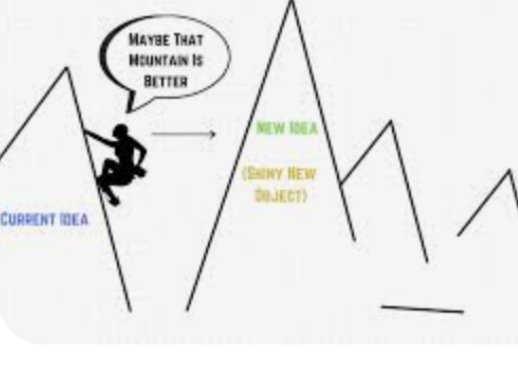
The bright shiny object is a term that is used particularly in business, but can be relevant in many different situations in life.
It is the belief that, although you have put a plan in place, a new venture or interest catches your eye that attracts you to it. This new thing being the bright and shiny object. In the psychology field they have even called it a syndrome (Shiny Object Syndrome, SOS).
It can often be derailing to our original commitments and the extra cost and time devoted to the shiny object begins to affect a plan that was actually already working rather well.
In the gym I see it daily and, make no mistake, the shiny object is as alluring to me as for anyone else. But I have trained my mind to move on and stick to the plan as difficult as that might be sometimes. So let’s give a couple of examples of what it means in our health and fitness goals and our diets.
Case 1. The Inconsistent Trainer.
This is the shiny object that often tries to put me off of my stride. And it did for Jack. Jack had committed to the gym four times a week to follow a program plan by his trainer which would eventually see extra muscle mass and a leaner, aesthetic physique. He was fully focussed, made the investment in time and money and, after a few weeks, began to notice subtle changes to the way he looked and felt.
His program continued to be challenging as he progressed through the different phases of training, but after 3 months a friend had started to send him YouTube videos of a few different fitness influencers. They became Jack’s new, bright and shiny new object. He wanted to try the sort of techniques and ‘kick ass’ moves that would quicken the process and reach his results in less time.
He began only loosely following his program as he diverted from it during his training to try the new stuff that he had seen from the influencers. He no longer practiced conventional deadlifts. Instead he was keen to master the Jefferson deadlift, which was described as ‘quad killers’ by the influencer. However, whilst the Jefferson might be a useful lift for many of their subscribers, for Jack it put pressure on his spine. Over time, he began to suffer with lower back pain. His PT advised him to stick closely to his original plan, as he still needed to master the original deadlift before trying different variations.
Jack became frustrated. He understood what his PT was saying, but the pull of an influencer with thousands of followers was too much of a draw. Surely they knew their stuff, he thought. And of course he was right, they did know their stuff, but they didn’t know Jack. However, Jack decided to stop the services of his PT and try to pursue his own routine.
As the year progressed, Jack went from having moments of motivation where he would manage to get to the gym four or five days a week to not managing to get there at all for weeks at a time. Either through injuries or simply feeling demoralised, Jack didn’t reach his goals. He ditched his original plan designed specifically for him for the bright shiny object. He found that one influencer would tell their audience to do one thing and another influencer would tell their subscribers something totally different. Jack’s consistency and motivation had gone.
Case 2. The Yo-Yo Dieter.
Jill had promised herself that she would lose some weight and started to be more careful about the food that she ate. Having a sweet tooth and grazing throughout the day meant that she had put on a certain amount of weight that left her feeling lethargic and uncomfortable about herself.
Jill decided that she would download a calorie counting app to keep a check on the amount of calories that she was consuming. She didn’t want to be too restrictive, so along with meal plans of some of her favourite nutritious meals, she allowed herself some of her more indulgent treats a couple of days a week. Jill knew that, as long as she could track her calories, she could remain in control of her portions and enjoy her efforts to lose the weight that she wanted. After a few weeks, Jill felt that she wasn’t so tired all the time and she decided to join a local running group and also began enjoying long walks with her partner.
After 6 months of the positive lifestyle change, Jill was talking to a friend. They were discussing weight loss and it was apparent that her friend had lost a considerable amount of weight. Jill’s friend told her that she was on a diet which allowed just 800 calories a day and, although she felt too tired to exercise from the lack of energy, she was losing lots of weight each week.
Jill had been happy with her progress, but her friend’s impressive story had made her wonder if she could do the same. Jill concluded that, due to the darker cold nights setting in, she wouldn’t want to go running anyway. Plus, if she can make the sort of progress that her friend did, she could hit her target weight for Christmas, 6 months earlier than she’d expected.
Jill started the new diet. But it wasn’t long before her energy fell and she quit the running club. Her mood changed too. She felt snappy with her partner and didn’t want to attend special occasions because she was unable to eat or drink the same as anyone else. She lost weight quickly, but she wasn’t happy. Eventually, she would have binge days and this left her even more frustrated as she felt like she was failing.
Jill came off of the diet and tried to go back to her original plan. This proved to be more difficult than she’d expected though as all of her positive habits that she had worked on had gone. She found herself grazing and eating all of the wrong things again. Despite having bouts of motivation, Jill has not found the consistency that she had once enjoyed.
Summary
In both scenarios, Jack and Jill had found something that worked for them and their lifestyle. There is nothing wrong with what a friend might be doing differently or what an influencer might suggest, but what Jack and Jill were doing was successful to THEM. Yet something new and exciting swayed them into boycotting their plans. The very plans that were working.
Alterations, tweaks or little changes to a plan are fine as long as it is exactly that…the plan. Nobody wants a training program to stagnate or a nutritional menu to become boring with the same meals each day. But the foundations in which it was first created need to remain the same.
The bright shiny object will always have us wondering and the newness to try alternative methods is intriguing, but take it from someone who has had his fingers burnt on many occasions before becoming a Personal Trainer, it will often end in derailing our good work and possibly even ending it with nothing in return.
The act of congratulating one’s self might seem a little egotistical to some. And perhaps, like everything else, we can form opinions about stuff that only makes sense once we give a bit of context to each situation.
For example, the gym goer checking themselves out in the gym mirror can look like they’re being self absorbed or a ‘poser’. But what if they’re training for a bodybuilding competition and a part of their sport is to flex. Or even if they’re not training for competition, maybe they’re actually quite insecure about a certain part of their body and they want to admire themselves for a short time before the negative feelings about themselves come flooding back.
And I have met people who have tried ‘bigging’ themselves up by putting other people down. They will constantly tap away at your insecurities and laugh at your failures to cover up their own inadequacies. It is difficult, but being the better person and politely removing yourself from this type of person is the best thing to do in this situation. Like I say, it is difficult, as your reactions are often to start believing what they say to you or to give them a piece of your mind and insult them back. But remember, they’re possibly even more insecure than you, that’s why they do it.
Congratulating yourself can be done with humility. It can be done in private so you’re not being ‘showy’. And maybe you should give it a try.
Men of all ages (not just teenagers) grunt into the mirror as they flex their pecs like a WWE wrestler and women check their rears with their new jeans on and feel satisfied with the gym work they’ve done that week. That is a sure sign of congratulating one’s self and giving a well deserved pat on the back, but I’m thinking of something much deeper than that with a greater impact on our mindset and wellbeing. I’m talking about positive affirmations, mantras and reflection.
Sometimes it’s important just to stop and reflect on what you’ve achieved that day or week. Heck, if you have the time you can reflect on your achievements throughout your whole life!
Did you pass the exam and get a dream job? Did you stick to an exercise plan and reach a fitness goal? Have you done your best as a parent or partner? Did you make someone smile today?
If your answer is no to any of these, that’s fine, because now you have given an honest answer, doing it better tomorrow becomes a little easier. But to do things better I believe that affirmations are powerful tools. These are words and short sentences that you tell yourself and repeat them.
In the advertising industry, short sharp slogans are very popular. The most popular seem to be the three word slogans which are also adopted by politicians. Here are a few examples…
Just do it
Taste the rainbow
Build a wall
Get brexit done
I’m lovin’ it
Yes we can
Education, education, education
Take back control
Strong and stable
Maybe it’s Maybelline
Let’s go places
How many of those can you identify? They are memorable because they have a certain ring to them, almost like a chant. Indeed, Trump’s ‘Build a wall’ speech was chanted by himself and his followers. Whether you like the political ideology and the product or not, these slogans were/are very successful which have helped create huge brands with many voters and consumers alike. They were believed. They were punchy.
Now, let’s go back to you. If you gave yourself a moment each day, for example in the mornings, to repeat positive affirmations to yourself, do you think that this could work for you? Indeed, this precedes advertising slogans by thousands of years so it is most certainly working for somebody! My guess is that it worked so well for so many cultures and religions throughout the world for so long that a very clever advertising agent cottoned on to it too. And voilà. What was said over and over again became reality.
You might find it strange to come up with a phrase and repeat it to yourself. It might be uncomfortable at first. But you actually do it already without really acknowledging it. You make a judgement on whether you can reach the jar on the top shelf. You create dynamic risk assessments when crossing the road and driving a car. These daily routines are embedded into your life. Therefore the same affirmations are repeated over and over again.
“Yes, the road is clear,” is a typical example of this. You are confirming your belief that you can cross the road. So why not take a moment in your day to consciously go through your positive affirmations?
Phrases such as…
I am strong
I am confident
Today, I can do it
I am grateful
I will do
…can impact you so profoundly that you begin to believe. After all, you use self fulfilling prophecies to be negative about yourself all the time. Whether it’s how you look, how you act, what you’ve achieved. Imagine countering this negative thinking with “today I look good, I feel great, I am happy!”
Allow yourself the time to tell yourself these great and wonderful things about you. Yes, you. Just a moment in time where you tell yourself how fucking fantastic you are. Tell yourself daily. Make it as much of a priority as eating. Ensure that it becomes as natural as breathing. There’s no shame in telling yourself that you are a good person. It is not self indulgent to believe that you are an important person in other people’s lives and you are capable of great things to them and to you.
You just need to do one simple thing to make it be true. And that’s to keep telling yourself.
I am a Personal Trainer, Meditation Guide, a Cognitive Behavioural Therapist in Anxiety and I tell myself that I’m the luckiest man alive every day. Therefore I am.
I find myself talking about it more and more with my wife. Within my circle of friends the subject keeps cropping up. And for my clients it is often a topic of discussion.
Age. Or the ageing process.
Lately I’ve found that a couple of stubby beers at 4% and a couple of glasses of wine on an evening is fairly excessive to me lately. My younger self would be calling me a lightweight. I’m happy to be a lightweight.
One too many these days can leave me feeling rubbish and it can ruin the next day. Long gone are the days of me partying on Thursday, Friday and Saturday nights as a twenty something. It didn’t bother me then.
But as I got older my body gave me a little tap on the shoulder and told me to slow down. If I didn’t, it would let me know by feeling ill for the next 24 hours and, whether through having young children, running a business or simply just having a zest for life, I didn’t want to waste a day being so hungover that I was missing an important day. And that’s another thing you realize when you get to a certain age. Life’s too short. Sure, at 20, a day or two having duvet days due to excessive partying doesn’t seem to matter. You’ve got your whole life ahead of you.
Age can’t be ignored though. The ‘whole life ahead of us’ thing at 20 seems like a much shorter route when you reach middle age. We do feel and think differently with age. Attitudes change. Aches and pains appear much more. We can’t escape the process. But the key here is this…we don’t need to accept it.
Dying. That’s what we all need to accept. But we all hope that it will be when we’re very old and we’ve lived a long and happy life before we get there. Being shackled by getting older, being defined by age, this is something that doesn’t have to be accepted.
I rarely teach fitness classes now, but when I did I promised my participants that I would give them what they came for. They deserved a top quality delivery that helped them towards their goals. A class on an early Tuesday morning would attract older people as opposed to a class on the evenings where it would bring in a younger demographic. However, I rarely changed the exercises or the intensity in the morning to how I would approach an evening class. I found that there were many people in their 70’s who were very capable of keeping up with a lively barbell class just as the younger group could.
If I slowed the music down, created easier exercises and spoke to the older people like they were some ‘old dear’ in a retirement home, then they would, over time, become the old dear in a retirement home.
If you tell someone something over a period of time there’s a good chance they start to believe it. Also, similarly with the body. Under perform it and the body gives in to what it has been taught to do. Underperform.
“You can’t stop the waves, but you can learn to surf.” Jon Kabat-Zinn.
When your body begins to tell you something about ageing that you should know, you need to listen. The waves get higher as we get older. Instead of regressing to the toddler’s paddling pool in defeat, I’m going to try and ride out those waves. For sure, sometimes I’ll fall into the sea. But if I keep the challenge interesting, fun and with set goals then I am giving myself a chance to thrive as I age.
There’s no doubt that there will be tweaks to be made as we age. Wear and tear is real! But the earlier we can strengthen muscle, bones and joints, the easier it is to deal with general ageing wear and tear. If we fail to address these issues early enough then the body, through the ageing process, will pick up on them. I’d recommend listening to your body before it happens.
The only certainty in life is death and in the western world we are living longer than ever. This is great. However, it means that in many circumstances, our chances of living the final 20 years of our lives with any meaningful quality and dignity are decreasing.
When we reflect on our previous week, month and year, we will often find patterns to our behaviour. Some behaviours add to positive outcomes but some can be negative and impact us greatly. Indeed, the positive things might get unnoticed, while the negative stuff gets pushed to the front of our mind.
Currently residing in Scarborough, I’m holding personal training, meditation and CBT for anxiety sessions as well as remote coaching to create happier, healthier futures to children and adults.
Reflection is good. It will not only assist us in our own lives but it can be a welcome trait for those around us. I might snap at my wife or the kids, for example, but if I am capable of reflection then I can put things right, apologize and do better next time.
So how can reflection help with lifestyle changes in relation to your health and fitness goals? Well, it might surprise you that you do this all the time. You have the cognitive capacity to think, process and act on everything you do in your daily life. But how much of it sticks is usually where the problem lies. Sometimes we end up thinking about a hundred things at once. Our moments of reflection just whiz on by without us really being able to act on them. In the end, nothing gets done.
Unless, of course, reflection becomes a conscious act. As each day goes by, this act will become a subconscious habit. This habit can lead to better decision making.
Bestselling author John Maxwell perhaps says it best when he said, “You’ll never change your life until you change something you do daily. The secret to your success is found in your daily routine.”
Each day you are capable of finding the new norm. A lifestyle that you find fulfilling. It’s the little things that you can reflect on each day. Day by day, little by little, changes happen.
There’s a magic number of days that psychologists and lifestyle coaches often cite as the amount of time it takes to create a positive habit (or get rid of negative ones) and that is 28 days. After this time, research shows, we have trained ourselves to be consistent in our new behaviour.
And, as a Personal Trainer, I find the 28 day rule quite accurate in our approach to our health and fitness. You see, we think that we just need motivation to reach our goals. And whilst a burst of motivation can be helpful, we cannot rely on it. Motivation is a fleeting emotion. It doesn’t last 28 days. Therefore a little bit of strategy is needed.
To find your new norm, firstly you need to stop creating problems. They exist only in your head. If you find yourself doing this, call yourself out in it. Write the problem down if you need to with a set of solutions next to it. Do this daily.
Start a thought or mood diary. Never dismiss writing down your thoughts. This helps with reflection and it keeps you on track on the days that those bursts of motivation escapes you.
Plan ahead but don’t plan your year or your whole life. Just your week or the next day or two. Whatever feels comfortable. Again, write these plans down. It could be when you schedule your exercise times or plan a menu. Keep it where you can see it. As an online PT I keep all daily tasks on my app so that my trainees are alerted each day.
You have a new opportunity each day to change something that you don’t like and to add something positive and meaningful to your life. Act on these few ideas above and start today in finding a new norm.
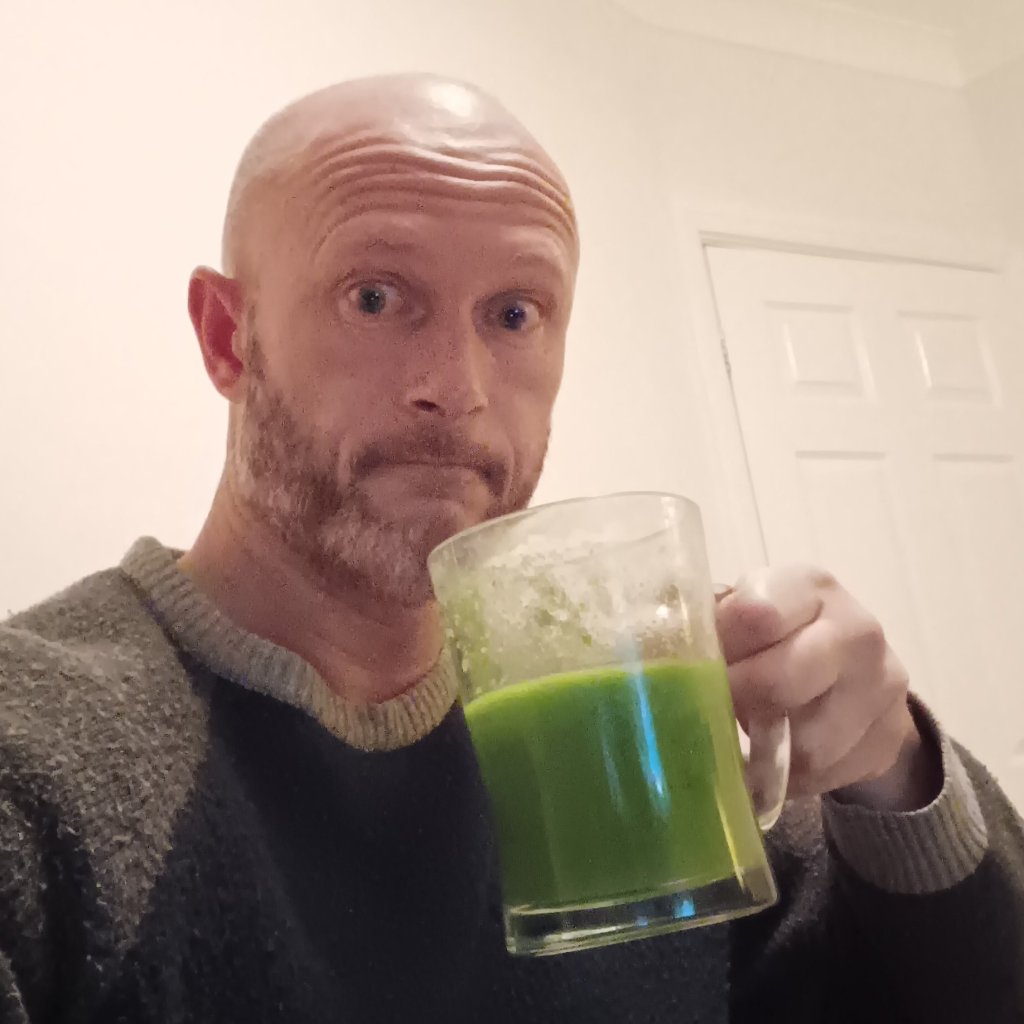
Believe it or not, I’ve trained my brain to like this green stuff.







 Never Give Up PT