The bright shiny object is a term that is used particularly in business, but can be relevant in many different situations in life.
It is the belief that, although you have put a plan in place, a new venture or interest catches your eye that attracts you to it. This new thing being the bright and shiny object. In the psychology field they have even called it a syndrome (Shiny Object Syndrome, SOS).
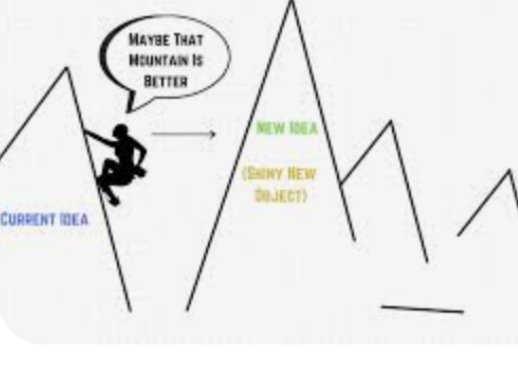
It can often be derailing to our original commitments and the extra cost and time devoted to the shiny object begins to affect a plan that was actually already working rather well.
In the gym I see it daily and, make no mistake, the shiny object is as alluring to me as for anyone else. But I have trained my mind to move on and stick to the plan as difficult as that might be sometimes. So let’s give a couple of examples of what it means in our health and fitness goals and our diets.
Case 1. The Inconsistent Trainer.
This is the shiny object that often tries to put me off of my stride. And it did for Jack. Jack had committed to the gym four times a week to follow a program plan by his trainer which would eventually see extra muscle mass and a leaner, aesthetic physique. He was fully focussed, made the investment in time and money and, after a few weeks, began to notice subtle changes to the way he looked and felt.
His program continued to be challenging as he progressed through the different phases of training, but after 3 months a friend had started to send him YouTube videos of a few different fitness influencers. They became Jack’s new, bright and shiny new object. He wanted to try the sort of techniques and ‘kick ass’ moves that would quicken the process and reach his results in less time.
He began only loosely following his program as he diverted from it during his training to try the new stuff that he had seen from the influencers. He no longer practiced conventional deadlifts. Instead he was keen to master the Jefferson deadlift, which was described as ‘quad killers’ by the influencer. However, whilst the Jefferson might be a useful lift for many of their subscribers, for Jack it put pressure on his spine. Over time, he began to suffer with lower back pain. His PT advised him to stick closely to his original plan, as he still needed to master the original deadlift before trying different variations.

Jack became frustrated. He understood what his PT was saying, but the pull of an influencer with thousands of followers was too much of a draw. Surely they knew their stuff, he thought. And of course he was right, they did know their stuff, but they didn’t know Jack. However, Jack decided to stop the services of his PT and try to pursue his own routine.
As the year progressed, Jack went from having moments of motivation where he would manage to get to the gym four or five days a week to not managing to get there at all for weeks at a time. Either through injuries or simply feeling demoralised, Jack didn’t reach his goals. He ditched his original plan designed specifically for him for the bright shiny object. He found that one influencer would tell their audience to do one thing and another influencer would tell their subscribers something totally different. Jack’s consistency and motivation had gone.
Case 2. The Yo-Yo Dieter.
Jill had promised herself that she would lose some weight and started to be more careful about the food that she ate. Having a sweet tooth and grazing throughout the day meant that she had put on a certain amount of weight that left her feeling lethargic and uncomfortable about herself.
Jill decided that she would download a calorie counting app to keep a check on the amount of calories that she was consuming. She didn’t want to be too restrictive, so along with meal plans of some of her favourite nutritious meals, she allowed herself some of her more indulgent treats a couple of days a week. Jill knew that, as long as she could track her calories, she could remain in control of her portions and enjoy her efforts to lose the weight that she wanted. After a few weeks, Jill felt that she wasn’t so tired all the time and she decided to join a local running group and also began enjoying long walks with her partner.
After 6 months of the positive lifestyle change, Jill was talking to a friend. They were discussing weight loss and it was apparent that her friend had lost a considerable amount of weight. Jill’s friend told her that she was on a diet which allowed just 800 calories a day and, although she felt too tired to exercise from the lack of energy, she was losing lots of weight each week.
Jill had been happy with her progress, but her friend’s impressive story had made her wonder if she could do the same. Jill concluded that, due to the darker cold nights setting in, she wouldn’t want to go running anyway. Plus, if she can make the sort of progress that her friend did, she could hit her target weight for Christmas, 6 months earlier than she’d expected.
Jill started the new diet. But it wasn’t long before her energy fell and she quit the running club. Her mood changed too. She felt snappy with her partner and didn’t want to attend special occasions because she was unable to eat or drink the same as anyone else. She lost weight quickly, but she wasn’t happy. Eventually, she would have binge days and this left her even more frustrated as she felt like she was failing.

Jill came off of the diet and tried to go back to her original plan. This proved to be more difficult than she’d expected though as all of her positive habits that she had worked on had gone. She found herself grazing and eating all of the wrong things again. Despite having bouts of motivation, Jill has not found the consistency that she had once enjoyed.
Summary
In both scenarios, Jack and Jill had found something that worked for them and their lifestyle. There is nothing wrong with what a friend might be doing differently or what an influencer might suggest, but what Jack and Jill were doing was successful to THEM. Yet something new and exciting swayed them into boycotting their plans. The very plans that were working.
Alterations, tweaks or little changes to a plan are fine as long as it is exactly that…the plan. Nobody wants a training program to stagnate or a nutritional menu to become boring with the same meals each day. But the foundations in which it was first created need to remain the same.
The bright shiny object will always have us wondering and the newness to try alternative methods is intriguing, but take it from someone who has had his fingers burnt on many occasions before becoming a Personal Trainer, it will often end in derailing our good work and possibly even ending it with nothing in return.


 Never Give Up PT