I Need Help

I randomly watched an interview from 1997 with Elton John the other day where he mentioned seeing Elvis months before he died. Elton was worried for Elvis with how he looked and wasn’t surprised when he heard that Elvis had died not long after.

Shortly after this news, Elton made a massive decision himself to seek help for his lifestyle. In his words in this interview with Oprah Winfrey he said that he told those closest to him and professionals that he needed help

“I need help. Those three words are so important. And once I said those words I never looked back.” Elton said.
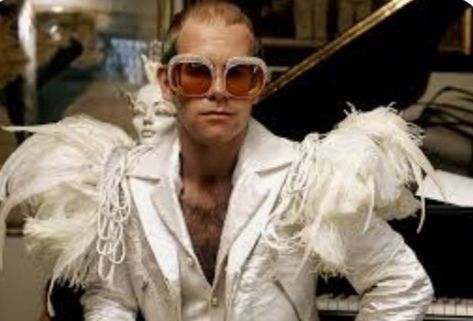
Yet those three words don’t always have to come at your most desperate times. Unlike most of us, Elton John, as he admits in the interview, had wealth and a fame that enabled him to be surrounded by people that told him daily how great he was. His career, selling millions of records, was confirming his popularity. But that could not stop this urge to almost self destruct. He said those words just in time and maybe Elvis didn’t.

It doesn’t matter who we are. Whether we are successful in our job, exercise, meditate or pray daily, have a loving family and supportive friends, become one of the most famous names in the world. The need to say “I need help,” sometimes is important.

But rather than saying them just in the nick of time, perhaps we need to learn to say them more regularly. Maybe we need help with a work deadline or organising an event that seems to have bogged you down. Or it could be something even smaller like asking for help with a bench press at the gym or reaching for an item on the top shelf at the supermarket!

Yes, it might seem trivial, but the burden of always having to come across as so friggin’ perfect all the time is actually a breath of fresh air. And this perfection seems to be something that we have to aim for these days. We have to be seen to be saying and doing the right thing all of the time because we get judged by strangers, colleagues and social media.

The other month I was looked at rather strangely as I said that I needed help changing a car tyre. A man who had obviously had lots of experience in changing car tyres did it very quickly. But for a moment I became quite self conscious that, as a man, I should have been able to do that. But that is, in fact, bollocks.

I have helped rehabilitate Team GB athletes from serious injury, I’ve successfully structured fitness programmes and healthy eating diets for hundreds of people and I’ve supported many people with mental health issues. I consider myself to be quite good at all of that. Sod the society that says that my masculinity is questioned because I can’t change a tyre. I’m crap with a drill as well but I don’t worry about it anymore. I just ask for help from someone who is better at it than me like my wife.

Now, whenever I ask for help, I can feel a tension release from my shoulders. That’s where I feel the stress the most. It travels into my trapezius, my neck and finally my head. And whether it’s a big problem or a small problem, asking for a little bit of help can stop it from manifesting. And when you surround yourself with the right people, it’s amazing how many people are happy to help.
Manufactured In The Gym

Since around this time last year I have had no gym membership. My time, despite efforts in keeping up ‘sort sort’ of a routine outside of a gym, have been entirely preoccupied in my family’s move, house and business set up in Portugal.

I knew it had to be like that. I knew I’d have to take the hit on something that I loved. And training in the gym is what I love.

A few things that I’ve kept in my head have been comforting though…

1. It’s not forever. I’m creating my own gym on the property.

2. I’ve trained 3-5 days a week for the past 27 years (even on my honeymoon). Taking a year out isn’t going to harm all of my good work.

3. I’m keeping calories to around 2,500 to 3000. I’m not counting. By now I just know what I’m eating, but using a calorie counter can be useful too.

4. I’m not sedentary. I’m probably more active than ever seeing as I’m working in the forest and doing building works. So my energy consumption, along with my energy intake, keeps my weight balanced.

But, despite knowing this, I am really missing training. That is because I am not getting the buzz (adrenaline) from the repetition of a lift or push that has become a part of me.

Creating my outdoor gym at 40°

At 18 I had to quit most sports that I enjoyed. Contact sports such as football, boxing and martial arts left my body in bits. And most of the pain came from my back or the sciatic nerve. The sharp pain that drives from the lower back into the buttock and down the leg made me struggle to even get dressed each morning. The anger that I had towards this pain and how it had practically ended my passion for playing sports affected me not just physically but mentally too.

Sports can give us ambition and focus on something positive. Especially for a young person trying to discover themselves. Joining a team, goal setting, planning and staying active weren’t on my radar anymore. Instead, smoking, drinking, clubbing and generally finding substances to enable me to continue clubbing into the wee hours became my focus.

‘When Saturday Comes’ is an expression to highlight the thrill of a football game. For me, my Saturday just became another chance to get into town and party. Now, don’t get me wrong, I have some great memories too! As George Best said,’ I spent a lot of money on booze, birds and fast cars. The rest I squandered .’ I didn’t have his fame or riches, but I gave it a bloody good go for a period of time!

That is until I found the gym. After a few months of training I noticed that my muscles were becoming firmer and I was filling out a T in all the right places. But something more significant was taking place. My back pain was slowly easing, I was quicker, more agile, stronger. And mentally I had a more positive outlook and I didn’t want a weekend of mistreating myself to hinder my hard work in the gym. I had found a lifeline. Furthermore, I had given my career a boost. My confidence grew and helped me to find a vocation which I enjoyed. Things started clicking into place. The gym, I believe, is what started it. My attitude to life was manufactured in the gym.

So then, you can see why it is so important to me. So much so I retrained as a PT some years later to spread the word. ‘How many people could I help?’ I thought. My aim was to just get people active and learn new, interesting exercises. I knew that for the most people that I trained in a commercial gym that strict programs weren’t entirely necessary. They just had to turn up and move to begin with. Push, pull, jump, skip, squat and run. Anything that got them excited about being there. And, no doubt, even for those who hated the gym, there was one aspect that interested them, be it a speed trial, a PB lift, calisthenics or a tyre flip. Something would trigger anyone’s adrenaline. It made me a decent PT because I was like anybody else. I wasn’t a bodybuilder or athlete. I just knew how the average gym goer operated. For me personally, anything heavy that I could push or pull got me out of bed in the morning. ‘How many reps at X weight can I do today?’ was my motivation.

And it will be again, albeit in a very different setting. But it can’t come soon enough. For how beautiful my surroundings are and how well our business preparations are going, I still don’t have a gym!

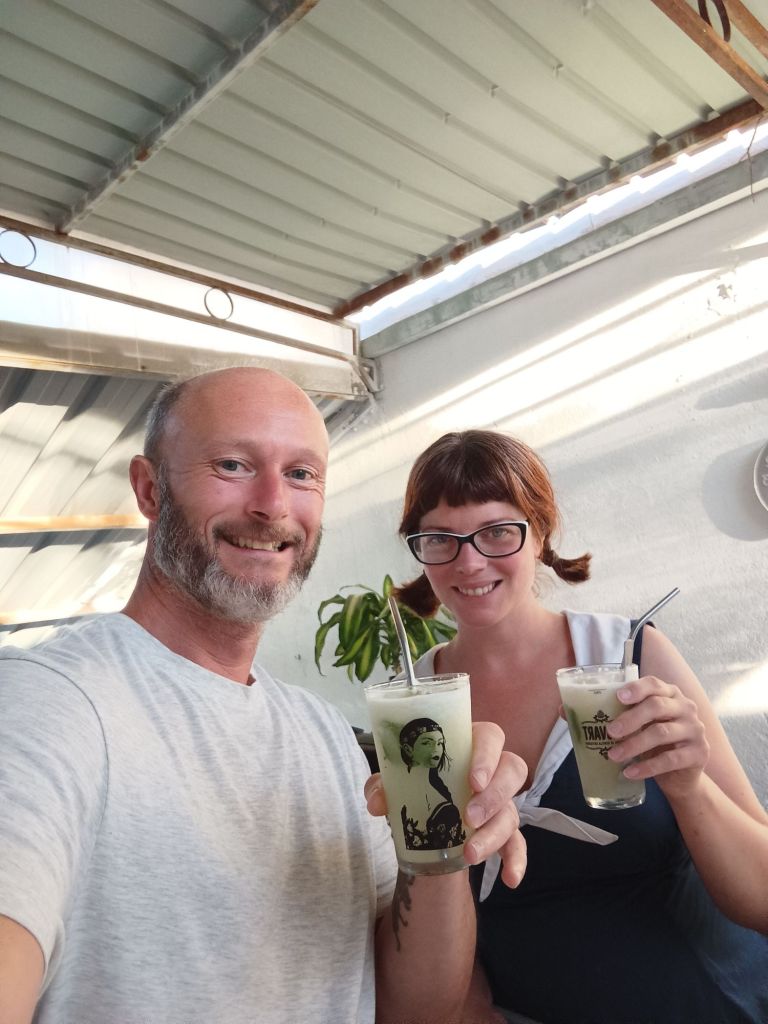
Drinking mojito in the outdoor kitchen at 40°

Rat Park

Despite an easier VISA process to live in Portugal from the UK there were many factors why Portugal began to be a very attractive country to live in.

There were hours and hours of research done by my wife and I to discover the cost of living, how good the education system was, we wanted to know more about the crime rates, the policing, the government structure and the tax system. We especially wanted to know what the quality of life could be expected for our young children. What is Portugal like to grow up in and to become young adults?

And yes, Rishi, we wanted to know if National Service existed in Portugal. It doesn’t. That was important to us. You see, my idea of a country expecting their young citizens to serve mandatory time in the armed forces strikes me as a country with a social problem often brought about by a lack of funding to those who need it the most and, crucially, who the wider society depends on. The youth. They are, after all, the ones who will be taking that particular country forward. Therefore we need to create well rounded young people with opportunities to develop.

Yes, the armed forces can get a great opportunity to learn many skills, but only if that person wishes to enrol in the first place.

So, after our conclusion that Portugal, albeit not perfect (which country is?!) gave us good vibes, we decided to move there.

One thing that caught my attention during my research was Portugal’s drug laws. Since 2001, drugs have been decriminalised. This includes cocaine and heroin. It was the first to do so in the EU. So although it is an offence to carry drugs it is not punishable by imprisonment, it does not result in a criminal record or lead to associated stigmas which may affect the ability to find work.

Instead, drug abusers are treated as patients instead of criminals. Those who remain clean from drug use are given incentives to reconnect with society. The government set up job creation schemes and loans for small businesses, directly intended for an individual to focus on getting their lives back on track and away from drug use.

Portugal had one of the highest number of drug related HIV cases in Europe prior to 2000.  It has seen a reduction in new HIV cases by 17%.

Portugal’s drug related death toll is 3 people per million compared to the EU average of almost 18 per million people.

The street value of these illicit drugs massively decreased. Courts and prisons became less crowded. The number of adolescents using drugs declined. All because the government at the time decided to invest in tackling the problem.

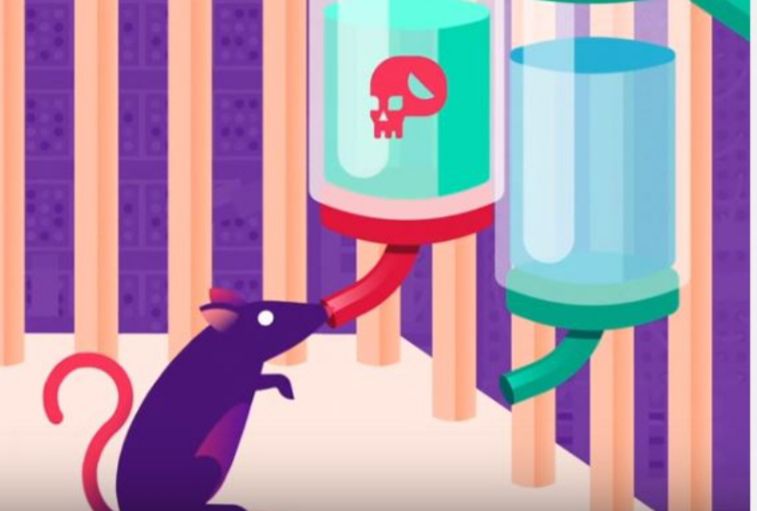
A series of experiments were conducted in the early 20th century where they would put a rat in a cage with two water bottles. One was water and the other was water laced with heroin. Almost every rat would keep going back to the water laced with heroin where it would eventually overdose and die.

Then came along a professor in psychology, Bruce Alexander who noticed that, if the rat had nothing to do other than choose from these two bottles then maybe it is an unfair experiment. So he set up a Rat Park. As well as the two bottles, he introduced several rats into a cage so that they could play together, have sex and interact. He placed tunnels into the cages, food and climbing frames.

Professor Alexander

Professor Alexander noticed that the rats hardly ever went to the drugged water. It didn’t interest them. It went from 100% overdose when they were isolated and 0% when they had happy and connected lives.

What if addiction isn’t about our chemical hooks but instead about our cage?

If we can surround ourselves with a supportive network of people, be excited by a safe and happy future, eat well, exercise, laugh, love and play, then surely our cage is worth staying around for. And the need for turning to the drugged water is less attractive.

And I can say with some experience that it is only when I found a purpose to my life did I stop routinely taking cocaine, ecstasy and steroids.

Much like the rats in the Rat Park I found friendship, pathways, exercise and reasons to live. I also found Blair’s New Deal which got me off of my arse to learn a trade. I gained NVQ level 2 qualifications in bricklaying and construction for £50 a week. Not bad at the time.

Maybe if we change our cage, we can all find happiness. And with upcoming elections in the UK looming, its citizens have an opportunity to vote for who will help them find their cage.

Clear The Cache

After some problems in getting our Fire stick to work on the TV, I found that I could clear the cache of each application and it worked much faster.

Cache. What exactly is it?!

Well, in computing terms, it is a temporary data storage location that automatically stores data to reduce retrieval time.

And there I found a connection. Not only could it be used in computing terms, but in my own head.

You see, the data that is stored is not necessarily all useful information. Just like on my Fire stick, it can cause broken links and a lack of proper formatting, causing my browsing and viewing experience to be slow and glitchy.

Over the past few weeks my head has been gathering a lot of data, similar to the fire stick, and it needed a clear out.

This brain cache will be back, I’m sure, but without regular clear outs it will become more difficult to function and keep a focussed mind. I will become glitchy.

Do you feel that you need to clear the cache sometimes? What do you do as your preferred method?

Clearing the brain cache is not a one size fits all answer. My suggestions are to go on a long walk, go to the gym, talk to a friend or partner, sleep or in my case this morning I meditated.

There was no filming today. I had answered all of the builders questions. I took the kids to school. It was raining heavily therefore working on the land was out of the question. So I took two hours away from everything and I meditated.

Sure, I could have found something to do. But that would have been my useless cache data telling me to descale the toilet or iron my undies. No, I thought, I need some time to clear my head.

Today has gone a little smoother. Or, at least, dealt with much better now that I am thinking clearer, so it seems to have worked.

Let me know how you like to clear your brain cache. There are no wrong answers. Just the right ones that work for you.

Until next time, my friends.

Changing The Past Means You Have To Change The Present

The past has gone. For all the good bits, the bad bits and all the bits in-between, you cannot change your past.

But what if you could by living the present by one simple rule?

Psychologist Victor Frankl will be able to explicate my introduction with this quote…

“Live as if you were living already for the second time and as if you had acted the first time as wrongly as you are about to act now.”

When I first read this I had to replay it through my head several times to truly understand what Frankl meant by this. My brain chewed through it like a sticky toffee glued to my teeth but eventually I tasted the essence of its flavour. It was sweet.

Frankl is inviting us to understand that the past can still be changed and corrected as long as we acknowledge that the present is the past.

Without knowing of this revelation let alone understanding it, I could not live by this several years ago. A mixture of immaturity, pig headedness and selfishness meant that I am now left with a string of regrets that I wish I could change.

For example, the way I have spoken to a friend or relative that was unkind. I have felt, in moments, that they were trying to hurt my feelings or in some way ruin my day and piss on my parade. My emotions heightened and out of control, I have said things that I know would hurt them too.

I have never made a habit of this but there are moments in my life which stand out in my mind that I wished had never happened.

What if I had acted differently? What if I had considered Frankl’s advice before becoming irrational with someone who I love?

What if, in that moment, I had taken a deep breath, considered my options and chose to act in the right way?

Because, when you strip back the quote, all it means is to think about your actions before doing or saying something you will regret. You can’t go back in time to correct mistakes so take extra care to get it right the first time.

There’s no time machine, but we do actually possess something much more powerful than that. We have the ability to perceive what is right and wrong and control, evaluate and execute our actions. We have a conscience.

Looking back, from a selfish point of view, had I reacted differently in certain situations I would have felt better about myself. Making someone else feel rubbish does nothing for the soul. It can turn you bitter.

Before the past becomes regrettable, make some good choices in the present while you can. Seize that moment to make yourself and others around you feel better. In your head, consider the different outcomes of the actions you’re about to take.

Be kind to others. And yourself.

And She Stopped…

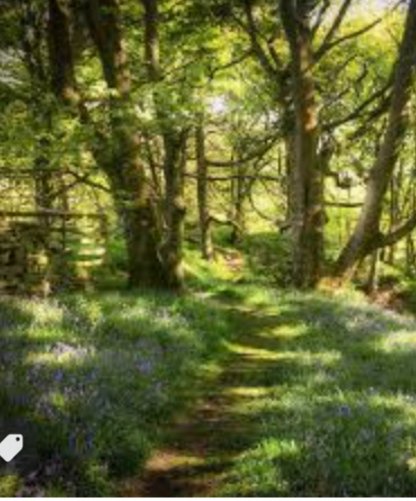
I often find the answers in the most unlikely of places. Well, unlikely to some. But for me, standing by the sea and observing the waves gently ebb in and out or in a forest as the dappled sun light dances through the branches, that’s when I am thinking clearly. Perhaps you have a favourite place where you feel inspired and where you can figure out a little puzzle that’s been on your mind.

Poet Becky Hemsley wrote…

“And she stopped…and she heard what the trees said to her. And she sat there for hours not wanting to leave. For the forest said nothing, it just let her breathe.”

As I gaze at the stars on an evening, miles away from traffic and humans other than my sleeping family, the silence is deafening. It is so profound that it takes on its own quality. A quality that is very difficult to convey.

So I just breathe. In that moment, I don’t need to do anything else.

My work includes instructing people on how to breathe. A strange job, right? After all, we breathe from birth. How can I teach that? Not that I have ever thought of it like that until now. As a fitness instructor, I need to teach a breathing pattern for a client to be able to perform an exercise correctly. This can take weeks or months to perfect. Even then, the professionals still need a reminder now and again.

And in a meditation therapy session the breathing techniques can be the most important aspect. It’s how we tune in and connect with our body.

But taking a moment to realise your breathing isn’t exclusive to these activities. Just five minutes in a quiet environment can help, but finding your favourite place, your ‘happy place’ and spending quality time there can be a game changer. Sometimes, you don’t even need to be there in person.

Have a think about where your favourite places are. Imagine being there now. Close your eyes, take a deep breath and put yourself there.

Sometimes you just need to stop and listen to the trees.

Heroes

As a child I would watch my sporting heroes who would inspire me and enable me to dream of one day following them in their achievements.

Just to name a few, sportspeople like Paul ‘Gazza’ Gascoigne, Jimmy ‘The Whirlwind’ White and Andre Agassi excited me as they performed in their professional sport. They excited me because, although they were never considered the very best, they had an abundance of character to compete with those who were. A part of their edge is perhaps also down to the fact that they have each had their own mental health struggles.

Gazza

And it appeared to me as I watched a recent Netflix documentary about Robbie Williams that most of the ‘famous’ people that I like or admire have mental health problems.

For some reason I’ve always followed William’s career. I don’t even like his type of music. But I could see, from afar, that he was desperately unhappy. The cheeky chappy who always wanted to play the clown and say something controversial, act differently and seem to go out of his way to be disliked. That was me as a teenager and young man. And seeing as we’re of similar age, he connected with me.

Similarly with Gazza. As a young footballer I wanted to be him. I watched World Cup Italia ’90 as a 12 year old in absolute awe of what Gazza could do with a football. I’m sure many kids did. He played for Spurs, I supported Liverpool and my mates supported Manchester United or Leeds. But it didn’t matter. That summer, we all had Gazza T-shirts on under our England shell suits.

None of my idols admitted to any sort of mental health issues, though. Yes, there had been drugs and alcohol issues, getting into trouble with the law and well documented domestic issues, but they never actually came out and said ‘I am depressed’ or ‘I need help’. Certainly not publicly.

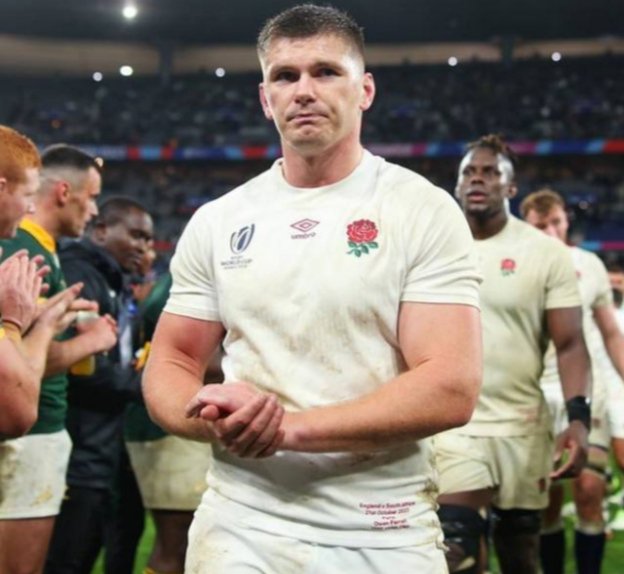
This week, England and Saracens rugby captain Owen Farrell has made a statement saying that ‘in order to prioritise his and his family’s wellbeing’, he will be taking a break from International duties. This coming from a man who has lived and breathed the sport in an extremely masculine environment is highly commendable. Yes, winning World Cups and Six Nations trophies are important. They train incredibly hard for that moment. But it is not as important as an individual or their family’s mental health. Being an elite athlete is about recognising that. He did and he has acted on it.

Owen Farrell

Another of my idols, albeit a bit before my time, is Bill Shankly. He once said, “Some people believe that football is a matter of life and death. I am very disappointed with that. I can assure you it is much more important than that.”

With the world that we live in I am sure many people will qualify in justifiably being able to disagree with him. Sport is sport. Life is life. However, as a coach myself I can understand exactly what he means. During a training session of mine or a client’s, I expect that to be the only thing that matters in that moment. Whatever is going on outside of the gym must be parked there. That is how we achieve fitness results and how elite sportspeople achieve medals and trophies. But inevitably we have a life away from that, even the professionals who are making a living from their sport. They have families. They have feelings. They are fallible. No matter what their earnings are, where they live or what car they drive, mental health does not care. It can take a hold of anybody.

Perhaps mental health is, at last, being talked about much more openly than it used to be. I knew, even as a kid, that these sportspeople that I idolised were different from their counterparts. Their behaviours didn’t always fit the acceptable requirements of their team, professional body that they represented or the media. But did they even know that they had mental health concerns? Even if they did, what options did they have?

The UK in the 80’s and 90’s was a very different place to be an upcoming sports superstar to what it is now. For the likes of Gazza, he had to perform in front of terraces known for chanting fans abusing the footballers for anything they could. Any sort of ‘weakness’ or admittance to needing help would have been disastrous for him and his career. And this baying mob mentality was led by the written press at the time. They loved his antics, but I often wondered if they were laughing with him or at him.

In my opinion, social media has nothing on the British tabloids of the 90’s. Social media has, for every bad, a cause for good too. The tabloids, however, could ruin you in an instant if you didn’t stick to its narrative. It’s hard to imagine a rugby player talking about mental health back then. So, though saddening to hear that Owen Farrell feels that he needs to step down from his England duties, it is encouraging to know that he can without being abused for it. At least from the majority of us decent folk.

Heroes aren’t just the ones who lift the trophy at the end of a game.

The Brick Wall

For those of you who read my blogs from afar you might not see my family’s move to Portugal as anything too big. But for those who have followed my journey and who know me personally will know that it is absolutely massive.

The fact is that my decision to move from the UK to Portugal came from me (or my wife and I) hitting a brick wall.

This brick wall was making us unhappy. We felt that, month upon month, we could not pay mortgage bills, rent bills on our businesses, council tax and food and energy bills. There was no way of planning a holiday for the kids. Our savings since COVID was depleted. Our brick wall was getting thicker and higher.

You too might feel that you have a brick wall. Let me tell you now that you can climb it, dig under it, hell you can kick your way through it, but never let a brick wall break you. You can come through the other side.

Your brick wall might be totally different to mine, but if it is making you unhappy and restricting your happiness then it is there.

I always had a need to travel, yet career moves and kids meant that I had to stabilise my life at that time. It was only in 2016, after the referendum for the UK to leave the EU did I know that I would leave my home. But at the time my career was just taking off as a Personal Trainer and my kids were babies. It was, we felt, not the right time.

And as much as I always threatened to leave the UK it only became a reality when I felt that I could no longer afford to live there. I hit the brick wall. And to put that into perspective, my mortgage had doubled in the UK from October and council tax was almost £300 a year. In Portugal, we are mortgage free and council tax is 20€ a year. A 5 litre box of quaffable wine is under 5€ too. Bonus.

I’m not here saying, hey, look at me! Look at how well we’re doing! Blimey. There’s a long way to go for us yet. We’re still renting from one place to the next until our house purchase goes through. We’ve been living like this since September and expect to be until late January as we still await a reply from a school for our kids.

Also, there is a whole lot of work to do on the property that we have bought to become liveable and profitable for our business. Something that you will be able to see on our Road To Tranquility Facebook and YouTube pages plus Channel 4’s A New Life In The Sun in series 10.

The Brick wall is still palpable. But we still keep climbing, digging, bulldozing and beating down this bloody wall. It won’t get in our way.

Never let a brick wall get in your way. Whatever you want, overcome it and reach the other side. Don’t let it beat you.

The Day Will Wait

As I was getting the kids ready for school this morning I, as always, ran around like a headless chicken from room to room collecting PE kits, lunch boxes etc but there’s an added load of stress at the moment.

Every room is full of half packed boxes awaiting our house move. Going from one room to another is like an episode of Ninja Warrior as I jump, skip and trip my way to the front door with my two kids under each arm ready to throw into the car.

And I’m sure, as I come back home after school drop off, the boxes at home have been breeding. They’ve multiplied. The task looks even more intimidating by the hour. Indeed, time is of the essence. But…

But I stopped looking.

I stopped looking and I lay on the sofa and closed my eyes. I began to recognise my breathing. Witnessing every intake of breath and appreciating the way my chest and stomach expands as I breath in deeply.

And slowly exhale.

The belly softens. My shoulders drop. My body relaxes.

For the sake of ten minutes, listening to my body, allowing my mind to stop, reflect and contemplate, I enabled myself to reconnect to the day.

The day will wait. I will get stuff done when I’m ready. I’ll finish this text, post it onto my site, put my phone down and get the day done as it was meant to be done.

The Volume Goes To 9

For years (as long as I can remember in fact), I was unable to put the volume of the TV or the car to an odd number. This branched out into oven settings, reading until I reached an even number and other stuff which I had control over. I even set my clients sets of 6,8,10,12 reps. Rarely would I stop a set that I was performing myself at 11, for example.

It’s not through superstition, which is just as well. My eldest was born in 2013 on Friday the 13th. He’s called Jonas. A little shuffle of the words spells Jason! Luckily, Jonas hasn’t asked for a hockey mask yet.

Anyway, back to my odd, odd number thingy. Apparently, this is called imparnumerophobia and it is common.

It has never taken over my life or anything. In fact, it’s something that my wife and I would joke about. She would turn the volume up on a song that she likes in the car and if it went to 9, I would discreetly alter it with the volume on the steering wheel. 10 if I liked it too, 8 if I didn’t.

But, strangely, I’ve been able to control this anxiety recently. My head is in a space that I’ve never known before. Serene. Zen. Of course I am still capable of emotion, feeling fear and sadness. But my journey this year has toughened me up. Every day mine and my family’s future is awaiting further information. So many questions unanswered. When the phone rings this whizz popping in my belly happens. Is it the estate agents? Is it the solicitors? Is it good news or bad?

These butterflies are my adrenal glands. Survival mode kicks in.

But I can point to other periods of my life where I’ve had to develop strength that I didn’t know that I had. Periods where my adrenaline took over.

Starting a new job. Asking my (now) wife to marry me. Opening the doors for the very first time to a new family business. Performing my very first fitness class. Visiting my mum in St Gemma’s. Going to her funeral.

They all required me to say to myself “You’ve got this, Shay, you’re strong.”

And people think I am. Some people might see me as being quite hard, in control, calm. And in truth I try to be the swan. Folk don’t see the feet paddling like f*** below the surface.

A subtle sign, perhaps, would have been the imparnumerophobia. But it’s not something anyone can really detect. It goes unnoticed unless I announce it.

But where’s this little quirk gone? Am I cured? I mean, not that it was an illness, but it did alert me to my anxieties which, in turn, caused more anxiety. Has my skin developed such thickness that I can now laugh in the face of number 7,9,11? Or even 13?!

Maybe not quite so much.

Sure, I can keep the volume on 9 without it really freaking me out, but every day I need to keep saying to myself “You’ve got this Shay.”

So maybe I’m just keeping it all at bay. After all, there won’t be time for cocktails by the pool once I reach Portugal. I’ll need to keep this strength and go again to make the move work.

“Deep breaths Shay, and count to 9.”