Spotting Is A Skill

Your session is going well. After a series of successful barbell back squats you decide to go for a PB with a one rep max. You look around the gym to find someone to ask to spot you for your next set.

The person you choose is vital for you to complete the rep successfully, avoid injury and the possibility of death. I’m not kidding here. A recent death of a bodybuilder with over 200k on his neck tells you that I am being extremely serious. Choose your spotter wisely.

So who do you ask? The obvious choice would be to ask a trainer who works in the gym. But be careful here. You need to know what they specialise in. Have you ever seen them perform a barbell squat or instruct their clients? A trainer with an ego might agree without really knowing what to do. And that goes for other gym members too. They want to help but haven’t got the skill (or strength) to if assistance is needed.

The person with the legs like tree trunks who you see hanging around the squat rack every time you’re in there is a good start. Tell them what you’re wanting to do. It is important that they know your expectations for the lift such as time under tension, reps, your weaknesses etc.

Spotting is indeed a skill. So what are the main points to know if you have a spotter or you are the spotter of a barbell back squat?

1. For a heavy lift, the spotter should place their arms under the lifter’s arms.
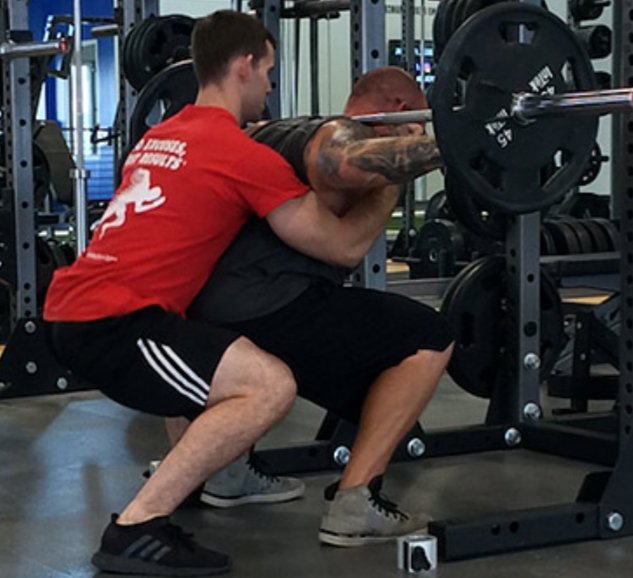
Holding the waist can be fine for moderate weight and can be more comfortable if it is a male spotter and a female lifter. The spotter should not place their hands on the bar. They’re not supporting the bar, they’re supporting the lifter.

2. The spotter should mimic the lifter’s movement on the way down. This is why a good squatter usually makes a good spotter. They must keep a straight back and use their core to get the lifter to the starting position if needed.

3. The spotter should be stood close. There’s no need to look like you’re dirty dancing though, not if the spotter and lifter are using their hips correctly.

4. If it is a very heavy weight, not only can a spotter be crucial in the lift but a person at either side of the bar should be considered. The body can buckle at any point when under pressure and there’s only so much a spotter can do if they’re having to deal with a collapsing person and a weight falling on top of them.

It’s worth pointing out that the body can give way with any amount of weight and this extra weight can still cause serious injury, so extra help at either side of the bar is something that can be considered at any time.

Lifting heavy can be fun and rewarding, but it is essential that you do it correctly. A part of that is finding a good spotter!

Training Frequency And Doing It Correctly

A question I am often asked in the gym is how often do I train. I answered that I currently train 3 to 4 days a week and the lady was shocked that it wasn’t more.

My current lifestyle does not enable me to train myself in the gym as much as it used to. I have taken on a couple of different projects that have taken my time away from the gym, therefore when I do get the time it has to be time well spent.

Fortunately, even for busy lifestyles, training programmes can be created to fit into tight schedules. You just need to identify your goals and know what to do to achieve more ‘bang for your buck’. And unless it has been a seasoned athlete or bodybuilder in the gym I have never seen anybody execute this time management correctly without a good PT who will offer either 1-1 or programming.

It is often said that as long as you are moving in the gym you are doing something positive. Well, I have to disagree. I find it a cop out and a disservice to ourselves to have this attitude. Not only are we not going to achieve the best results in the best time, it can result in injury and a lack of motivation.

Moving is great. Going for walks and staying as active as possible doing sports you enjoy is very important. But once you are in the gym with a specific goal, it is a different game altogether.

In the last couple of years I’ve personally seen a big difference in the sort of person that now requires personal training. And this issue relates to a shift in lifestyle brought on by our time in lockdown. With gyms closing, we had to be inventive with how we exercised. During this time, many people felt that they either no longer needed a gym or that they didn’t need any help once they were in the gym. In fact, due to social distancing, the gym I train at cancelled inductions for new members and they aren’t mandatory anymore to this day.

During lockdown, we became self proclaimed professional bread makers, scientists, content creators, politicians and personal trainers.

I’m seeing the fall out of that in the gym now. Most people that approach me are asking how to fix injuries. Here are the most common examples…

Running became very popular over lockdown. But the correct footwear is vital if you are to run frequently. It can also create muscular imbalances and an overuse of certain muscle groups. Joints are also under pressure from the repetitive impact with the ground. Relying too heavily on running as your choice of exercise without the right precautions can also cause oxidative stress on the body, which will have a negative effect on your goals.

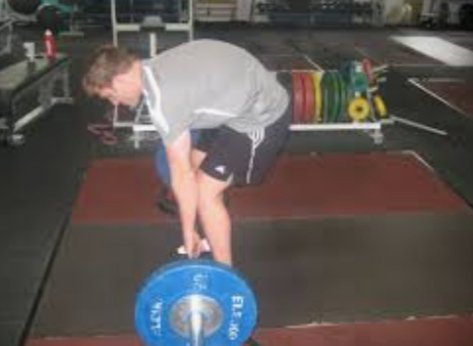
Home workouts became a staple for those wanting to continue their hypertrophy goals. Kettlebells and dumbbells are relatively cheap to buy at shops like Lidl and Aldi, who often stock them in their middle isles. But they don’t come with instructions. I have always been an advocate of the home workout, but it still has to be done correctly to get results and avoid injury. Lifting the wrong weights with the wrong equipment can easily do this. And a bench is useful. Sitting on the edge of your sofa to perform an overhead dumbbell press offers no protection to your spine. If repeated often enough, back pain will occur eventually. And deadlifts, bent over rows, kettlebell swing and squats are common exercises to get wrong and cause injury. Not a day goes by in the gym where I don’t wince at a deadlift technique. If this is gym technique, what are their home workouts looking like?

Personally, even if I’d looked up how to fix my car on YouTube and I gave it a go, if I were knackering up my car I would see a good mechanic. I need to get to work and get to social events. I can’t afford to go too long with my car being out of action. I have to swallow my pride and see a professional.

Now change the above statement from car to body and replace mechanic with personal trainer. You get the idea.

Joining a gym or embarking on any fitness goal doesn’t have to be 7 days a week, intense, gruelling or time consuming. But you do need to know how to use the time that you do have productively and safely.

Nike was almost right with their ‘Just Do It’ tag line. Mine is ‘Just Do It, But Do It Correctly.’

The Bench Press Back Arch

Go into any gym or click onto any fitness/training page and there will be a debate that has been around since the first person laid on their back and pushed something heavy above their head.

I’m now picturing Fred Flintstone pressing a rock, but that’s silly.

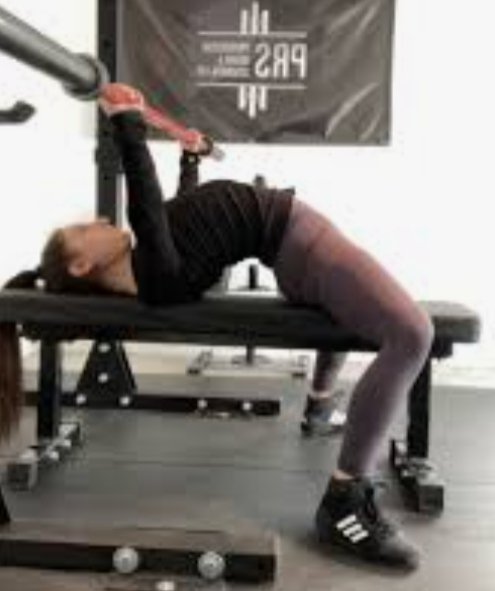
The debate is whether or not we should arch the back during the bench press. And I mention this now because it has once again been brought up in conversation at my gym today. After somebody saw me arch my back during a bench press, they asked,”Are you supposed to arch your back?”

Knowing that the questioner was a football fan I came back with a football analogy. I replied,”If you are taking a corner kick should you knock it into the box or go short?”

The answer, of course, is that it depends on the circumstances. It depends on the stage of the game and the tactics that you or your coach wish to deploy. There’s no right or wrong, but the timing can be right or wrong. I’ll explain…

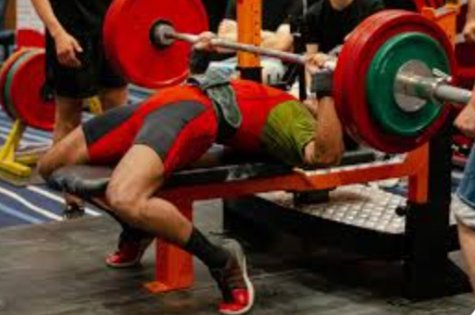
Arching the back is great for lifting heavier weights. It provides a more compound movement which recruits different muscle groups and helps create more power. And this is my reason for arching my back. In fact, I always bench press with my back arched because I don’t find it the best hypertrophy exercise, despite it’s many other qualities.

So, a chest press in order to promote pectoral hypertrophy would be to use a set of dumbbells at around 70% of your 1 rep max for 10-12 reps. Dumbbells allow a longer range of motion which can result in more muscle activation. The bar just can’t give you that sort of range, so a bench press with a bar without an arch, in my opinion, just gives you a ‘pump’. A few pics in the changing rooms for your Instagram look great but by tomorrow there will be nothing to show for it in real life.

I always use compound movements as my primary exercise and I often start with the bench press. Now in my 40’s, I have to look at ways of increasing my testosterone and compounds have the greatest success at doing this. I don’t bench press to ‘grow muscle’, just testosterone levels. However, once I pick up the dumbbells it’s all about weight management and hypertrophy.

Let the debate continue!

Back To Basics

We are told that the more experienced we are in our muscle hypertrophy journey, the harder it becomes to create more growth. My own experience can confirm that the science seems annoyingly accurate on this. But it’s not impossible. In fact if you just take a step back and take a look at your own current workouts it’s probably very fixable.

The more advanced we get, the more we tend to add to our workouts. But this takes up more time and before you know it your head is spinning with a myriad of techniques and workouts from YouTube to start stimulating your sluggish muscle growth. And in trying to fit all of this new routine into your sessions you forget about what got you where you currently are in the first place. Sometimes less is more, so let’s get back to basics.

Sure, adding supersets or drop sets to promote stress to the muscle is a good idea, but what you include in your sets (supers or drops) will be an important factor.

I often see traditional compound lifts such as bench press, barbell rows, deadlifts, squats and lunges left behind for more ‘adventurous’ workouts. The problem with this is that the traditional compound exercises are your bread and butter muscle building moves that haven’t been perfected yet.

From close grip bench press, pendlay rows, jump squats, resistance band deadlifts, deficits and animal flow, they can all contribute to your workouts but also you need to stay grounded. Never ditch the traditional lift that the alternative bases itself on.

We can become bogged down with alternative methods and, rather than use them to accompany your routine, they begin to take over. But muscles like consistency. They need to grow into each technique. And perhaps we begin to think that we have outgrown the bench press and the muscle needs a different stimulus, but the muscle still needs to keep learning for it to truly adapt. Chopping and changing a routine just because we see a cool technique from another gym goer or a YouTube guru won’t benefit us unless we stick to our principals.

Regain your passion for a 1 rep max on your bench. Aim to add a little bit more weight over time. Increase the reps. Decrease rest periods. Do what works first and then have a play with alternative methods. Get back to basics.

Mirror, Mirror On The Wall

Hmm. How can I make an interesting article about the thickness of mirrors? How can I make it informative without having you guys fall asleep when I start describing the thickness of glass?

Well, if you go to the gym and look in the mirrors or if you try clothes on in a clothes shop then you might find it rather enlightening. And I’ll not get too technical. Promise.

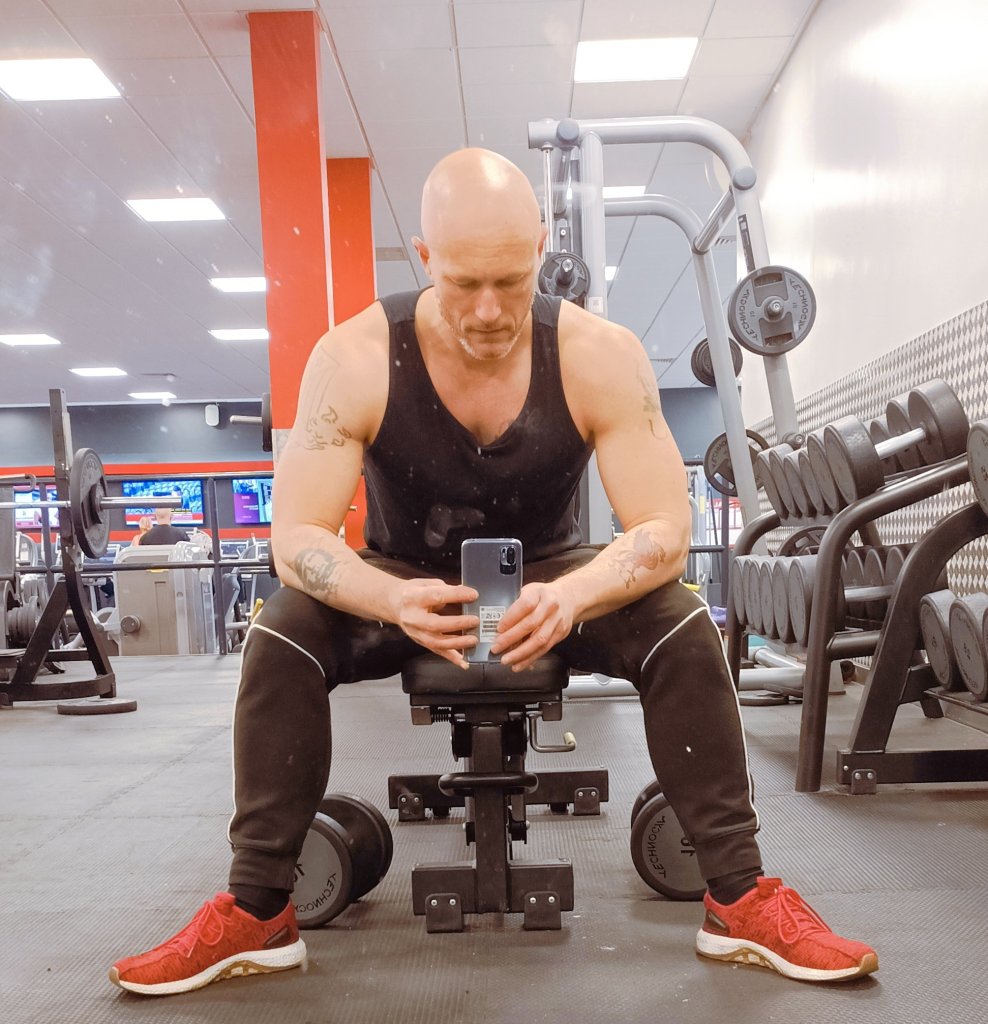
Leonardo Da Vinci said “The mirror is our teacher.” He was referring to the mirror being used as a fresh eye. When I train a client in a gym I will often look in the mirror at my client’s form instead of looking directly at them. Apart from the fact that it can be off putting having someone (even your PT who you trust) staring at you as you struggle through your set, me looking through the mirror gives me a different perspective on their form. I see things differently. We can lose perspective with the naked eye. Reflections can create new ones, especially with the thickness of a gym mirror which should be above 5mm in thickness.

Due to health and safety, public mirrors must be of a certain thickness and be safety backed. Therefore this thickness can give us a much better perspective of the reality that it portrays. Whereas a domestic mirror might only be 3mm in thickness. This can create a mottled effect on the glass and give a distorted view of what we see, especially in cheap mirrors that are mass produced.

Trainees have often said to me,”I look great in the gym but when I look at myself at home I feel rubbish again!”

This is the reason why. The gym mirror will be a true reflection. Your home mirror is probably a much cheaper, thinner piece of glass.

Artists often use mirrors to get a new perspective of their paintings. It takes away the peripheral clutter and enables the eye to focus on the subject. Training in the gym shouldn’t be any different. Your workout is your art. You have a blank canvas to work on and produce your own work of art. Mirrors can help. Whether wanting to build muscle or lose weight, often looking in a good mirror can give you a much better idea of your progress than the weighing scales.

I’m hoping that, one day, mirrors will become so thick that it will make me look like I have a fringe. But maybe that’s an art that might be a little bit too much of a stretch.