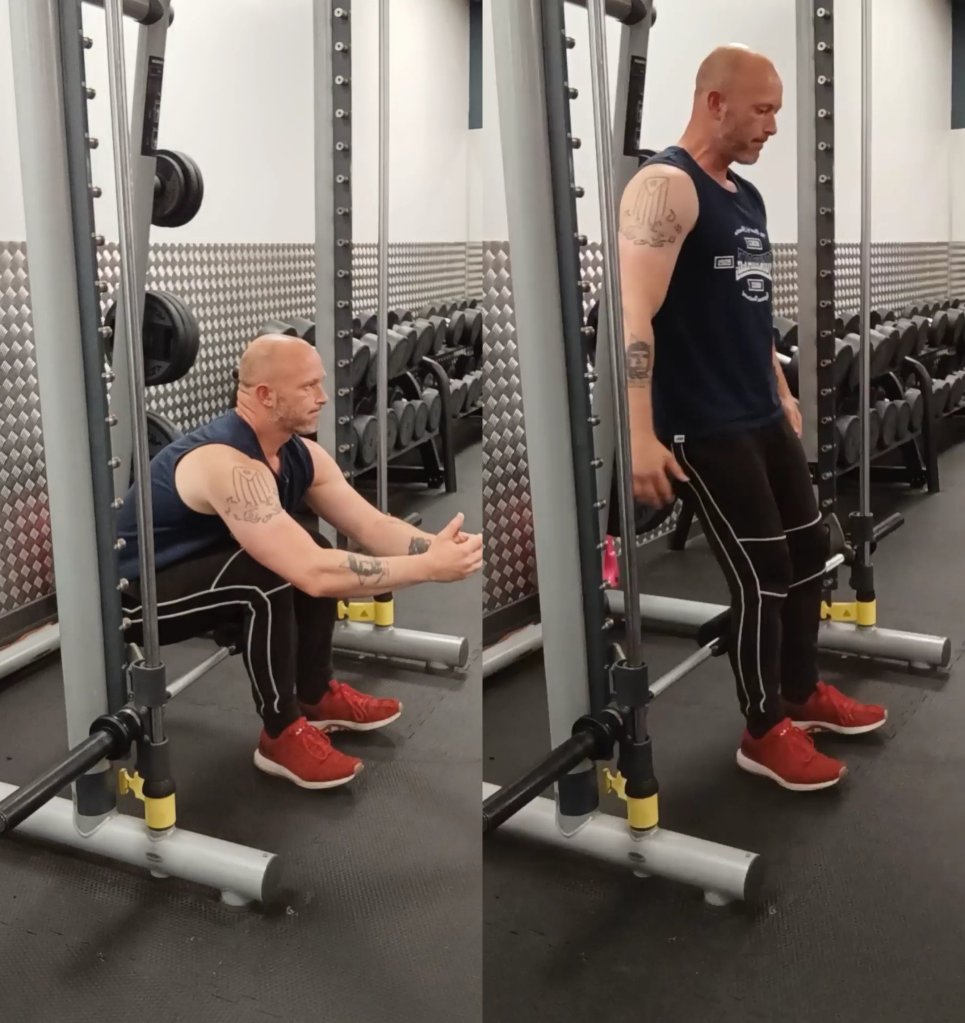
There are three things that need explaining when I bring up the conversation of sissy squats. Its name, what they are and why we could benefit from performing them.
As it goes, these points are easily resolved. So here goes…
Why are they called Sissy Squats?!
It actually comes from the name King Sisyphus in Greek Mythology. As a part of his punishment from the Greek Gods he was ordered to push a huge rock up a mountain only for them to push it back down again. He would then have to begin at the bottom again. This forced Sisyphus into a never ending task, but he grew massive quads!
So, I need to push a rock?!
No! The significance here is his quads. And seeing as the sissy squats isolate the quads so efficiently it seemed like a good name to call them. In fact, sissy squats are seen by many trainees as a better alternative to machine leg extensions which can cause knee pain due to the fixed linea movement. Sissy squats are tough, but they can add a little wiggle room if a trainee has had a previous knee injury.
Another benefit is that they work the hip flexors and core strength too. So it’s an exercise not to be overlooked.
How do you perform a sissy squat?
If you have access to a sissy squat machine then you can adjust it as required ensuring that your feet are firmly locked in position. Bend your knees into a squat position and begin to lean slightly backwards. This applies the pressure to the quads but also begins to work the hip flexors and core. Hold for a second or two and then push yourself back to the starting position.
However, there are alternatives if, like my gym, there’s no specific machine. Some leg extension machines can be adapted, but I prefer the Smith machine with the bar at the lowest setting. I place a pad on the bar to protect my calves and I’m able to perform sissy squats.
The small print…
Like all types of squats, if you have a history of knee problems, you need to be careful that you are trained and confident in performing them correctly. As much as squats can be useful in injury rehabilitation, they can also do more damage with poor form.
Attempting any new techniques are often best under the guidance of a professional.

 Never Give Up PT